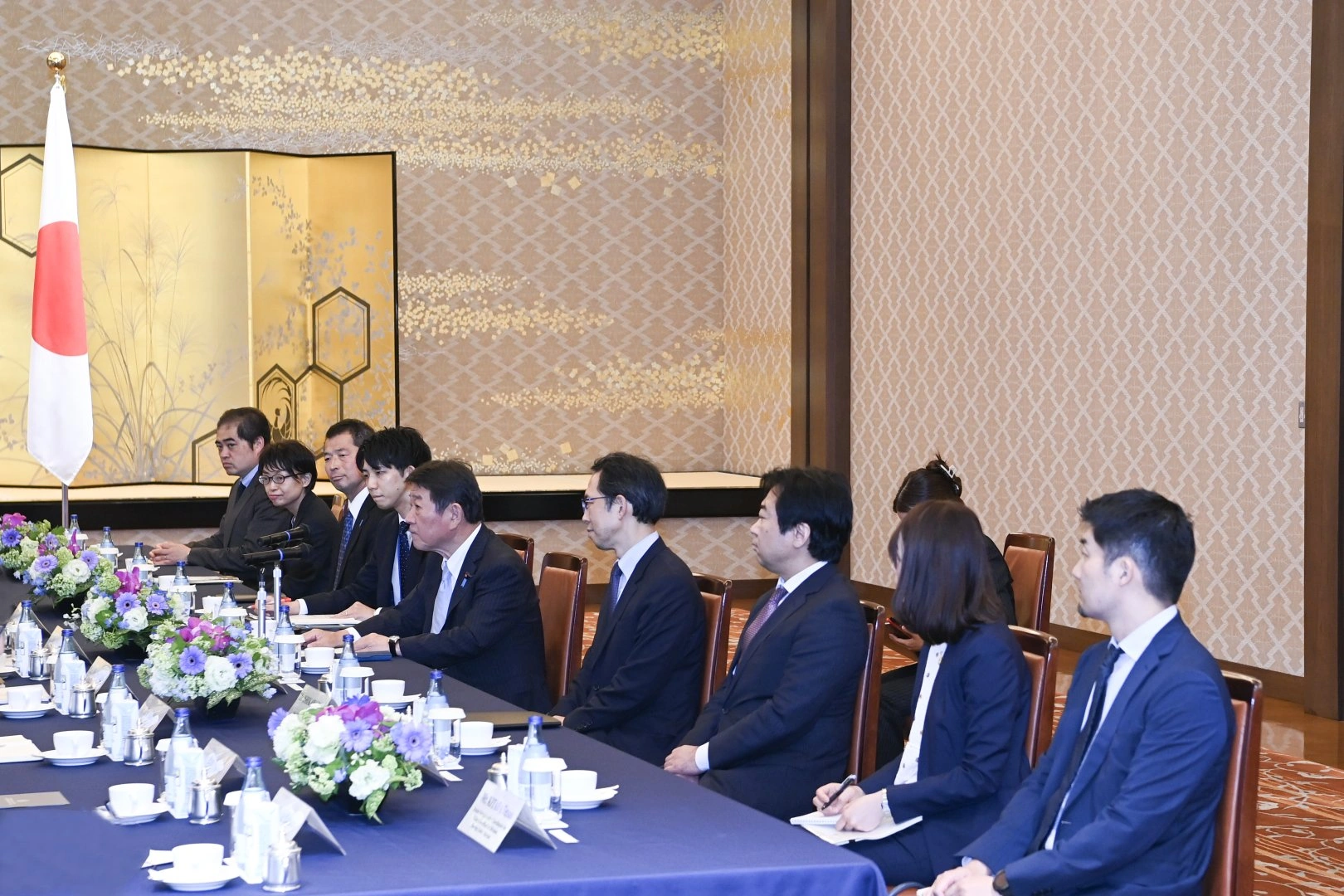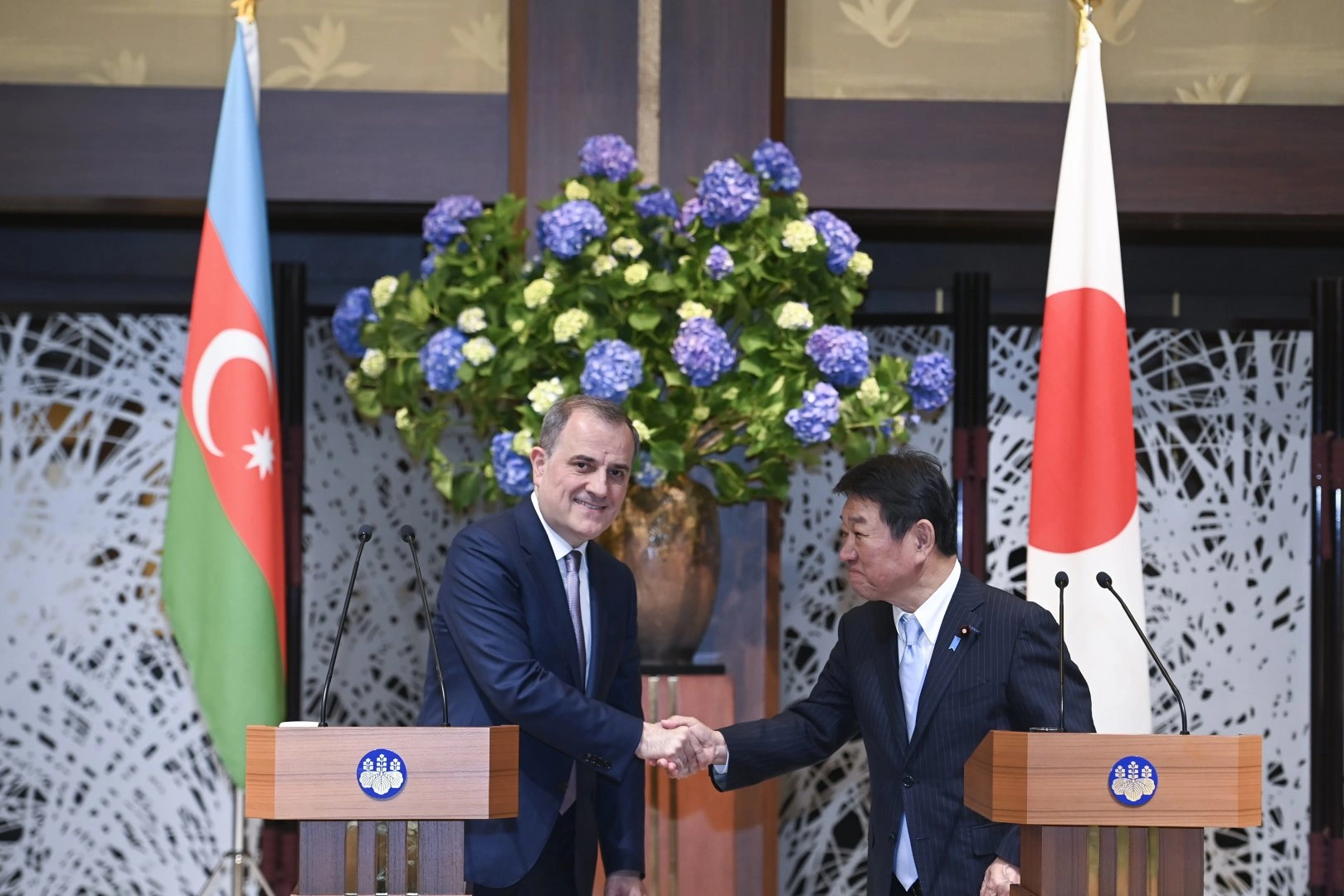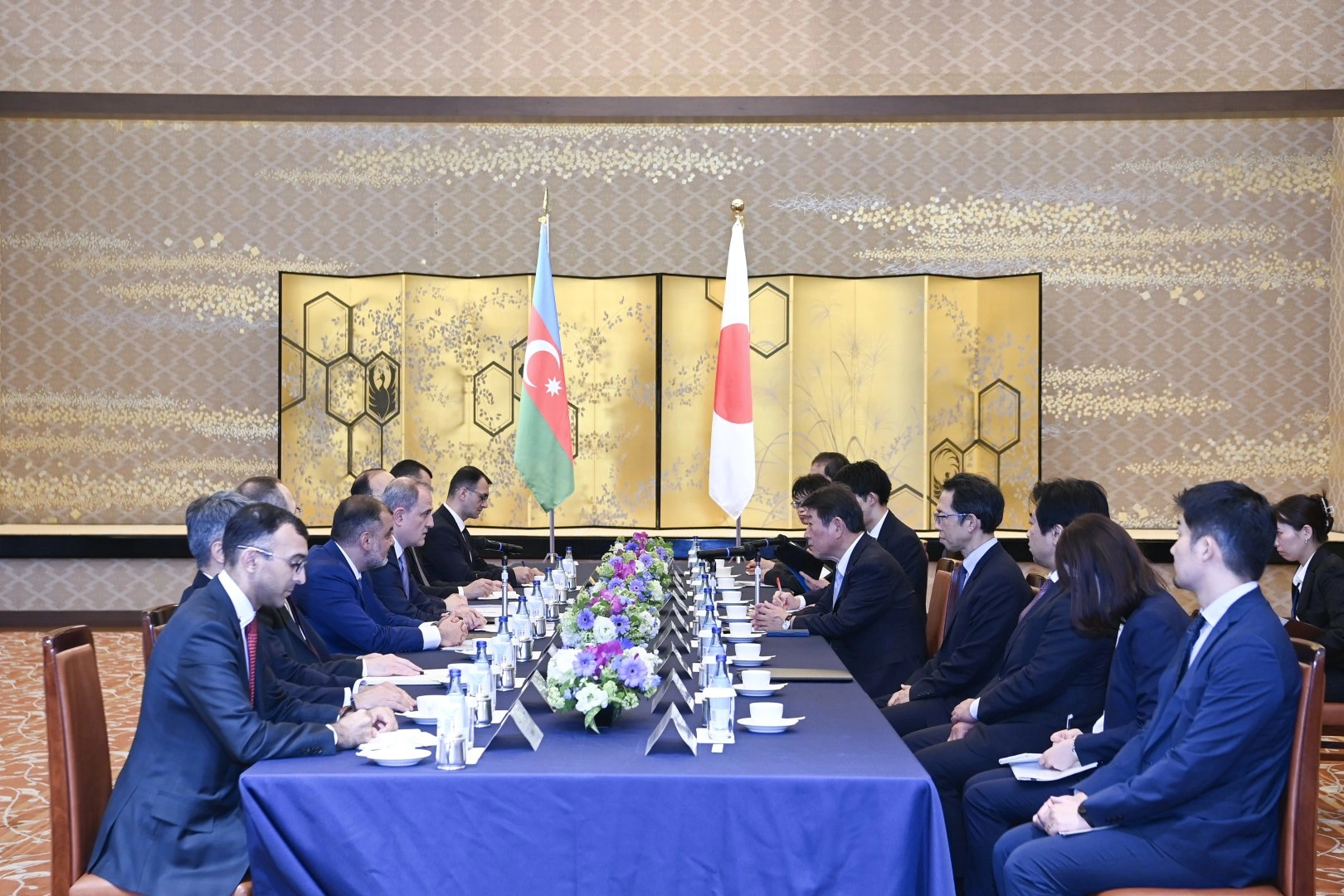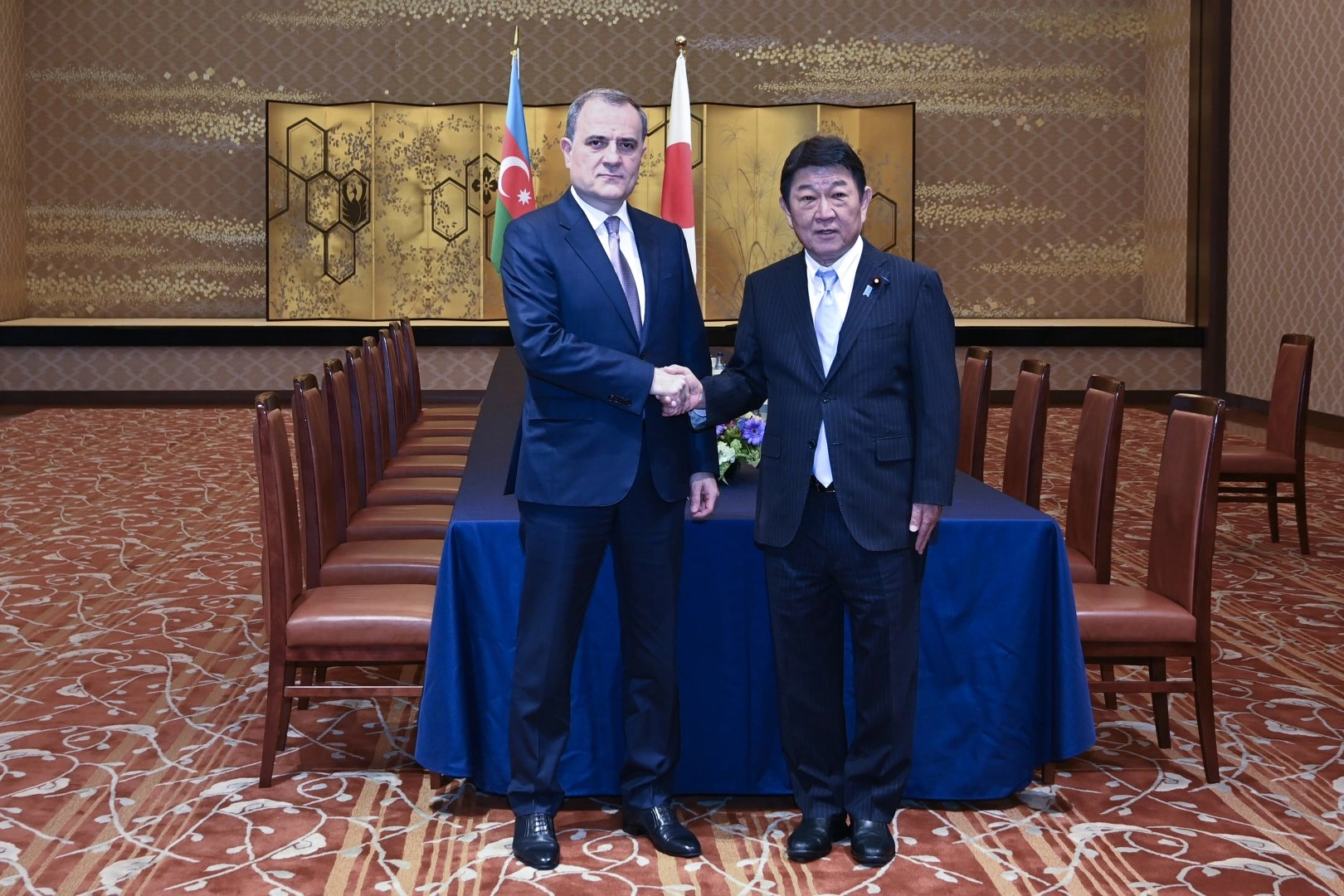
BAKU, Azerbaijan, June 10. On June 10, Foreign
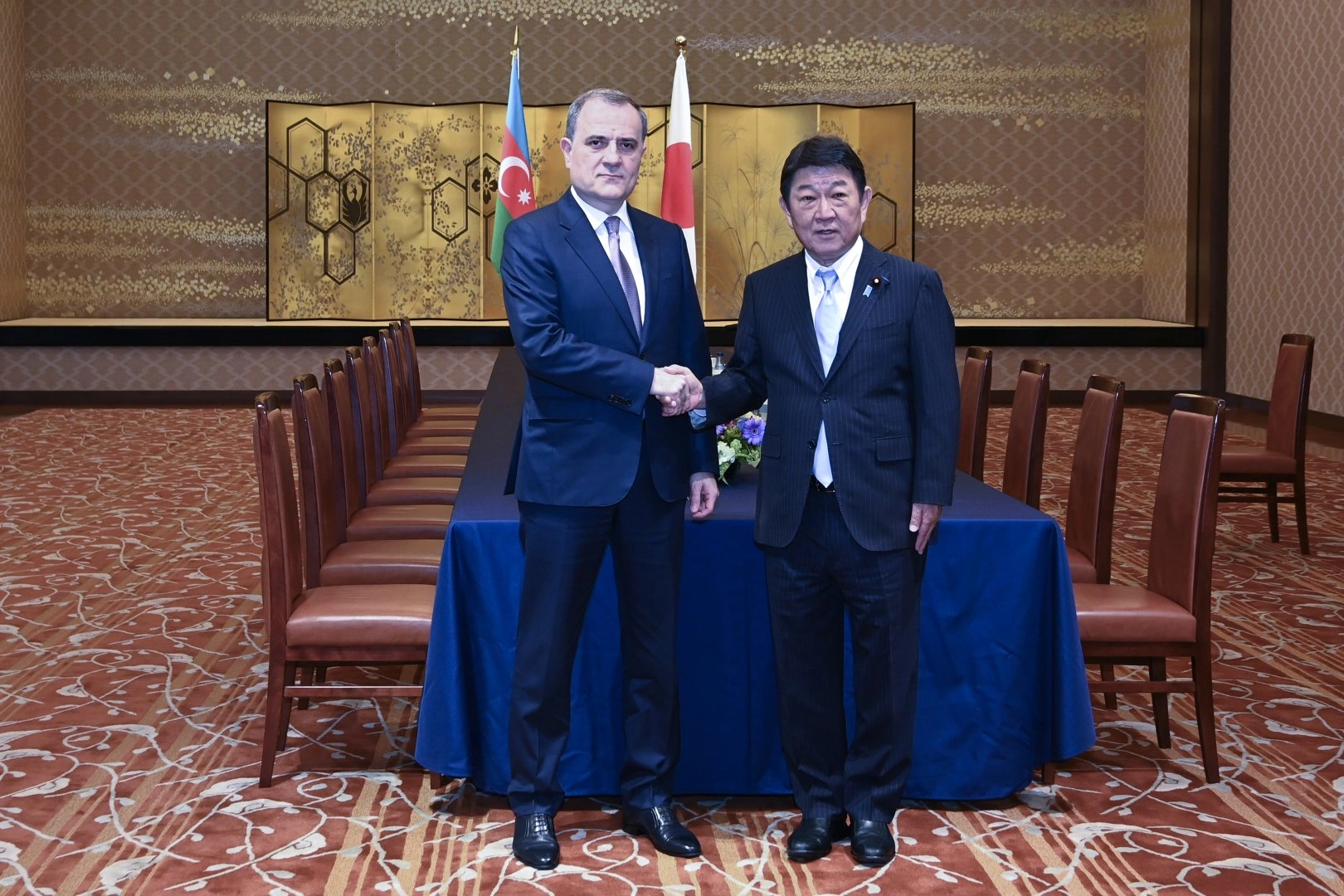
Minister of the Republic of Azerbaijan Jeyhun Bayramov met with
Japanese Foreign Minister Toshimitsu Motegi during his official
visit to Japan and briefed his counterpart on the process of
normalizing relations between Azerbaijan and Armenia.
This was stated in a statement by the Ministry of Foreign
Affairs of Azerbaijan.
During the meeting, it was emphasized that Japan was one of the
first countries to recognize Azerbaijan’s independence, and that
the first official visit of National Leader Heydar Aliyev to Japan
in 1998 and President Ilham Aliyev’s visit in 2006 were important
milestones in the development of Azerbaijani-Japanese relations,
providing a powerful impetus for the expansion of political and
economic cooperation.
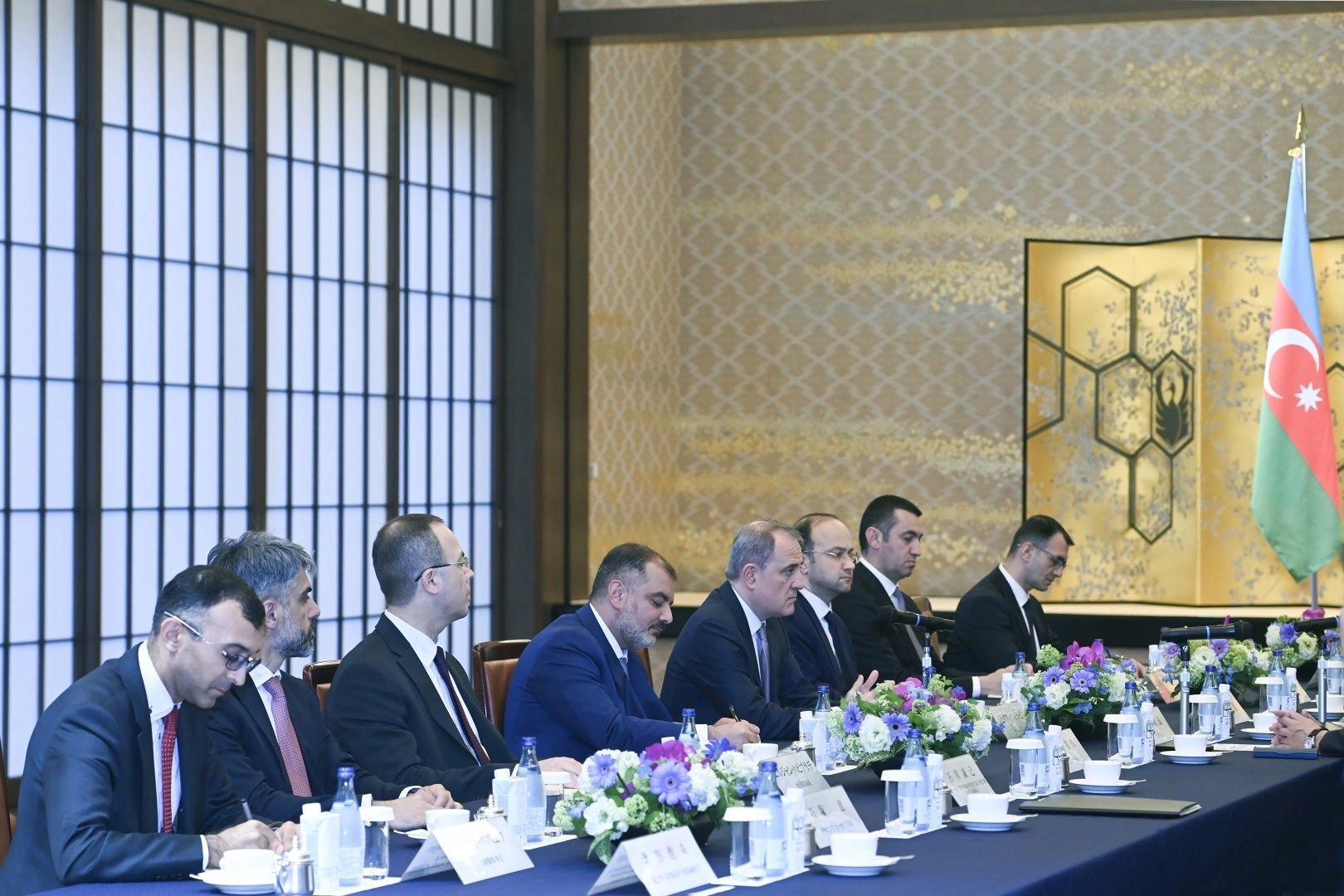
The meeting discussed the current state and prospects for the
development of bilateral relations between Azerbaijan and Japan,
the expansion of political dialogue, and cooperation in the
economic, trade, investment, energy, transport, digital
transformation, innovation, education, tourism, and sports sectors,
as well as in the fight against climate change and other areas.
The ministers emphasized that 2027 will mark the 35th
anniversary of the establishment of diplomatic relations between
the Republic of Azerbaijan and Japan, and noted with satisfaction
that cooperation, based on the principles of mutual respect, trust,
and friendship, has been successfully developing in various areas
over the past period. It was noted that this significant
anniversary creates additional opportunities for further deepening
bilateral relations.
In addition, the meeting explored opportunities for expanding
economic cooperation. The work of the Azerbaijan-Japan Joint
Economic Commission and the outcomes of the Commission’s 12th
meeting, held in September 2025, were highly commended. The parties
emphasized the importance of concluding the Azerbaijan-Japan
Investment Agreement as soon as possible.
Minister Jeyhun Bayramov briefed the Japanese side on
Azerbaijan’s planned initiative to introduce a visa-free regime for
Japanese citizens. The ministers noted that this would further
contribute to the development of people-to-people contacts,
tourism, and business ties.
Minister Jeyhun Bayramov, speaking about Azerbaijan’s growing
role as an international transport and logistics hub, highlighted
the importance of the Trans-Caspian International Transport Route
in strengthening regional and global connections. The active
participation of Silkway in the Japanese market for over 10 years
was noted with satisfaction. In addition, it was noted that
Azerbaijan possesses significant infrastructure in the Caspian
Basin, including nine international airports, a commercial port,
and the largest merchant fleet, as well as the Alat Free Economic
Zone, and that there are extensive opportunities for expanding
cooperation between the two countries.
The parties emphasized the importance of long-term cooperation
in the field of energy security and noted Azerbaijan’s vital role
in ensuring global energy security. They highly commended the
successful examples of cooperation within the framework of the
Azeri-Chirag-Gunashli field and the Baku-Tbilisi-Ceyhan
pipeline.
Meanwhile, it was noted that student exchange programs, Japanese
language instruction at two universities in Azerbaijan, cultural
and humanitarian events, as well as international development
projects, contribute to strengthening mutual understanding and
friendship between the two nations. In addition, cooperation in the
field of sports and the hosting of the World Sumo Championships in
Baku this October were noted with satisfaction.
At the meeting, Minister Jeyhun Bayramov provided the Japanese
counterpart with detailed information on the current situation in
the region during the post-conflict period, as well as on the
restoration and reconstruction work being carried out in the
liberated territories.
The parties also exchanged views on regional and international
security issues, including the situation in the Middle East and
Ukraine, multilateral cooperation, the fight against climate
change, sustainable development, and cooperation within
international organizations.
The importance of upholding the purposes and principles of the
UN Charter, including the sovereignty, independence, and
territorial integrity of states, was emphasized.
The meeting also addressed other bilateral and regional issues
of mutual interest.
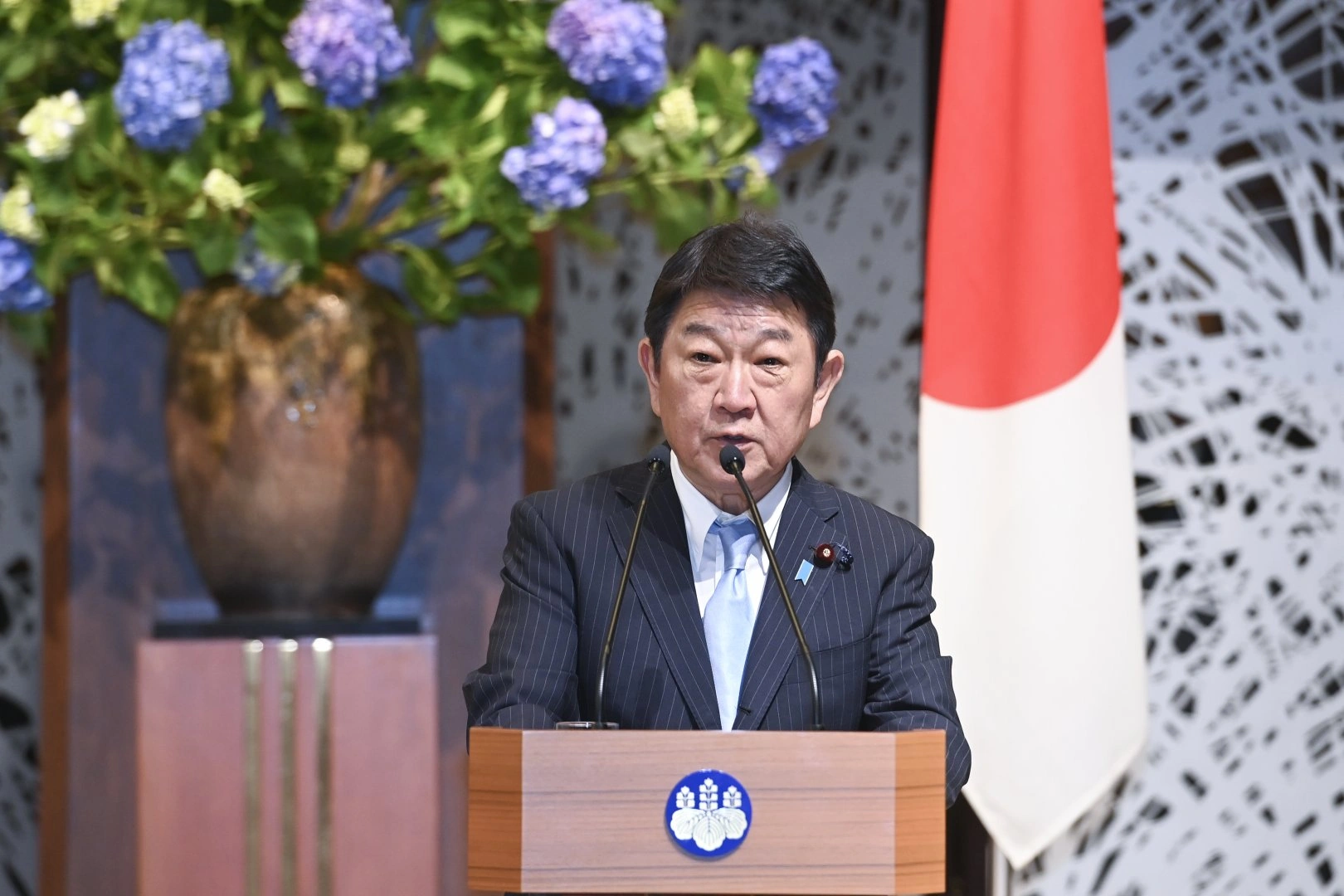
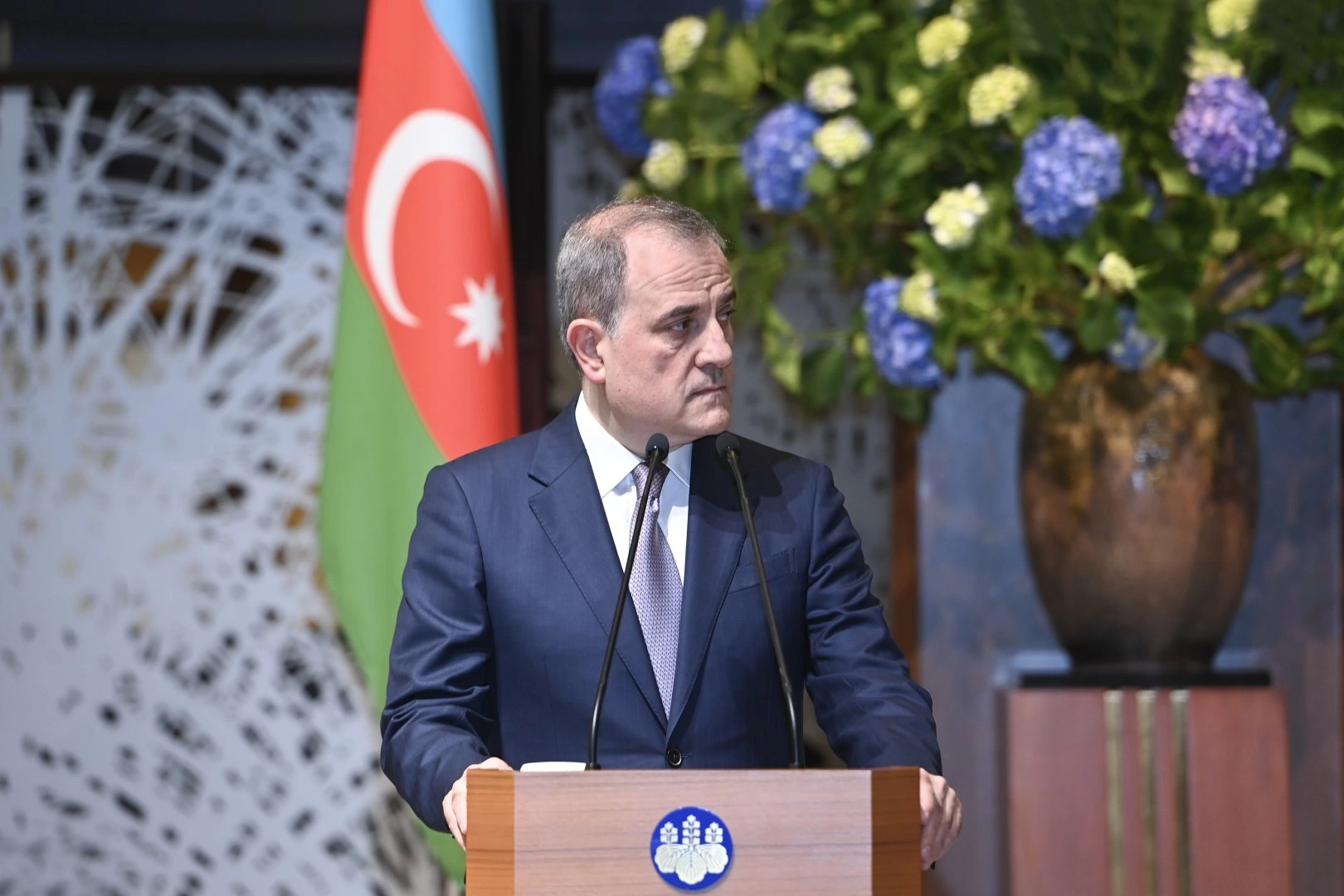
Following the meeting, the ministers made statements at a press
conference.
At the end of the visit, a joint press release was issued by the
foreign ministries.