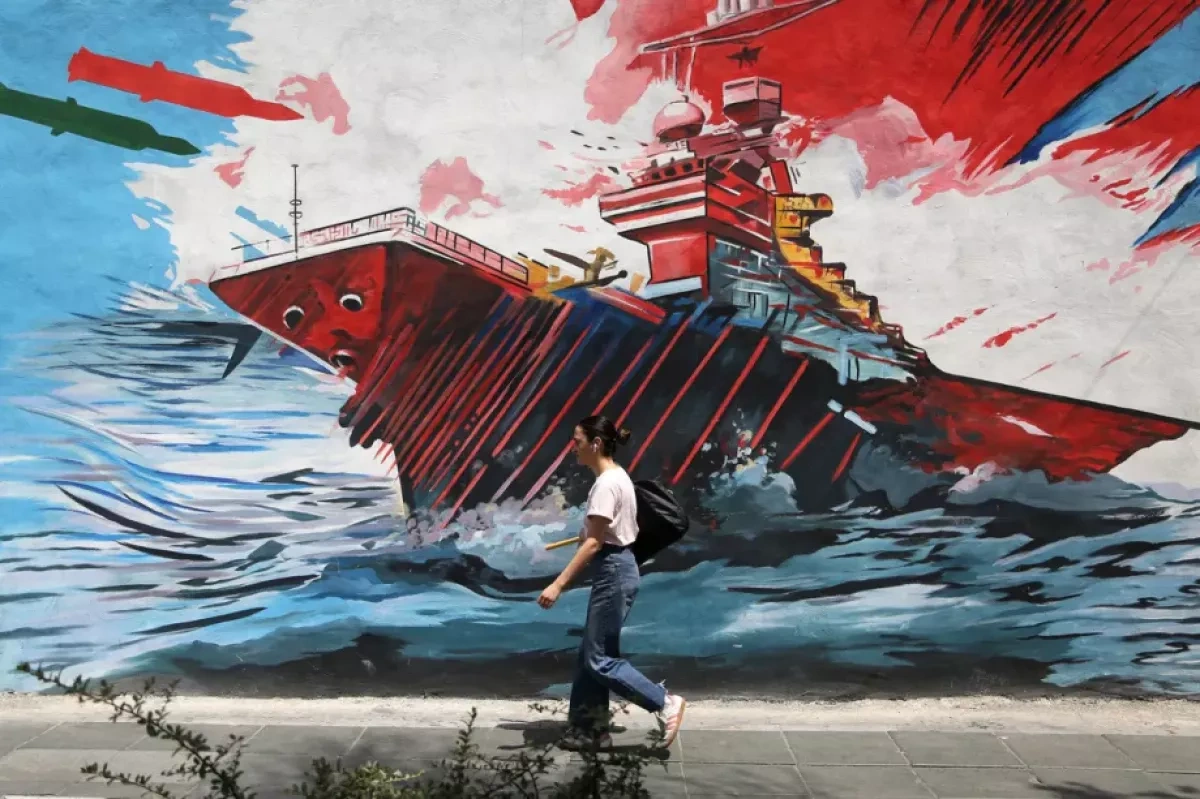
The pause in US air strikes on Iran has not ended the confrontation between Washington and Tehran. Instead, the conflict has shifted from the skies to the waters of the Strait of Hormuz, where both sides are competing to define the rules of one of the world’s most important maritime routes, Middle East Monitor writes.
After 13 consecutive nights of attacks announced by US Central Command, Washington stopped reporting new strikes, but pressure continued at sea. American forces said they had intercepted commercial vessels attempting to reach Iranian ports, while Iran’s Islamic Revolutionary Guard claimed it had forced ships away from routes near Oman. The air campaign may have slowed, but the struggle over control of maritime access has continued.
The central issue is whether the US can restore unrestricted shipping through the Strait without expanding the war, and whether Iran can use its ability to disrupt traffic as a lasting source of influence.
Military strikes have damaged Iranian facilities and reduced some capabilities, but they have not changed Tehran’s strategic calculations. Iran still possesses mobile weapons, drones, mines and small naval units capable of threatening commercial shipping even after losing fixed military infrastructure.
The dispute over Hormuz has become a test of authority. Washington argues that international navigation rules must remain intact, while Tehran seeks greater control over vessels passing through waters near its coastline. A lasting solution would require guarantees that ships can transit without political approval, restrictions or additional charges, alongside security measures to restore confidence among shipping companies and insurers.
However, the conflict could enter a more dangerous phase if the US expands beyond military targets and begins attacking critical infrastructure such as electricity networks, communications systems, transport links or fuel facilities.
Such a campaign could severely damage Iran’s ability to function, but it would not guarantee political change. The collapse of essential services could create instability, humanitarian problems and unpredictable power struggles rather than a transition controlled by Washington. Pressure on the Iranian state could weaken its institutions while also making its leadership less willing to compromise.
For Tehran’s security establishment, control over Hormuz represents one of its remaining tools of regional influence after heavy military and political losses. For Washington, allowing Iran to impose restrictions on shipping would carry domestic and international costs after declaring freedom of navigation a core objective.
A diplomatic settlement remains possible, but it would require both sides to avoid appearing defeated. Any agreement would need clear rules for shipping, independent verification and a broader solution to the unresolved nuclear dispute.
The next stage of the conflict will depend not only on what targets the US chooses but on what kind of war those targets reveal. Continued attacks on military assets would signal an effort to contain Iran’s capabilities. Strikes on national infrastructure would represent a far broader attempt to pressure the state itself — a move that could produce consequences neither side can fully control.
The bombing campaign has paused, but the deeper confrontation over Iran’s regional power and the future of the Strait of Hormuz remains unresolved.
By Aghakazim Guliyev