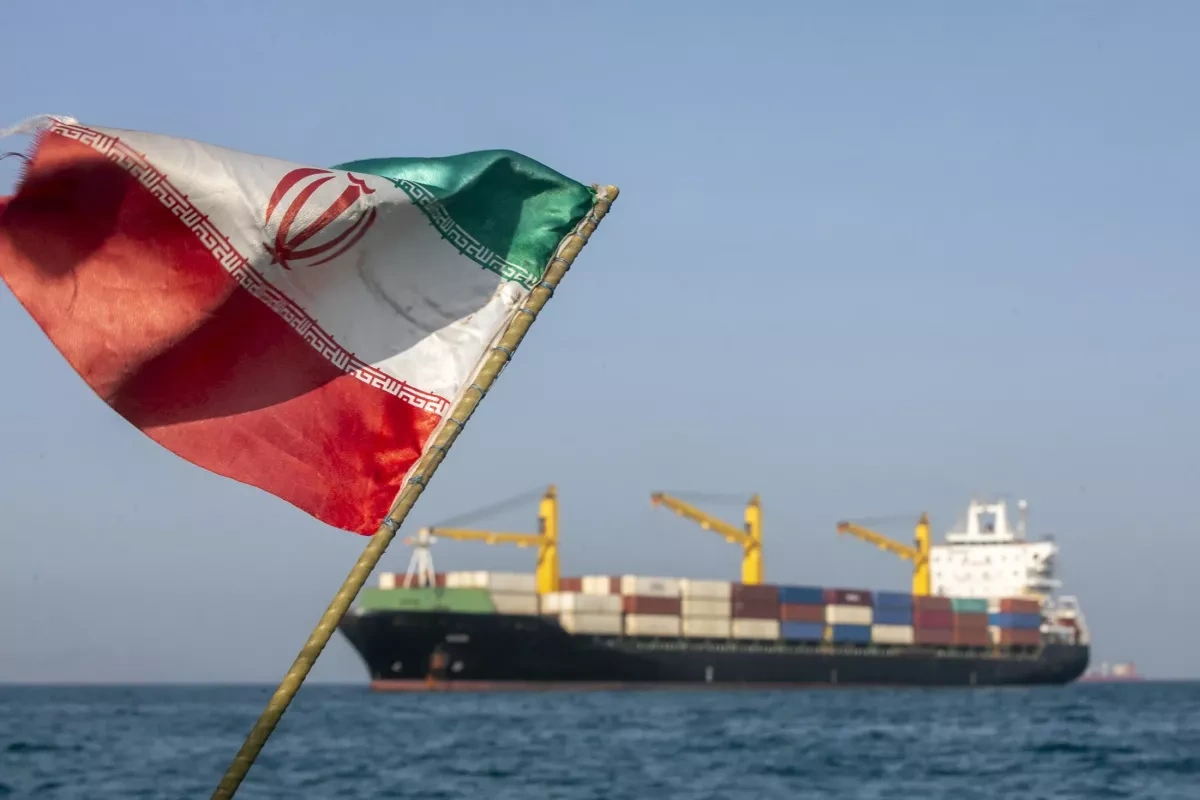
Iran's economy is under growing strain as the conflict with the United States disrupts major maritime trade routes, curtails oil exports and deepens domestic economic challenges, despite renewed diplomatic efforts.
Iran and the US have resumed Oman-mediated talks after a temporary pause in military action, but tensions remain high as disruptions spread beyond the Strait of Hormuz to the Red Sea and the Caspian Sea, Caliber.Az reports, citing Qatari media.
Iran's Petroleum Ministry says the country earned $11.5 billion from crude exports during the conflict and $6.5 billion during a now-suspended June agreement with Washington, together meeting about 60% of its annual oil revenue target.
The renewed US naval blockade, imposed in mid-July, has again restricted exports, placing pressure on Kharg Island, the terminal that handles about 90% of Iran's crude shipments. The US says it has intercepted and boarded vessels attempting to breach the blockade, while Iran reported that a ship struck a naval mine in the Strait of Hormuz.
Although military activity has eased in recent days, both sides continue diplomatic contacts, with Tehran describing talks on reopening the waterway as constructive.
Economic pressures mount
The conflict has compounded Iran's existing economic problems, including sanctions, inflation and infrastructure damage.
Officials say bombing significantly reduced natural gas production, worsening power shortages and disrupting industry. Iran also faces a daily petrol deficit and is considering higher fuel prices and tighter consumption limits.
Rolling electricity cuts continue across the country, while trade with China—Iran's largest trading partner—has weakened sharply. Chinese customs data show non-oil trade fell by around 75% during parts of this year compared with a year earlier.
Regional disruption widens
The conflict has expanded beyond the Gulf. Iran-backed Houthi attacks around the Bab al-Mandeb Strait have increased shipping costs, while Ukraine's strike on a vessel in the Caspian Sea has raised fears that another key trade route could become part of the conflict.
With several maritime corridors under pressure at once, Iran faces prolonged economic uncertainty even if diplomatic efforts succeed in reducing direct military tensions.
By Aghakazim Guliyev