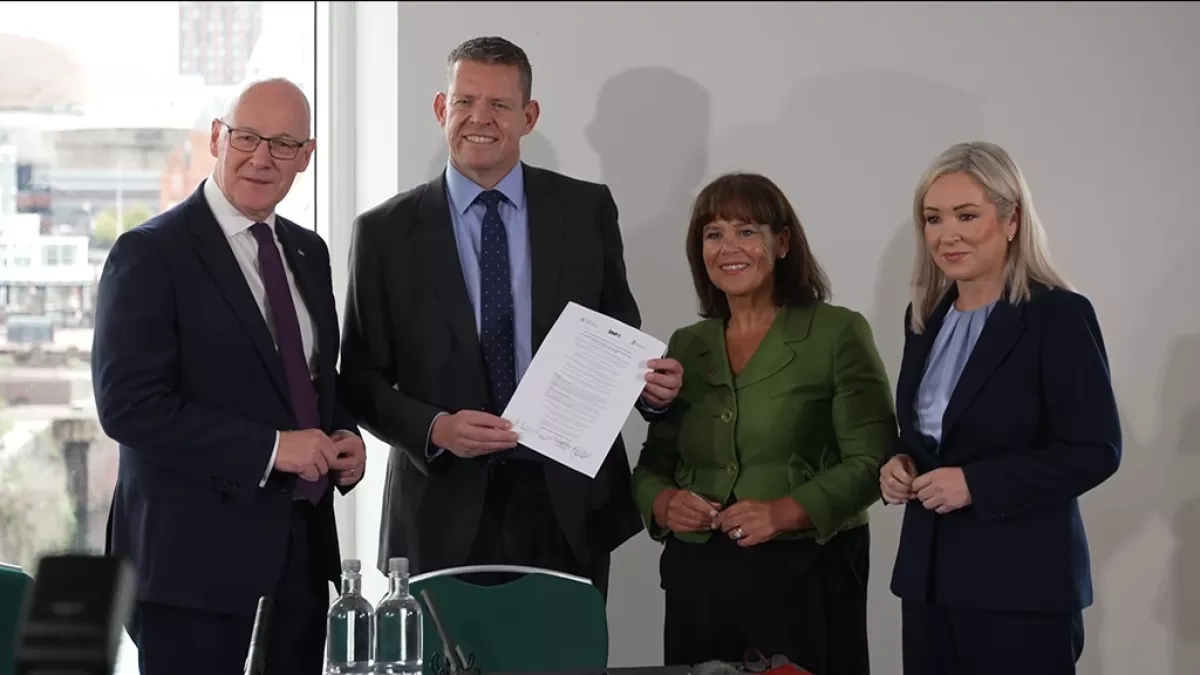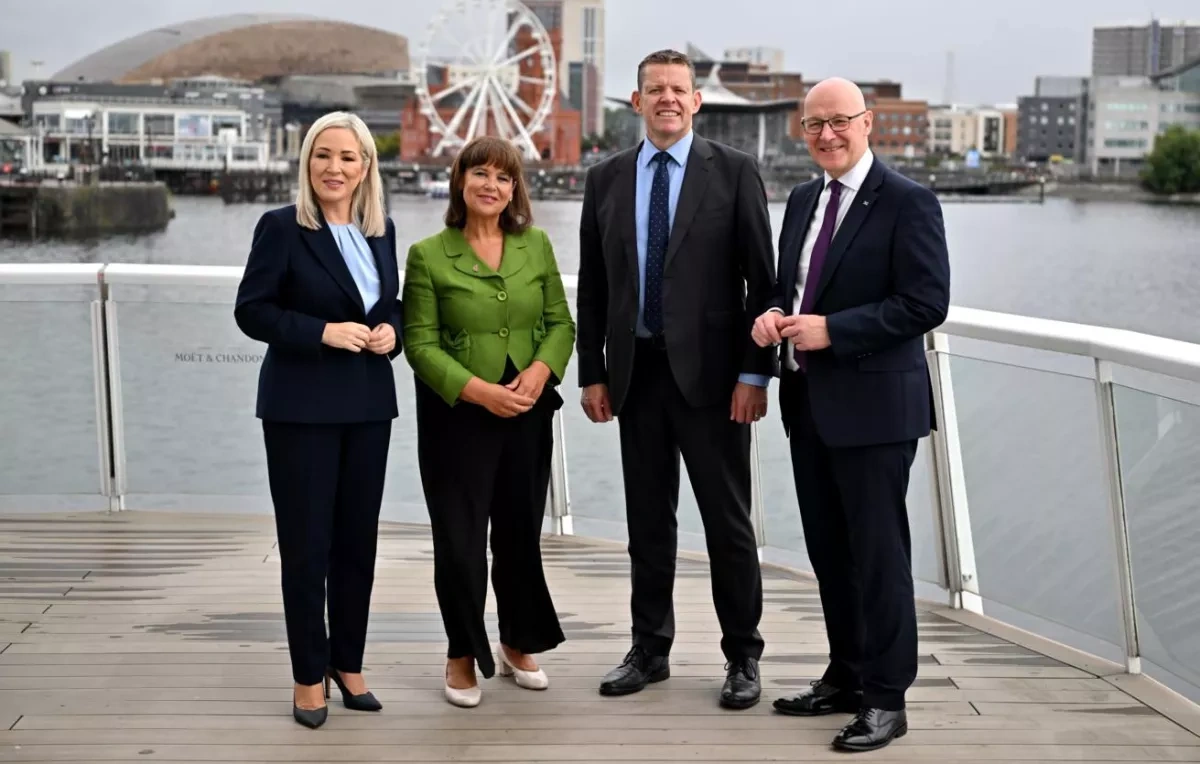
The nationalist first ministers of Scotland, Wales and Northern Ireland have said "Westminster's time is coming to an end" as they signed an agreement to strengthen cooperation and called for the right to self-determination for their nations.
Scotland's SNP leader John Swinney, Wales's Plaid Cymru leader Rhun ap Iorwerth and Northern Ireland's Sinn Fein first minister Michelle O'Neill made the comments at a news conference in Cardiff according to Sky News.
It is the first time Scotland, Wales and Northern Ireland have all been led by nationalist parties.
Swinney described the meeting as a "pivotal moment in the constitutional journey of the UK", while the leaders said the "political landscape across these islands is changing".
"The momentum is behind our movements," they said, adding that they "believe that constitutional change is coming".
The leaders called for the "right to self-determination" for their nations and urged the UK government to "prepare for, plan and facilitate constitutional change in each jurisdiction".
They signed a memorandum of understanding aimed at working together on issues including building a "stronger, fairer economy", expanding "our own energy resources" and securing futures that "belongs in the European Union".
The meeting was also attended by Sinn Fein president Mary Lou McDonald, who described the agreement as "historic".
"It is that moment where we assert collectively our inalienable right to decide our futures," she told the news conference.
The leaders stressed that their parties held "different constitutional positions and that each nation will determine its own future in its own way and in its own time". But they said they shared "a determination to ensure that the voices of our nations are heard".
The SNP supports Scottish independence, Plaid Cymru supports Welsh independence, while Sinn Fein seeks the reunification of Northern Ireland with the Republic of Ireland.
The leaders also said the "political landscape across these islands is changing", signalling closer cooperation among the nationalist movements as they pursue their differing constitutional goals.
By Aghakazim Guliyev