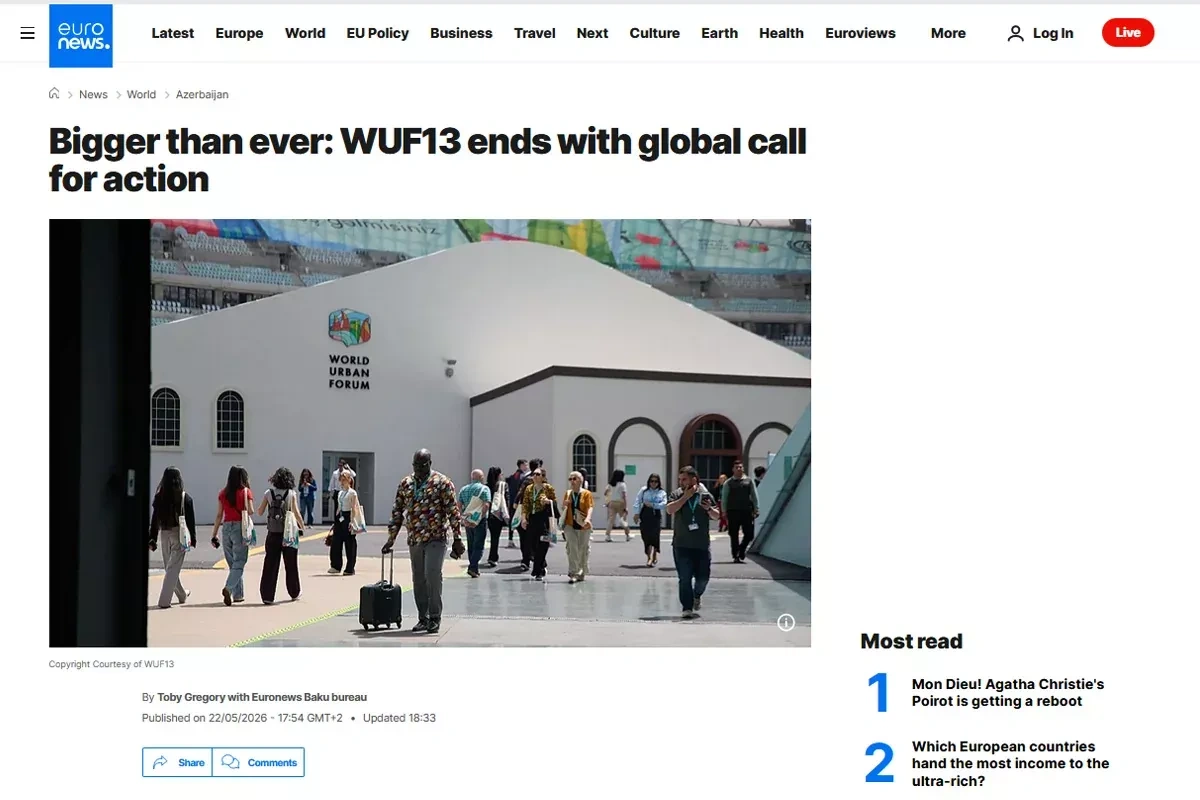
The outcomes of the 13th World Urban Forum (WUF13) in Baku have highlighted growing global concern over housing, climate resilience, and the future of cities, according to a feature published by Euronews.
The forum brought together more than 57,000 participants from over 176 countries, focusing on how urban areas can withstand conflict, climate change, rapid urbanisation, and rising inequality while ensuring that communities are not left behind.
Executive Director of UN-Habitat Anacláudia Rossbach described housing as a “systemic global challenge” that shapes inequality, opportunity, resilience, and stability in societies. She said affordability pressures, displacement, and climate vulnerability are among the main drivers of the crisis.
Rossbach noted that the forum’s concluding statement, the “Baku Call to Action,” underscored the need for integrated solutions that combine land, finance, infrastructure, and governance to build inclusive and climate-resilient cities. She also highlighted the unprecedented scale of participation at WUF13.
WUF13 National Coordinator Anar Guliyev said housing was placed at the center of the global urban agenda, stressing access to adequate, affordable, safe, and resilient housing as one of the defining challenges of the era.
In an interview, UN Deputy Secretary-General Amina J. Mohammed warned against treating housing as an isolated issue, arguing it is closely linked to community well-being and dignity. She also pointed to projections that more than 70% of the global population will live in cities by 2050, calling for coordinated international action by 2030.
Mohammed further cautioned about worsening climate risks, including the potential emergence of a “super El Niño,” and warned that declining development investment is deepening humanitarian crises and inequality. She highlighted growing affordability pressures facing young people in urban centers, linking them to rising anxiety and mental health challenges.
Assistant to the President of Azerbaijan and Head of Foreign Policy Affairs Hikmet Hajiyev told Euronews that Azerbaijan’s post-conflict reconstruction experience was a key topic at the forum. He said the country is rebuilding nine cities and around 300 settlements and villages affected by conflict and landmines, using modern urban planning to ensure safe and dignified returns for displaced populations.
Hajiyev also pointed to increasing urban destruction globally and said Azerbaijan is prepared to share its reconstruction experience with the international community. He added that Baku reflects a blend of historical and modern architecture, symbolizing continuity in urban development.
The forum concluded with Mexico formally joining the World Urban Forum network, with preparations now shifting toward WUF14, which will be co-hosted by Azerbaijan and Mexico.
By Sabina Mammadli