Tens of thousands of residents were ordered to evacuate from the Garden Grove suburb of Los Angeles on Friday, May 22, after authorities warned that a failing chemical storage tank could either leak or explode, potentially releasing toxic vapour into the air, first responders told Reuters.
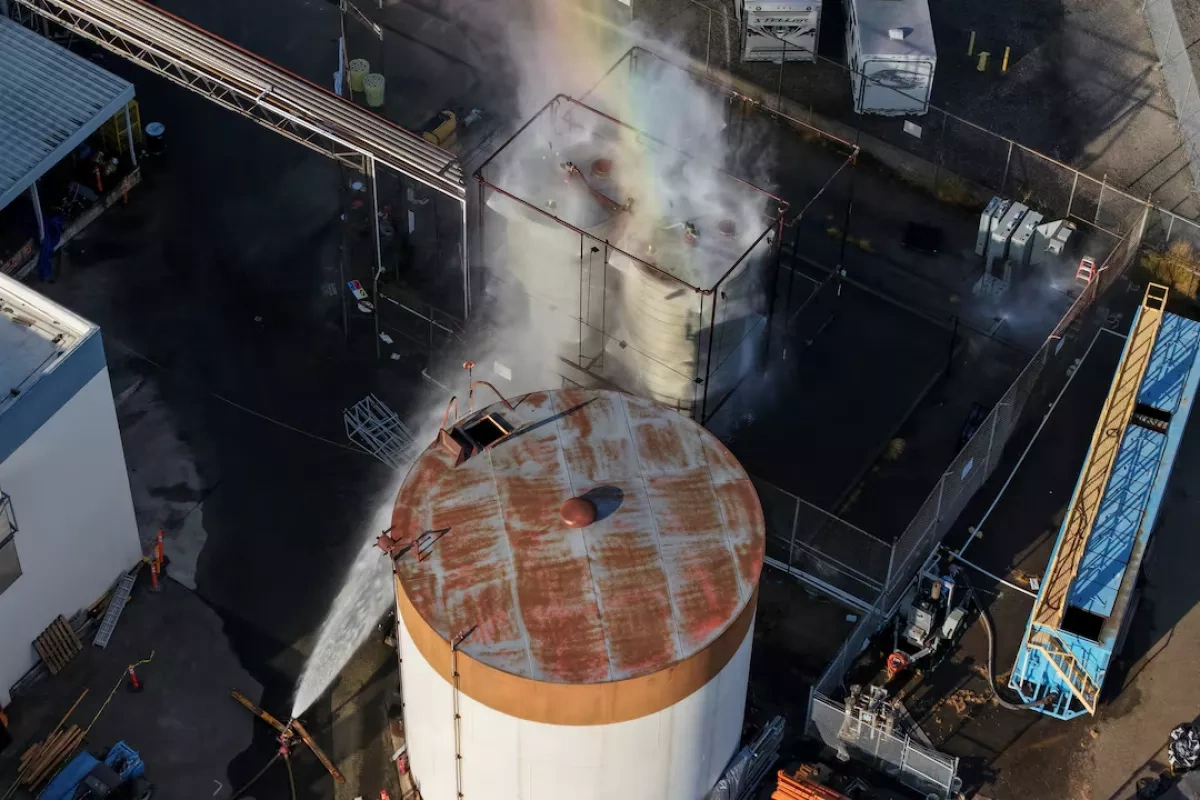
Firefighters worked to stabilise the situation by dousing the tank with water using a mechanical system designed to keep personnel at a safe distance. This effort helped control the temperature and was “buying us time,” said Craig Covey in a video posted on social media.
Covey had earlier outlined the severity of the threat, explaining that only two outcomes appeared possible: the tank could rupture and spill up to 7,000 gallons (26,500 litres) of hazardous chemicals, or it could explode, potentially triggering a chain reaction involving nearby tanks.
"I know I keep talking about we were handed this situation where there are only two things that can happen: it could crack and leak, or it could blow up. That's not acceptable to us," Covey said in a later video. "I have an entire team actively working locally, regionally, across the state, and across the country, to try to figure out how to fix this."
He added that his objective was to “get all these brilliant minds together to put a plan together, so that we don't let this blow up.”
According to the Orange County Register, the malfunctioning tank contained methyl methacrylate, a highly flammable and volatile chemical commonly used in plastics manufacturing at an aerospace facility.
The incident began on Thursday in Garden Grove, a city of around 172,000 people located about 30 miles (50 kilometres) south of Los Angeles. Authorities identified an increased risk of explosion on Friday after receiving updated information from the manufacturing company, said TJ McGovern.
Officials established three evacuation shelters—one in Garden Grove and others in the neighbouring cities of Anaheim and Cypress.
The evacuation zone included approximately 40,000 residents, according to Amir El-Farra, who said about 15% of those affected were refusing to comply with evacuation orders.
Health officials warned that if toxic vapour were released, prolonged exposure could cause severe respiratory problems. However, air quality monitoring had not detected any vapour as of Friday, said Regina Chinsio-Kwong.
"You are safe as long as you are out of the zone that was determined to be an evacuation zone," Chinsio-Kwong said.
By Tamilla Hasanova