BAKU, Azerbaijan, May 21. Achieving true
sustainable development remains structurally impossible without
establishing transparent waste management systems, localized
sorting protocols, scalable recycling infrastructure, and rigorous
data reporting mechanisms, Suleyman Aliyev, Director of Smart Waste
LLC, said, Trend
reports.
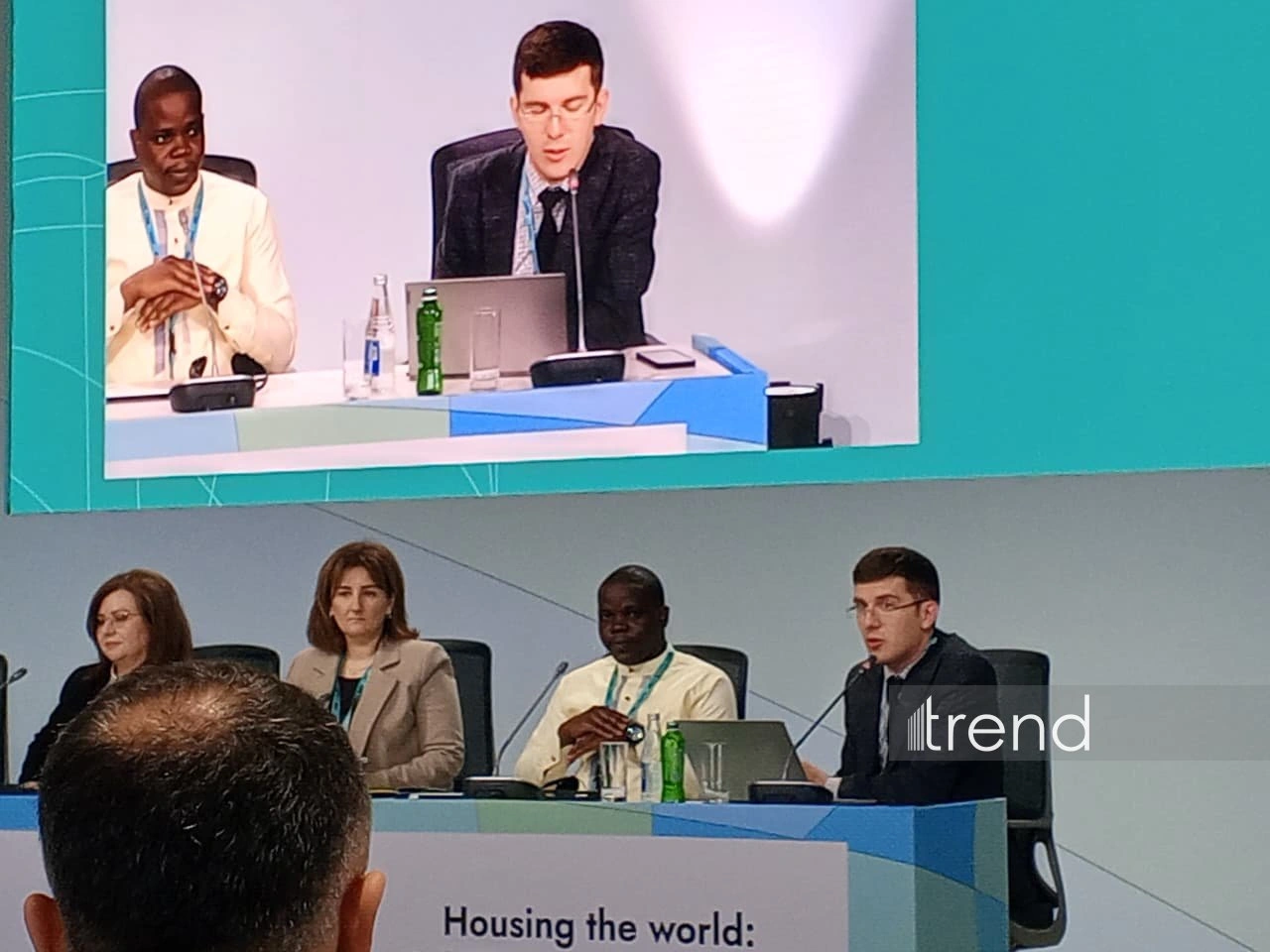
He made the remark during a panel discussion titled "Developing
Azerbaijan’s First National Sustainability Standard: The
Sustainable Practices Standard (SPS)" held within the framework of
the 13th session of the World Urban Forum (WUF13) in Baku.
According to him, solid waste outputs operate as one of the most
visible indicators of a society's sustainability footprint, meaning
that flawed municipal management patterns directly result in the
permanent loss of high-value recyclable materials.
Aliiyev noted that hotels, restaurants, commercial shopping
centers, public municipal spaces, and large-scale residential
complexes generate immense volumes of waste daily. However, when
these diverse material streams undergo premature mixing, the
technical feasibility of subsequent sorting and recycling drops
significantly. "The upcoming Sustainable Practices Standard (SPS)
must serve to transform positive environmental intentions into
highly measurable, daily operational workflows," he pointed
out.
According to the company director, modern waste management links
directly to broader municipal resilience, resource utilization
efficiency, public healthcare safeguards, and overarching state
climate policies.
Aliyev emphasized that the core structural challenge lies not
merely in the high volume of total waste generation, but in the
rapid degradation of material value caused by mixing recyclables
with organic refuse too early in the disposal chain.
To illustrate this, he cited ongoing corporate operations within
the hospitality sector, where the aggregate waste footprint
consists largely of organic food waste, polyethylene terephthalate
(PET) plastic bottles, glassware, cardboard packaging, and aluminum
cans. To successfully implement the parameters of the Sustainable
Practices Standard, he noted, commercial facilities require
distinct color-coded sorting containers, mandatory staff training
protocols, rigorous monthly compliance reporting, and verified
agreements with licensed collection and recycling enterprises.
"It remains absolutely critical that the entire waste management
ecosystem operates strictly on a licensed regulatory basis. We
anticipate that following the formal establishment of Azerbaijan's
new specialized waste management agency, these operational and
oversight issues will secure a comprehensive institutional
resolution," Aliyev highlighted.
Concluding his remarks, the corporate director underscored the
pressing commercial necessity of reducing single-use plastic
consumption, minimizing food production waste, and systematically
expanding industrial-scale organic composting practices.
Today marks the fifth day of WUF13 in Baku.
The first day included a ministerial meeting dedicated to the
New Urban Agenda, a ministerial roundtable, assemblies for women
and civil society, business sessions, and discussions on urban
prosperity. An official ceremony marking the raising of the UN and
Azerbaijani flags also took place.
The second day stood out for the inaugural Leaders' Summit,
featuring high-level discussions on the global housing crisis,
urbanization policy, and urban resilience. Concurrently, the
opening of the Mexico City pavilion took place, serving as a
significant platform for expanding cooperation with the Latin
American region and preparing for WUF14.
The third day of WUF13 featured a comprehensive program of
events covering the global housing crisis, the formation of safe
and inclusive cities, climate resilience, artificial intelligence
and urban governance, green urbanization, social equity, and
sustainable transport.
One of the highlights of the third day was the signing of a
sister-city memorandum between the Azerbaijani city of Shusha and
the Turkish city of Trabzon.
The fourth day of WUF13 featured a broad program of events
dedicated to urbanization, climate change, inclusive urban
development, housing policy, and sustainable governance.
One of the important events of the UN Special Program for the
Economies of Central Asia (SPECA) Cities Forum, held on the fourth
day, was the announcement of Almaty’s official accession to the
“Declaration of Intent on the Establishment of the SPECA Smart
Climate-Resilient Cities Forum.”
Also, for the first time in WUF history and at Azerbaijan’s
initiative, the “WUF13 NGO Forum: Global Partnership and
Decision-Making” was held.
WUF13, which has attracted more than 40,000 registered
participants from 182 countries, will continue until May 22. Held
under the theme “Housing the world: Safe and resilient cities and
communities,” the forum brings together governments, international
organizations, experts, and representatives of civil society to
strengthen global cooperation in the field of sustainable urban
development.