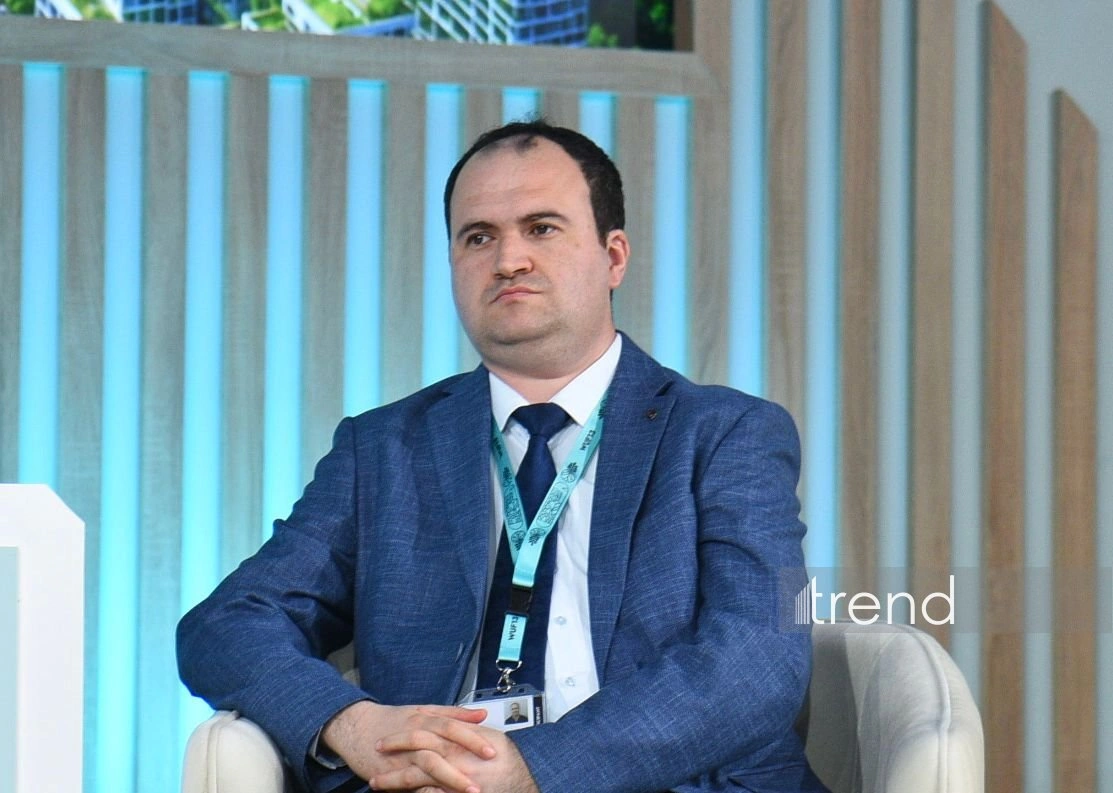
BAKU, Azerbaijan, May 20. Air pollution
monitoring is underway in the Caspian region as part of a joint
Azerbaijan-Uzbekistan pilot project, IDEA Campaign expert Elnur
Safarov said at an event "Breathing Life into the New Urban Agenda:
Integrating Air Quality and Green Infrastructure for Resilient
Cities" within the framework of the 13th session of the World Urban
Forum (WUF13) in Baku, Trend reports.
He noted that the direction of wind currents and regional
atmospheric circulation in the Caspian Sea region significantly
impact the spread of air pollution.
"In the study we conducted two years ago, we investigated not
only pollution, but also the processes taking place in the Caspian
Sea and the impact of wind currents on evaporation and sea level.
The studies showed that eastward wind currents are increasing,
replacing northward currents, that is, winds from Central Asia are
beginning to dominate the surface of the Caspian," he
explained.
Safarov pointed out that warm and dry air currents from Central
Asia increase evaporation on the surface of the Caspian Sea and, at
the same time, cause the transport of pollutants to the region.
"These air currents carry pollutants from areas such as
Tashkent, Kazakhstan, and Turkmenistan to Azerbaijan, including the
Absheron Peninsula, Baku, and Sumgayit," he stressed.
The expert also noted that the decrease in sea level in the
Northern Caspian basin and the transformation of drying areas into
sources of salty dust will create serious environmental risks in
the future.
"As a result of the decrease in water in the northern Caspian
region, salty dusty areas may form, and the wind will carry these
particles back to the region. This has already begun to be observed
and increases health problems, including allergic and asthmatic
diseases," he added.
According to Safarov, the use of modern technologies is
important for a more accurate assessment of the spread of air
pollution.
"We can no longer be satisfied with on-site measurements alone.
We need to more accurately model atmospheric processes with
satellite observations, artificial intelligence, machine learning,
and geographic information systems," he clarified.
The expert highlighted that Azerbaijani and Uzbek specialists
are working on a joint project.
"In our pilot project, measuring stations will be established in
Baku, Absheron, and Sumgayit. The Uzbek side will develop 72-hour
regional weather forecasting models. The goal is to more accurately
monitor the movement of pollutants from Central Asia across the
region," he emphasized.
In conclusion, Safarov noted that effective combat against air
pollution is impossible without regional cooperation and
scientifically based monitoring.
Today marks the fourth day of WUF13 in Baku.
The first day included a ministerial meeting dedicated to the
New Urban Agenda, a ministerial roundtable, assemblies for women
and civil society, business sessions, and discussions on urban
prosperity. An official ceremony marking the raising of the UN and
Azerbaijani flags also took place.
The second day stood out for the inaugural Leaders' Summit,
featuring high-level discussions on the global housing crisis,
urbanization policy, and urban resilience. Concurrently, the
opening of the Mexico City pavilion took place, serving as a
significant platform for expanding cooperation with the Latin
American region and preparing for WUF14.
The third day of WUF13 featured a comprehensive program of
events covering the global housing crisis, the formation of safe
and inclusive cities, climate resilience, artificial intelligence
and urban governance, green urbanization, social equity, and
sustainable transport.
WUF13, which has attracted more than 40,000 registered
participants from 182 countries, will continue until May 22. Held
under the theme “Housing the world: Safe and resilient cities and
communities,” the forum brings together governments, international
organizations, experts, and representatives of civil society to
strengthen global cooperation in the field of sustainable urban
development.