BAKU, Azerbaijan, May 20. It is necessary to
address the issue of expanding cultural heritage while involving
the local community in the process, the founder of the Library of
Alexandria, former World Bank vice president, and cultural expert,
Ismail Serageldin, said, Trend reports.
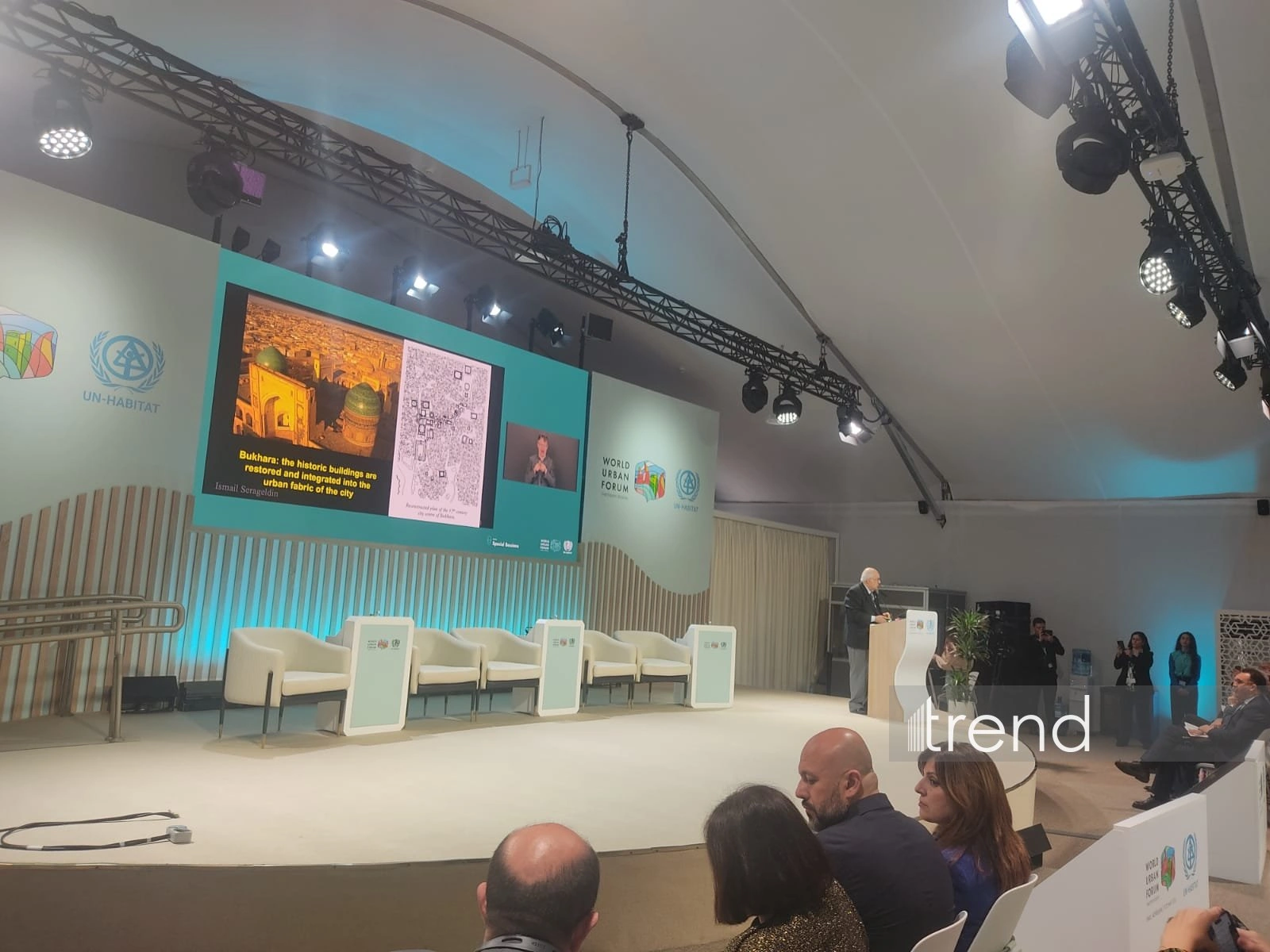
He made the statement at the event “Rethinking Cultural Heritage
and Inclusive Urban Regeneration,” organized as part of the 13th
session of the World Urban Forum in Baku, Trend reports.
According to him, when it comes to historic sites in developing
cities, four questions must first be answered:
“What should we preserve, how, for whom, and what are we
protecting? Historic sites, all buildings, or the character of the
city as a whole? Preservation must take into account future
residents, visiting tourists, and the international community.
Here, physical, economic, social, and environmental aspects must
be taken into account. Preserving the character of these elements
is very important. We must be able to do this while maintaining
interaction among people. We need to engage local communities and
private investors. It is important to minimize the displacement of
the local population.”
Cost-benefit analyses sometimes lead to mistakes in the field of
cultural heritage preservation. For example, an excessive focus on
revenue from tourism does not yield good results. Therefore, a
specific conceptual framework is necessary. It is essential to
address the issue of expanding cultural heritage while involving
the local community in the process. The integration of cultural
heritage is possible. It has made it possible to protect historic
cities.
Today, the fourth day of the WUF13 conference is taking place in
Baku.
The first day included a ministerial meeting dedicated to the
New Urban Agenda, a ministerial roundtable, assemblies for women
and civil society, business sessions, and discussions on urban
prosperity. An official ceremony marking the raising of the UN and
Azerbaijani flags also took place.
The second day stood out for the inaugural Leaders' Summit,
featuring high-level discussions on the global housing crisis,
urbanization policy, and urban resilience. Concurrently, the
opening of the Mexico City pavilion took place, serving as a
significant platform for expanding cooperation with the Latin
American region and preparing for WUF14.
The third day of WUF13 featured a comprehensive program of
events covering the global housing crisis, the formation of safe
and inclusive cities, climate resilience, artificial intelligence
and urban governance, green urbanization, social equity, and
sustainable transport.
WUF13, which has attracted more than 40,000 registered
participants from 182 countries, will continue until May 22. Held
under the theme “Housing the world: Safe and resilient cities and
communities,” the forum brings together governments, international
organizations, experts, and representatives of civil society to
strengthen global cooperation in the field of sustainable urban
development.