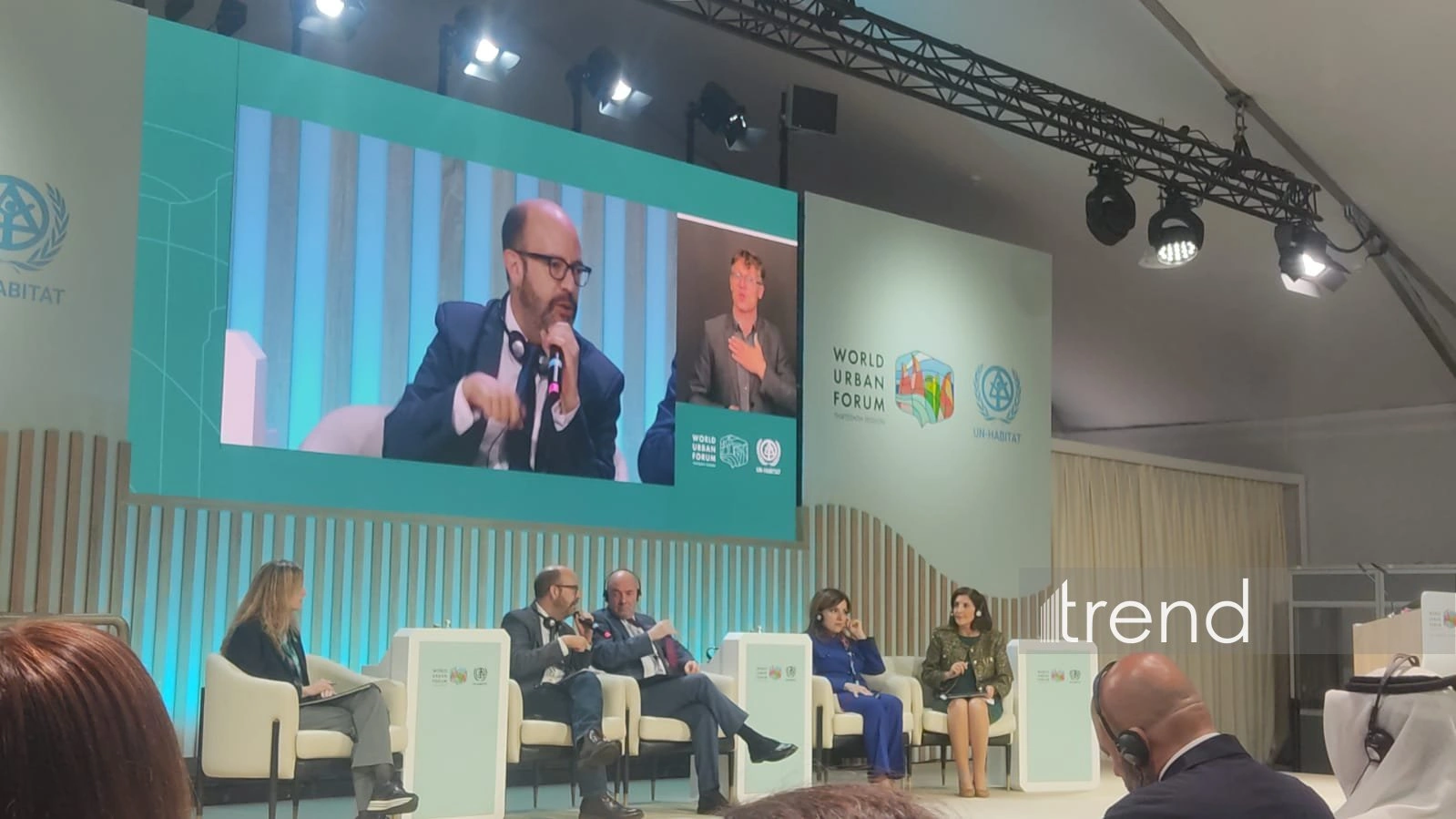
BAKU, Azerbaijan, May 20. A forum titled
"Rethinking Cultural Heritage and Inclusive Urban Regeneration"
took place within the framework of the 13th session of the World
Urban Forum (WUF13) in Baku, Trend reports.
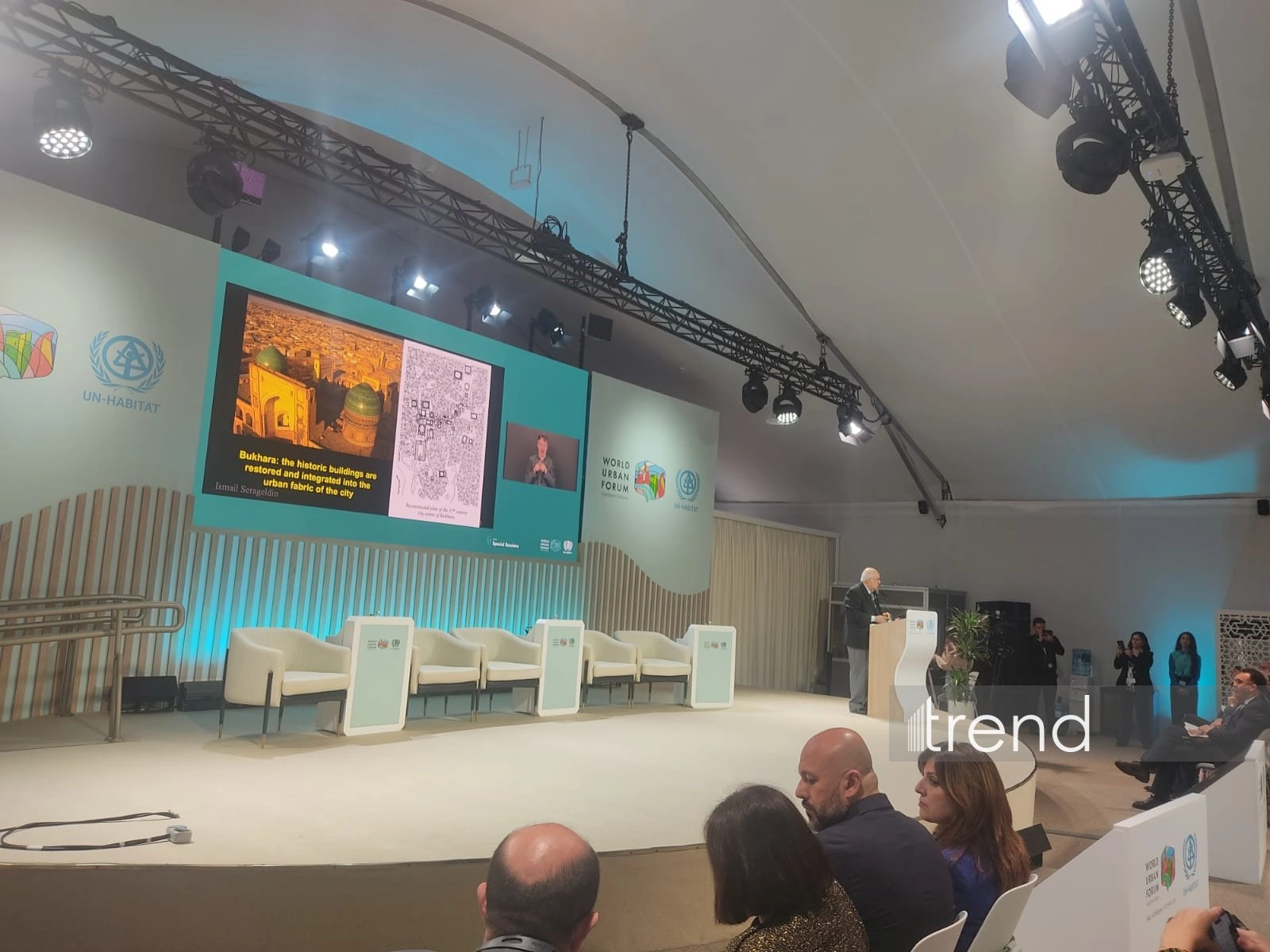
Speaking at the forum, Ismail Serageldin, cultural expert,
founder of the Bibliotheca Alexandrina, and former Vice President
of the World Bank, stated that when preserving historical sites in
developing cities, policymakers must answer the questions of "what,
how, and for whom are we preserving and conserving?" According to
him, the preservation process must encompass not only individual
buildings but the overall character of the city, taking social,
economic, environmental, and physical factors into account.
Concurrently, local community participation must undergo
guarantees, investments must be mobilized, and human displacement
minimized.
Adib Benbrahim, Secretary of State to the Minister of National
Territorial Planning, Urban Planning, Housing, and Urban Policy of
the Kingdom of Morocco, stated that identity must be preserved
during urban regeneration. He emphasized that if a building
undergoes demolition and reconstruction, this process requires
careful planning, with historical and social value factored in
comprehensively.
Inti Muñoz, Housing Minister of Mexico City, Mexico, noted that
urban regeneration must be carried out in a manner that maintains
social, cultural, and economic balance. In his view, this approach
prevents potential negative social consequences while
simultaneously strengthening the city's economic resilience.
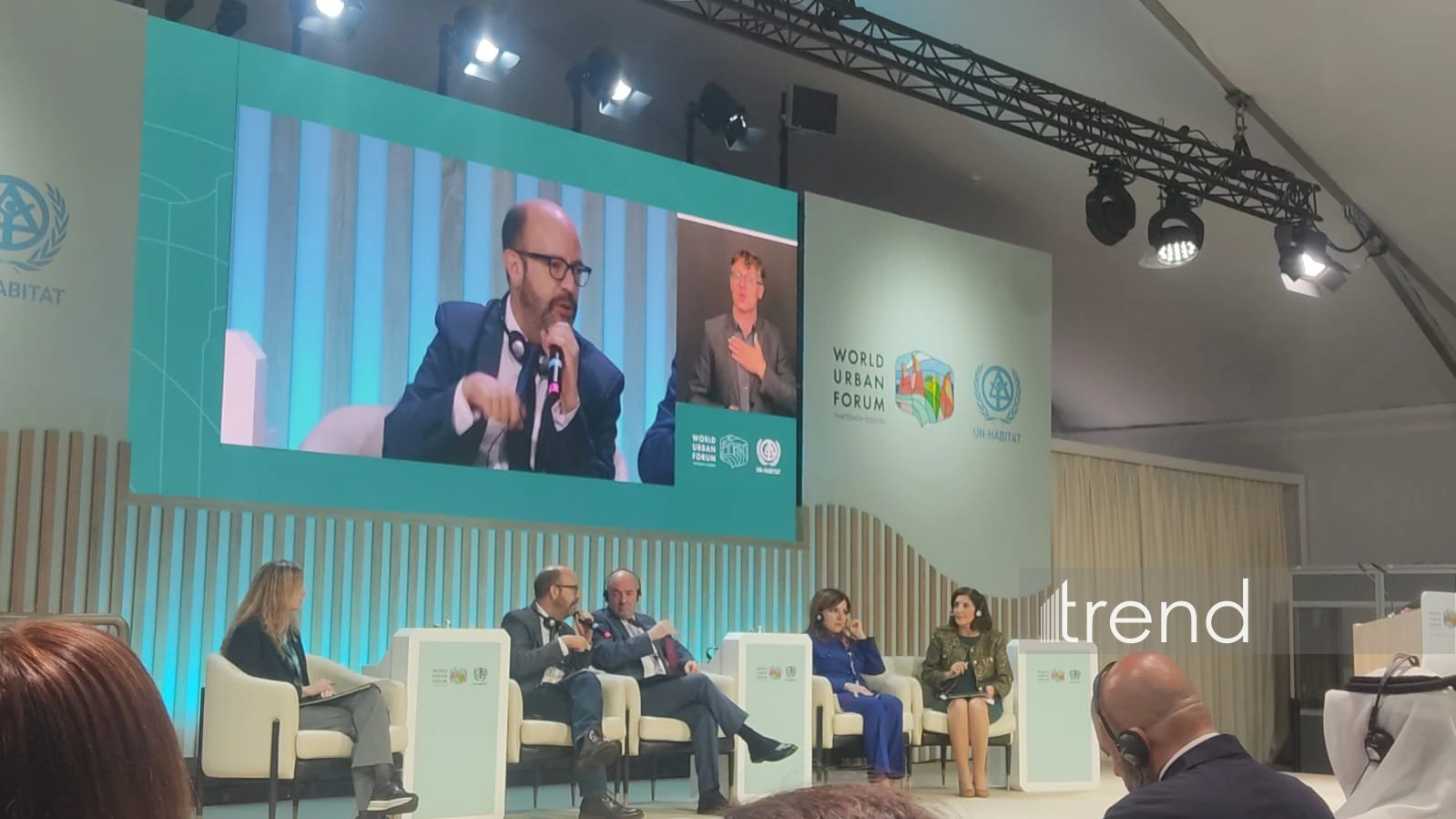
Elisabet Cirici, Director General for Territorial Planning,
Urbanism, and Architecture of the Government of Catalonia, Kingdom
of Spain, stated during her address that regeneration must not
limit itself to physical renewal, but must ground itself in
principles of social justice and inclusivity. She noted that social
issues must absolutely find their solutions within this process:
"Particularly, areas such as housing provision, employment, access
to public services, and the protection of vulnerable groups must
remain under the spotlight."
Anaclaudia Rossbach, Executive Director of the United Nations
Human Settlements Programme (UN-Habitat), remarked that protecting
cultural heritage means not only preserving the past but also
shaping the identity of future cities. "Cultural development
remains impossible without this component; concurrently,
sustainable development cannot fully materialize without the
preservation of cultural heritage," she noted.
Sabina Hajiyeva, Head of the State Service for Conservation,
Development, and Restoration of Cultural Heritage under the
Ministry of Culture of Azerbaijan, spoke on the experience of
Icherisheher (Old City). According to her, when discussing
regeneration, the conversation must center on protecting the
overall structure rather than an isolated building: "For example,
people continue to reside in Icherisheher today. Tremendous effort
went into its preservation. We do not view it solely as a tourist
zone; it simultaneously reflects living history."
Today marks the fourth day of WUF13 in Baku.
The first day included a ministerial meeting dedicated to the
New Urban Agenda, a ministerial roundtable, assemblies for women
and civil society, business sessions, and discussions on urban
prosperity. An official ceremony marking the raising of the UN and
Azerbaijani flags also took place.
The second day stood out for the inaugural Leaders' Summit,
featuring high-level discussions on the global housing crisis,
urbanization policy, and urban resilience. Concurrently, the
opening of the Mexico City pavilion took place, serving as a
significant platform for expanding cooperation with the Latin
American region and preparing for WUF14.
The third day of WUF13 featured a comprehensive program of
events covering the global housing crisis, the formation of safe
and inclusive cities, climate resilience, artificial intelligence
and urban governance, green urbanization, social equity, and
sustainable transport.
WUF13, which has attracted more than 40,000 registered
participants from 182 countries, will continue until May 22. Held
under the theme “Housing the world: Safe and resilient cities and
communities,” the forum brings together governments, international
organizations, experts, and representatives of civil society to
strengthen global cooperation in the field of sustainable urban
development.