BAKU, Azerbaijan, May 20. One of the largest
urban planning reforms is being implemented in Uzbekistan as the
country shifts away from a highly centralized planning system
toward a more coordinated model of urban management, said Muhammad
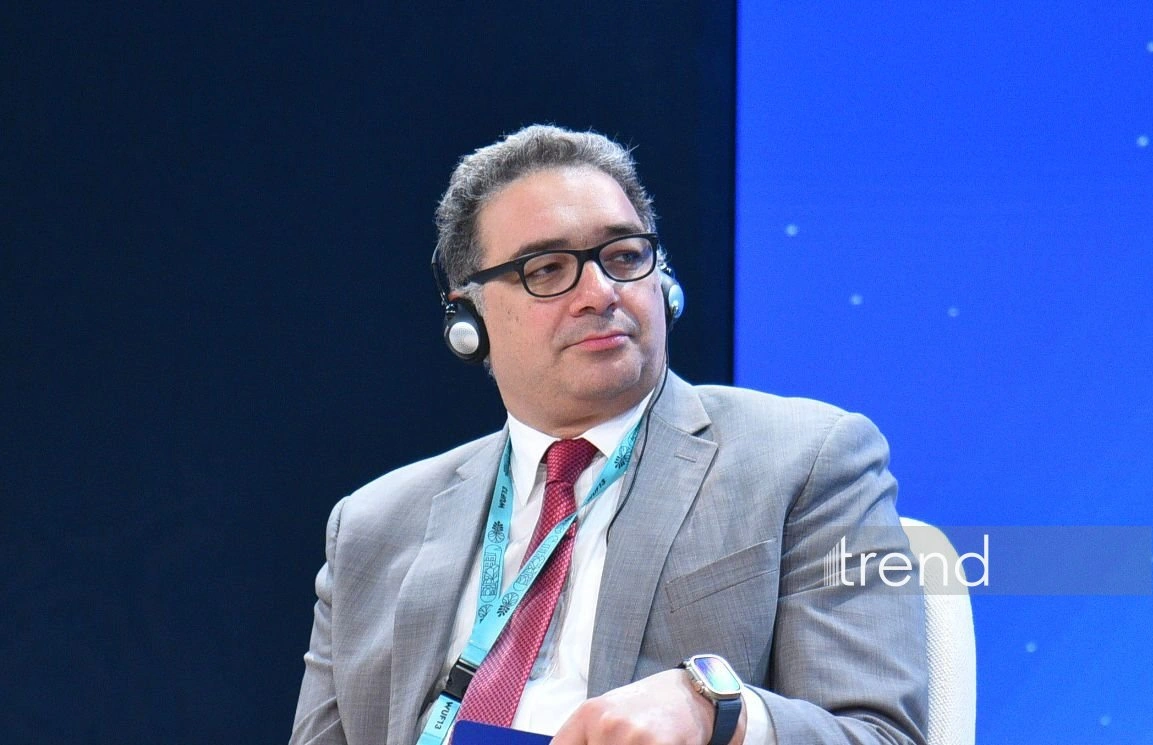
Nader, the World Bank Representative for Uzbekistan, Trend reports.
According to Muhammad Nader, Uzbekistan is addressing
long-standing gaps between spatial planning and economic investment
planning.
Speaking at a panel titled “Two Regions, One Agenda: Lessons on
Inclusive Urban Renewal” during the World Urban Forum (WUF13) in
Baku, he says that planning institutions in the past operated
separately, creating coordination challenges.
“For a long time there is a serious discrepancy between spatial
planning and economic and investment plans,” he says. “The
institutions preparing spatial plans are different from those
preparing economic plans and capital investment programs.”
Nader says Uzbekistan now implements a large-scale reform
program aimed at integrating these systems.
Planning now takes place simultaneously at national, regional,
and district levels, he says. A national plan is in place, regional
plans are being rolled out, and district-level plans are under
development in 35 of 208 districts, with 17 more expected next
year.
He says alignment between national, regional, and district-level
planning documents is a key priority of the reform process.
Nader also highlights the creation of a national spatial data
system as a major component of the reforms.
“A national spatial information infrastructure is being
created,” he says. “The goal is to integrate data from all state
institutions into a single geo-platform to improve investment
decision-making.”
He adds that the pace of reforms in Uzbekistan is unusually fast
compared to other countries.
“In many countries I advise governments to move faster,” he
says. “But in Uzbekistan, sometimes I ask them to slow down,
because the pace is incredibly high.”
In the mean time, today marks the fourth day of WUF13 in
Baku.
The first day included a ministerial meeting dedicated to the
New Urban Agenda, a ministerial roundtable, assemblies for women
and civil society, business sessions, and discussions on urban
prosperity. An official ceremony marking the raising of the UN and
Azerbaijani flags also took place.
The second day stood out for the inaugural Leaders' Summit,
featuring high-level discussions on the global housing crisis,
urbanization policy, and urban resilience. Concurrently, the
opening of the Mexico City pavilion took place, serving as a
significant platform for expanding cooperation with the Latin
American region and preparing for WUF14.
The third day of WUF13 featured a comprehensive program of
events covering the global housing crisis, the formation of safe
and inclusive cities, climate resilience, artificial intelligence
and urban governance, green urbanization, social equity, and
sustainable transport.
WUF13, which has attracted more than 40,000 registered
participants from 182 countries, will continue until May 22. Held
under the theme “Housing the world: Safe and resilient cities and
communities,” the forum brings together governments, international
organizations, experts, and representatives of civil society to
strengthen global cooperation in the field of sustainable urban
development.