BAKU, Azerbaijan, May 19. Urban reconstruction
must be based on the application of human-centered planning
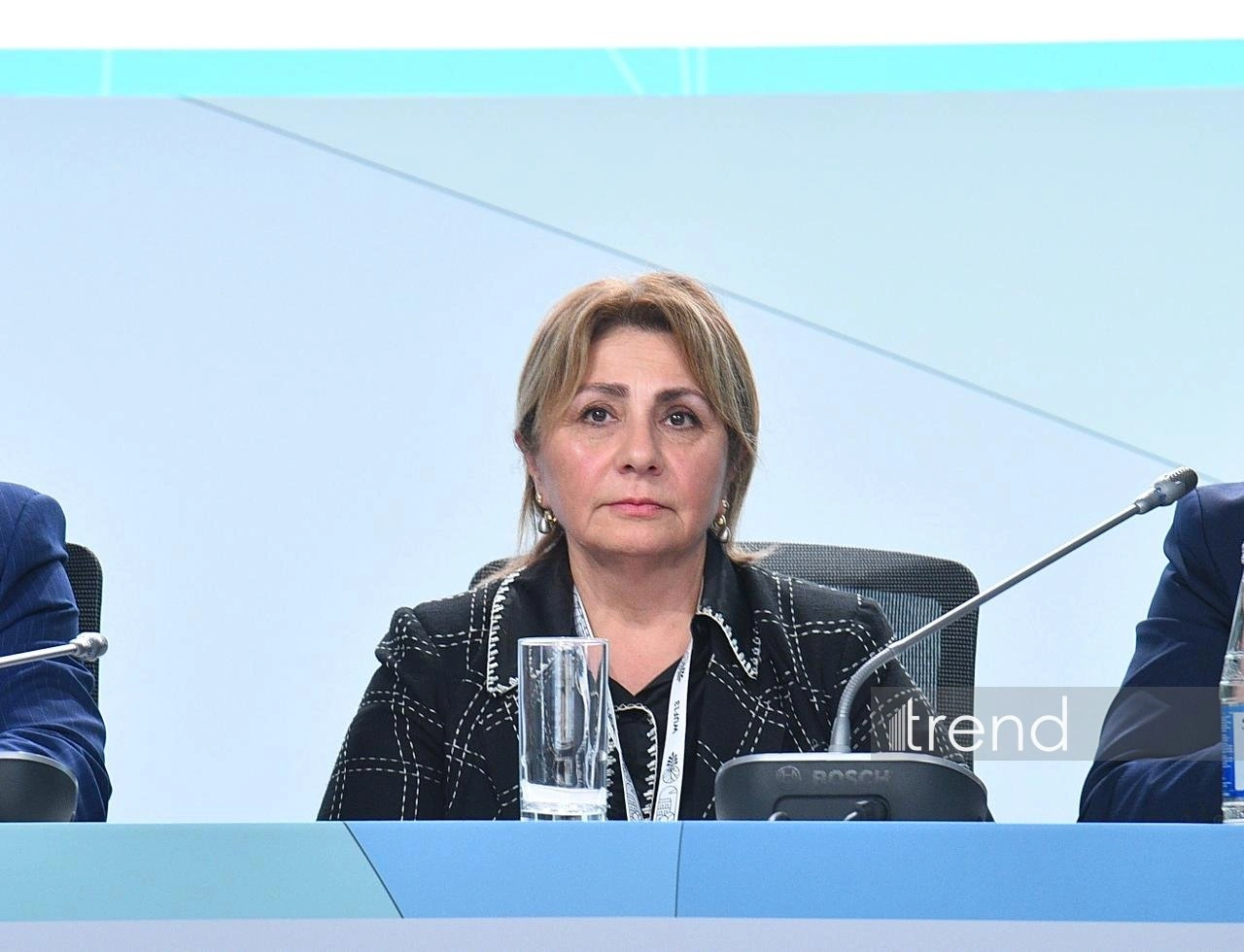
principles that go beyond basic infrastructure development, Gulshan
Rzayeva, Deputy Head of the Administration of the State Committee
for Urban Planning and Architecture, said at an event on
peace-centered climate action held within the framework of WUF13,
Trend reports.
According to Rzayeva, the process of rebuilding cities almost
from scratch requires a comprehensive approach where accessibility
and spatial planning form the core components.
"As the State Committee for Urban Planning and Architecture, we
view all initiatives primarily as vital steps serving the
development of cities, as well as the consolidation of peace and
stability in the regions where they are located," she noted.
In this regard, she highlighted the special significance of the
initiative presented today, noting that its foundation was laid and
introduced during the COP29 summit.
The Deputy Head of the Administration emphasized that the
primary goal of the initiative is to provide support to countries
affected by conflict or undergoing recovery processes.
"These countries are not only going through reconstruction and
construction phases, but they also require the development of urban
finance, the attraction of investments, and the assurance of
community development within the urban environment," Rzayeva
explained.
She stated that the initiative’s inclusive approach serves on
one hand to showcase Azerbaijan's model, and on the other hand, to
attract and mobilize financial resources for projects aimed at
resolving these issues. At the same time, the application of
standards and quality assurance mechanisms is envisioned to ensure
that the projects align with the requirements of international
financial institutions.
Rzayeva added that the State Committee for Urban Planning and
Architecture is proud to participate in developing unique
initiatives that serve the interests of both the Azerbaijani people
and the global community, in close cooperation with other state
bodies, particularly the Ministry of Foreign Affairs.
"I believe that along with the initiative itself, the
requirements and standards to be developed under its framework will
be formed together with partners and contribute to solving the
development problems of the global community. Most importantly, it
is about creating international platforms that cities can turn to
in the future and utilize to solve their problems. I believe that
this initiative, put forward at COP29 and presented at WUF13, will
be further developed and promoted on other international platforms
in the future," she said.
The third day of the 13th session of the World Urban Forum
(WUF13) is underway in Baku.
On the first day, a ministerial meeting dedicated to the New
Urban Agenda, a roundtable of ministers, assemblies of women and
civil society, business sessions, and discussions on urban
well-being were held. A ceremony for raising the flags of the
United Nations and Azerbaijan also took place within the framework
of the forum.
The second day of the forum drew attention with the first-ever
Leaders Summit. High-level discussions on the global housing
crisis, urbanization policy, and urban resilience were held that
day. At the same time, the Mexico City pavilion was inaugurated
within the framework of WUF13. The pavilion was presented as an
important platform for expanding cooperation with the Latin
American region and preparing for WUF14.
WUF13, which has attracted more than 40,000 registered
participants from 182 countries, will continue until May 22. Held
under the theme “Housing the world: Safe and resilient cities and
communities,” the forum brings together governments, international
organizations, experts, and representatives of civil society to
strengthen global cooperation in the field of sustainable urban
development.