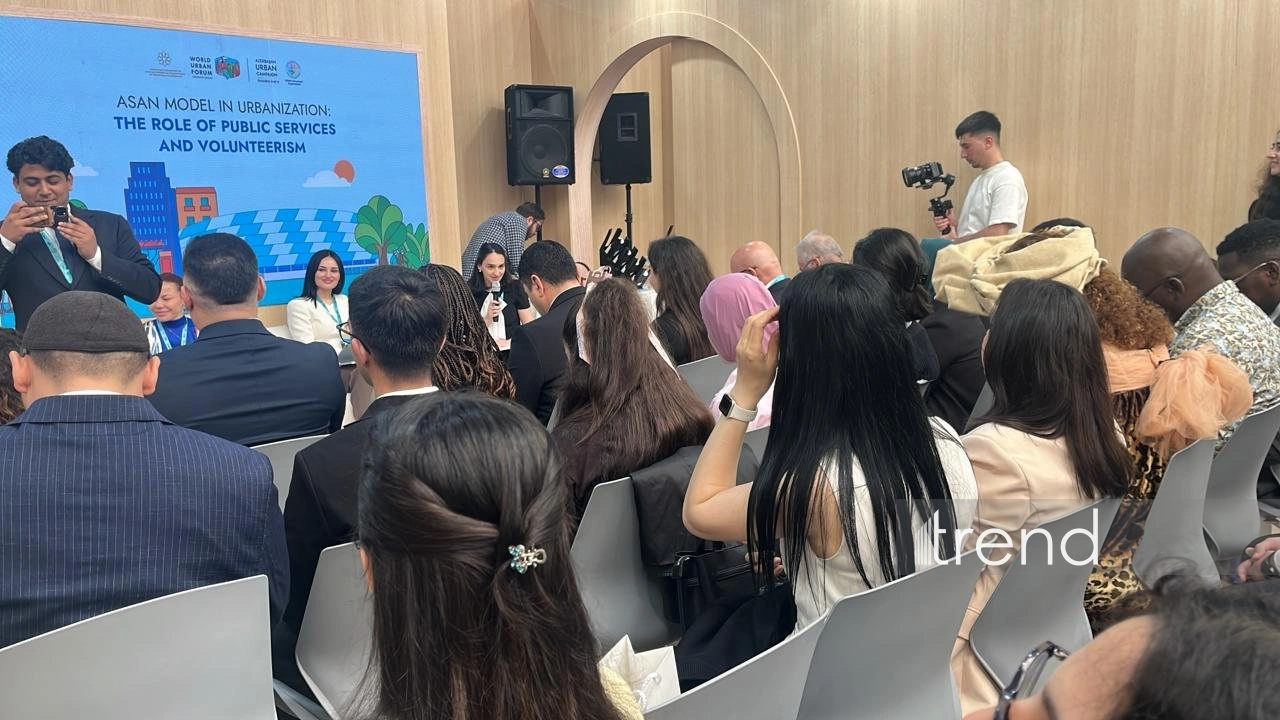
BAKU, Azerbaijan, May 19. Azerbaijan’s “ASAN
Application” Information System and mobile app serve as a key link
between citizens and government institutions, processing public
requests across a wide range of service areas, said Asli Ibrahimli,
head of the ASAN Application Information System, Trend reports.
Speaking at a panel titled “ASAN Model in Urbanization: The Role
of Public Services and Volunteerism,” held at the pavilion of the
ASAN Volunteers Organization State Support Agency during the 13th
session of the World Urban Forum 13, she outlined the platform’s
scope and function.
She said the system handles requests related to transportation
and road issues, environmental concerns, public safety, utilities,
and infrastructure challenges.
“In general, the ASAN Application Information System accepts
requests across 164 different categories,” Ibrahimli said.
According to her, submissions are reviewed by the ASAN team and
then forwarded to relevant state agencies for action. She added
that nearly 100 government institutions currently participate in
the system.
Ibrahimli also said the platform not only helps resolve public
issues but also promotes greater citizen engagement in urban
governance.
World Urban Forum 13 is being held in Baku from May 17–22 in
cooperation with UN-Habitat and the Government of Azerbaijan. The
forum brings together policymakers, experts, civil society
representatives and international partners to discuss sustainable
urban development under the theme “Housing for All: Safe and
Sustainable Cities and Human Settlements.”
The third day of the 13th session of the World Urban Forum
(WUF13) is underway in Baku.
On the first day, a ministerial meeting dedicated to the New
Urban Agenda, a roundtable of ministers, assemblies of women and
civil society, business sessions, and discussions on urban
well-being were held. A ceremony for raising the flags of the
United Nations and Azerbaijan also took place within the framework
of the forum.
The second day of the forum drew attention with the first-ever
Leaders Summit. High-level discussions on the global housing
crisis, urbanization policy, and urban resilience were held that
day. At the same time, the Mexico City pavilion was inaugurated
within the framework of WUF13. The pavilion was presented as an
important platform for expanding cooperation with the Latin
American region and preparing for WUF14.
WUF13, which has attracted more than 40,000 registered
participants from 182 countries, will continue until May 22. Held
under the theme “Housing the world: Safe and resilient cities and
communities,” the forum brings together governments, international
organizations, experts, and representatives of civil society to
strengthen global cooperation in the field of sustainable urban
development.