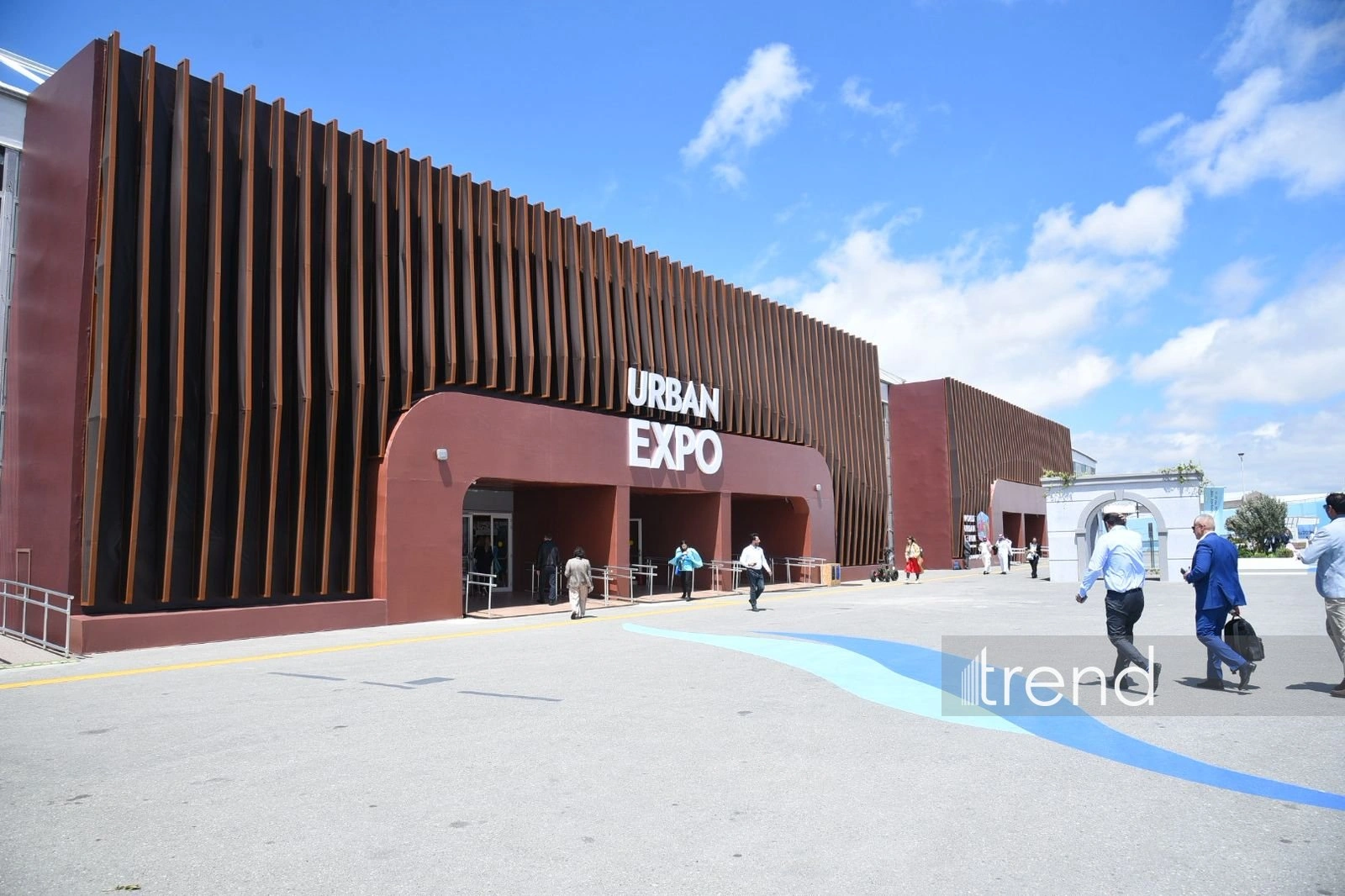
BAKU, Azerbaijan, May 19. The third day of the
13th session of the World Urban Forum (WUF13) is underway in Baku,
Trend
reports.
Broad discussions on housing provision, sustainable urban
development, urbanization, climate change, and digital solutions
for cities are continuing today within the framework of the forum
jointly organized by the United Nations Human Settlements Programme
(UN-Habitat) and the Government of Azerbaijan.
The program of the forum’s third day is mainly dedicated to the
global housing crisis, the development of safe and inclusive
cities, climate resilience, and innovative urbanization models. One
of the key sessions of the day will be a dialogue titled “The
Global Housing Crisis: What Is the Plan?”. The session will address
issues related to housing affordability, social equality, and
improving living conditions in cities.
In addition, topics such as “The Social and Economic Power of
Housing,” “Artificial Intelligence for Cities,” “From Data to
Decisions: Artificial Intelligence, Spatial Analysis and Housing
for All,” “Climate-Resilient Cities and Communities,” and “Urban
Planning as Climate Action” are in the spotlight at the forum.
Experts and representatives of international organizations
particularly emphasize the role of digital technologies,
data-driven governance, and green solutions in the future
development of cities.
During the third day, sessions will also be held on important
topics such as “Housing for All,” “Safe and Sustainable Living
Environments for Women’s Empowerment,” “Inclusive Cities for
Persons with Disabilities,” “The Role of Youth in Urban
Governance,” “Channeling Climate Finance into Cities,” “Sustainable
and Accessible Transport,” and “Rebuilding War-Affected
Cities.”
A special place in the forum’s agenda is devoted to the link
between urbanization and climate action. Topics such as
“Heat-Resilient Cities,” “Nature-Based Solutions,” “Green and
Sustainable Living,” “Water Resource Management,” and “Energy
Justice in Cities” highlight the relationship between urbanization
and environmental sustainability.
Today’s agenda also includes the presentation of the “World
Cities Report 2026,” high-level meetings on the African region and
other international platforms, as well as special sessions
dedicated to urban development and housing policy.
Within the framework of WUF13, international participants are
also being presented with reconstruction projects implemented in
Azerbaijan’s liberated territories, along with the concepts of
“smart city,” “smart village,” and “green energy zone.” The
projects being carried out in Karabakh and Eastern Zangezur are
attracting attention as examples of sustainable urbanization.
The first two days of the forum were also marked by an extensive
program of events. On the first day, a ministerial meeting
dedicated to the New Urban Agenda, a roundtable of ministers,
assemblies of women and civil society, business sessions, and
discussions on urban well-being were held. A ceremony for raising
the flags of the United Nations and Azerbaijan also took place
within the framework of the forum.
The second day of the forum drew attention with the first-ever
Leaders Summit. High-level discussions on the global housing
crisis, urbanization policy, and urban resilience were held that
day. At the same time, the Mexico City pavilion was inaugurated
within the framework of WUF13. The pavilion was presented as an
important platform for expanding cooperation with the Latin
American region and preparing for WUF14.
WUF13, which has attracted more than 40,000 registered
participants from 182 countries, will continue until May 22. Held
under the theme “Housing the world: Safe and resilient cities and
communities,” the forum brings together governments, international
organizations, experts, and representatives of civil society to
strengthen global cooperation in the field of sustainable urban
development.