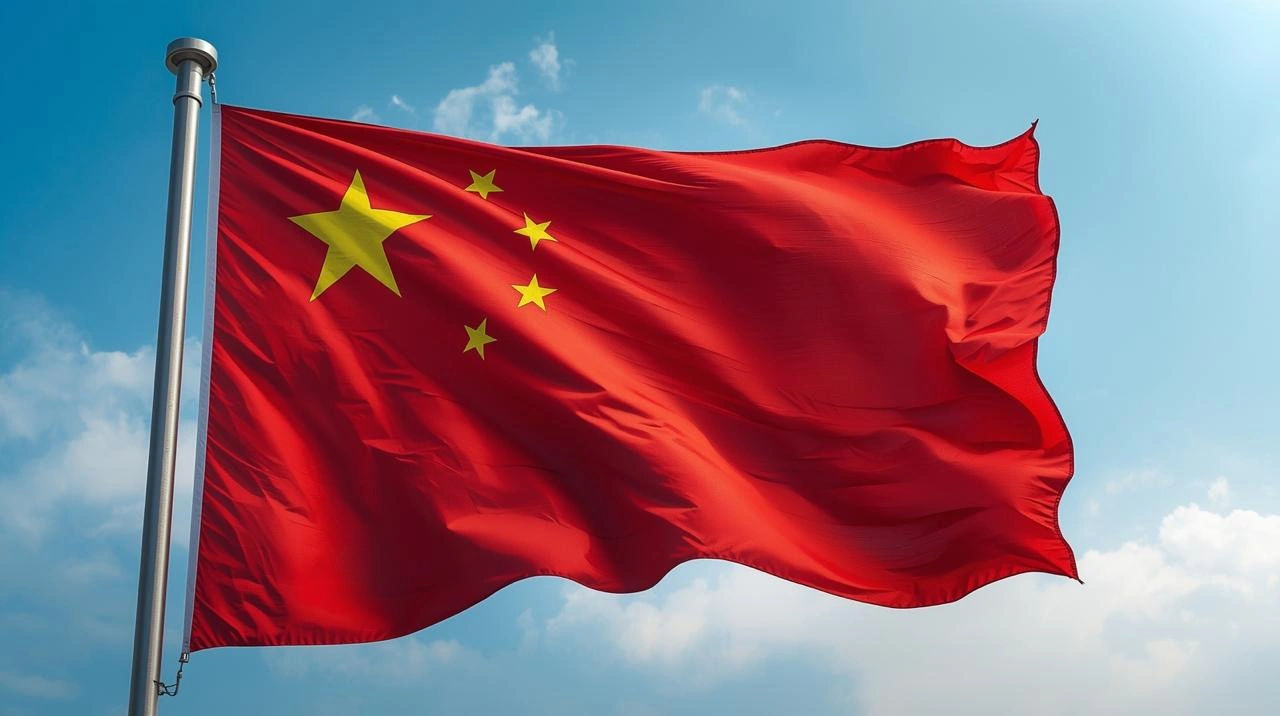
BAKU, Azerbaijan, April 15. Chinese exports in
the first quarter of 2026 grew by 11.9% to 6.9 trillion yuan
($977.6 billion), despite U.S. tariffs and the crisis in the Middle
East.
While Washington tries to raise trade barriers, official data
from the General Administration of Customs of the PRC for the first
quarter of 2026 shows that Beijing no longer needs its former
dependence on the West.
Beijing's geopolitical strategy is quite simple: replace falling
trade volumes with the U.S. with explosive growth in ASEAN and
African countries. Statistics are breaking records, as trade with
ASEAN grew by 15.4%, and with Africa by 23.7%. The share of "Belt
and Road" initiative countries in China's total foreign trade
turnover reached a historic 51.2%.
China is not just compensating for losses; it is redirecting
commodity flows to where demand for its infrastructure and
technological solutions is growing at double-digit rates.
Technology has become the main tool of defense against tariff
wars. China is betting on high-value-added goods that are extremely
difficult to replace with anything else. Exports of integrated
circuits jumped by 66.6%. Demand amid global involvement in
artificial intelligence allows Beijing to dictate terms despite
export controls by the U.S. The share of exports of electric
vehicles, lithium-ion batteries, and solar panels also increased by
53.3%.
China is effectively monopolizing global green energy supply
chains. Even considering the conflict in the Middle East, which
provoked an energy shock, Chinese industrial exports remain
resilient as the world continues to depend on their production
capacities. Within the framework of the 15th Five-Year Plan, the
world's inclination toward high-tech industry will become even
deeper, making the PRC economy less susceptible to external
sanctions.
The situation balances on the brink of two scenarios. In the
case of an optimistic development of events, the growth of the
Chinese presence in ASEAN and Africa will persist, and
technological exports based on AI and green energy will continue to
grow at rates of 50–70% in individual segments. In this case, China
will maintain double-digit export rates even under U.S. pressure.
China, thus, successfully completes its structural reorganization,
finally establishing itself in the role of a technological hub for
developing economies. The growth of exports to the countries of the
"Belt and Road" initiative covers any losses from trade wars with
the West, and technological leadership in the field of AI and green
energy forces even critics to maintain trade ties with Beijing.
The pessimistic scenario shows that the geopolitical pressure of
the West on the countries of the Global South is intensifying,
forcing them to choose a side. A slowdown in the global economy and
instability in developing regions could reduce the compensating
effect, and trade restrictions will strengthen market
fragmentation. Then export growth may fall into the 3–5% range with
increased volatility.
Data for the first quarter of 2026 so far speaks in favor of the
first scenario. But the March slowdown serves as a reminder that
geopolitics can still strike. Chinese trade is becoming less
West-centric and more technological, but its stability now
increasingly depends not on one market, but on the balance of
several rapidly changing regions at once.