ASHGABAT, Turkmenistan, April 14. The United
Nations Development Programme (UNDP), jointly with the Ministry of
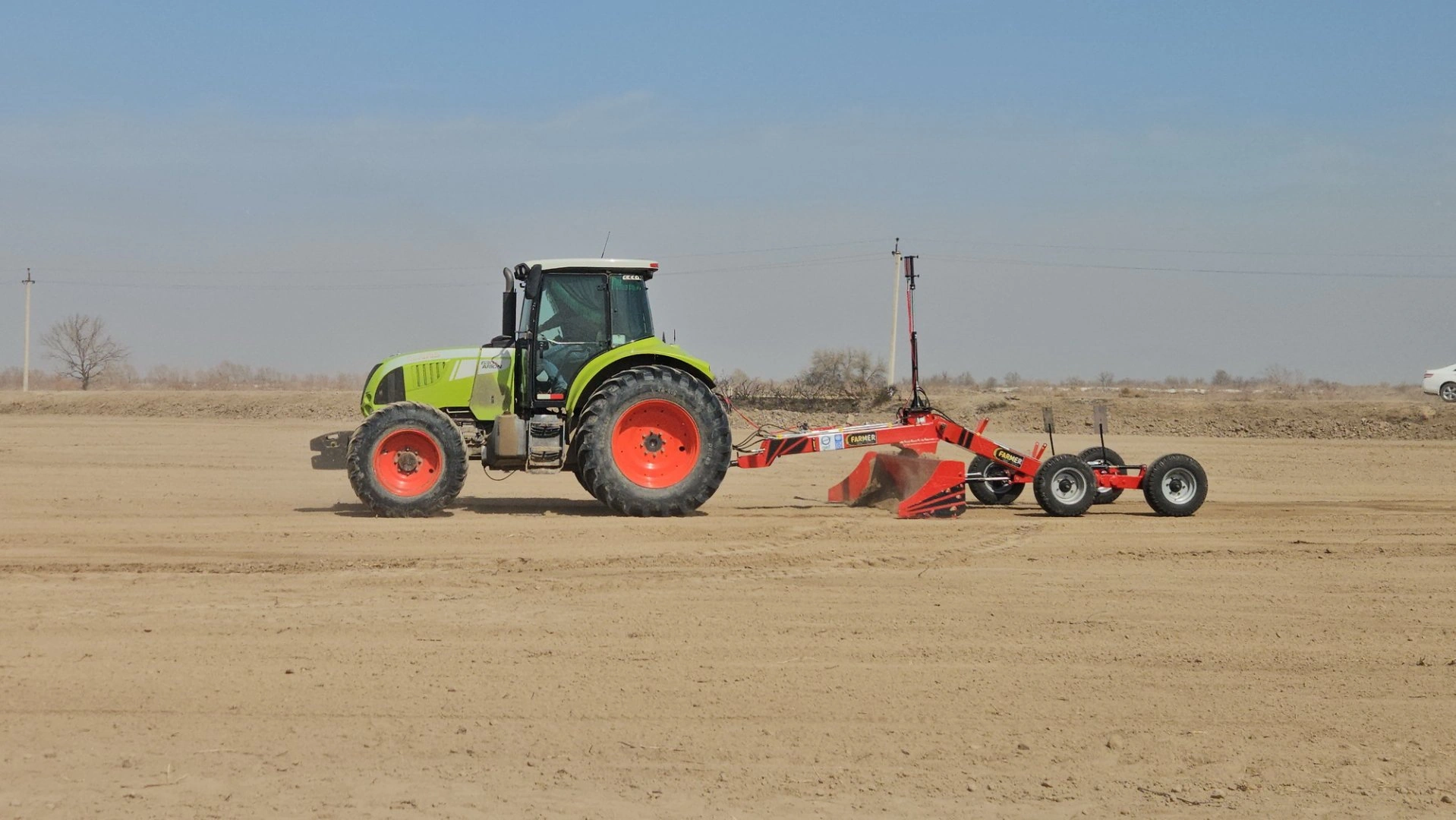
Environmental Protection of Turkmenistan, has handed over
specialized laser land leveling equipment to local authorities and
agricultural entities, Trend reports via UNDP.
The equipment was delivered to the Hakimlik (municipal
administration) of Saparmurat Turkmenbashi District in Dashoguz
province and the “Obahyzmat” production association in Darganata
District of Lebap province under a project supported by the Global
Environment Facility (GEF). It will be used on pilot plots, with
plans to scale up the technology among local farmers.
The initiative also includes training for stakeholders and
farmers to ensure effective use of the technology, which enables
precise land leveling, improves irrigation efficiency, prevents
waterlogging and soil salinization.
The equipment transfer is part of broader efforts to combat land
degradation, restore ecosystems, and promote sustainable land and
water management in the areas, which are most affected by the Aral
Sea crisis.
The Aral Sea, located between Kazakhstan and Uzbekistan in
Central Asia, was once one of the largest inland water bodies in
the world. Since the 1960s, massive irrigation projects diverted
the rivers feeding it, causing the sea to shrink dramatically and
lose over 90% of its volume. This led to widespread environmental
damage, including desertification, salt storms, and severe
ecosystem degradation across the region.
Turkmenistan, particularly its northern Dashoguz region, is
directly affected by these consequences through soil salinization,
water scarcity, and declining agricultural productivity. To address
these challenges, the country has received support from
international partners such as the United Nations Development
Programme (UNDP), the Global Environment Facility (GEF), and the
International Fund for Saving the Aral Sea (IFAS), which finance
projects aimed at restoring degraded land, improving water
management, and strengthening climate resilience.