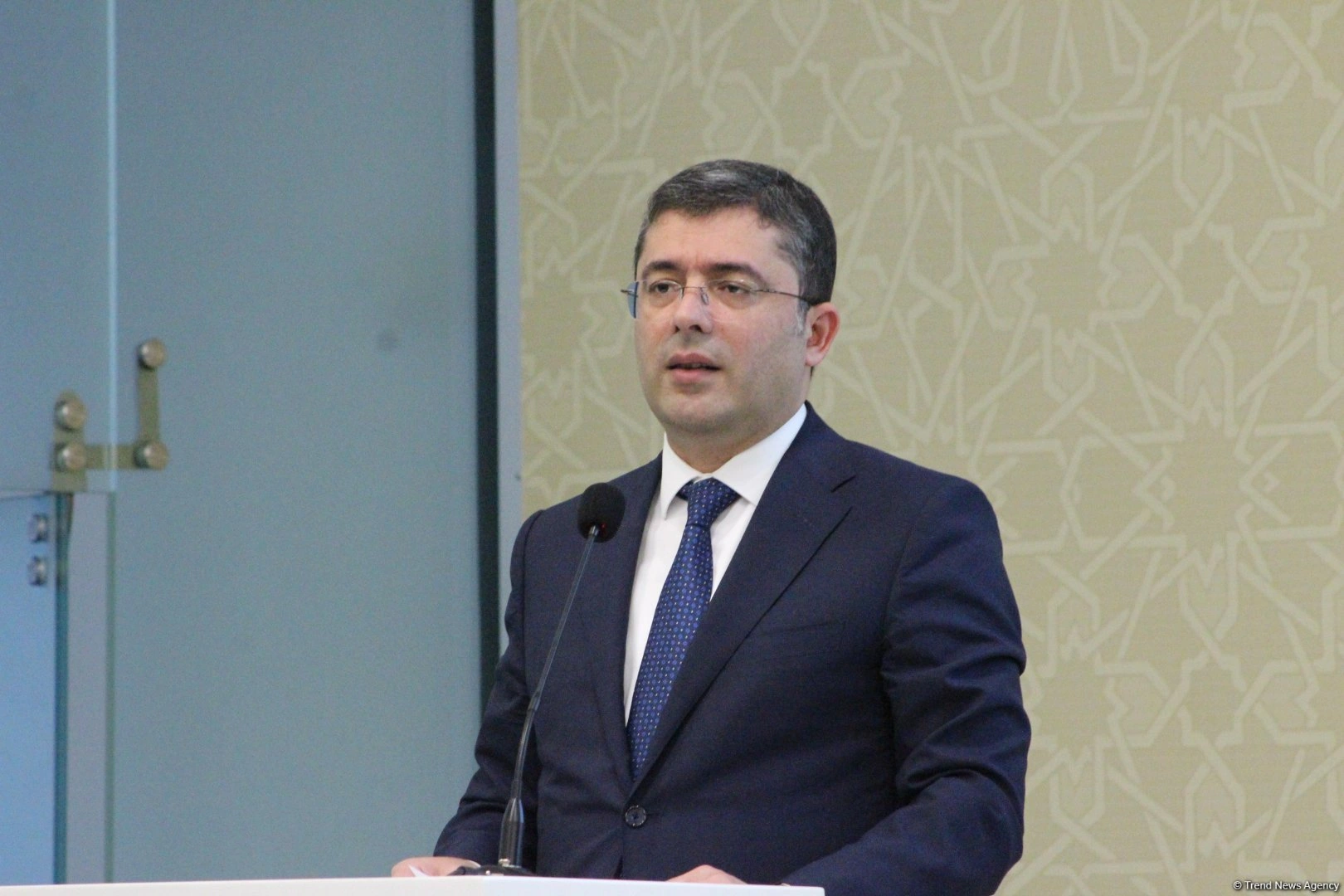
BAKU, Azerbaijan, December 22. Media literacy
is a shared responsibility of both professional journalists and the
audience, Executive Director of the Media Development Agency Ahmad
Ismayilov said at the "Digitalization, Artificial Intelligence and
Media Literacy" conference today, Trend reports.
"For four years now, organizing systematic, consistent, and
united activities around the topic of media literacy in the last
days of the year has become an important tradition in our country.
In an era when digitalization is rapidly deepening, and the scale
of information production and consumption is significantly
increasing, the concept of media literacy, which incorporates the
principles of security, responsibility, and reliability, is of
particular relevance," he explained.
He noted that this approach not only holds value for
participants in the information sector but also shapes an important
value system and behavior model for society as a whole.
"In the modern information environment, where data reaches wide
audiences within seconds in real time, we are also celebrating the
150th anniversary of Azerbaijan's national press this year. Based
on President Ilham Aliyev's relevant decree, marking this
anniversary widely is of great importance in analyzing the
historical role of the national press, its position in shaping
public opinion, and its role in preserving and developing
enlightenment traditions and state-building ideologies.
This anniversary also provides a valuable opportunity to reflect
on the development path of the national press, which began with the
'Ekinchi' newspaper, and to define new tasks for the media in the
context of global information challenges. The rich historical
heritage of the national press requires greater responsibility in
modern times," the official also said.
Ismayilov emphasized that the rapid expansion of the digital
media environment, the growing speed of information exchange often
surpassing accuracy standards, and the increasing influence of
social media platforms on public opinion, make information exchange
a collective responsibility.
"In this context, ensuring the accuracy, objectivity, and public
benefit of information, regardless of its source, has become a
priority. Given the current global information threats and new
realities, safeguarding our country’s information environment and
ensuring citizens’ access to reliable, accurate, and objective
information is of particular importance.
The media's responsibility to provide the public with
significant and reliable information, along with efforts to
increase media literacy, creates mutually reinforcing mechanisms.
Especially with the rapid development of artificial intelligence
technologies, protecting a healthy information environment,
adhering to ethical standards, and promoting accurate information
are of strategic importance," Ismayilov announced.
He emphasized that the strengthening of media literacy should be
viewed not only as a responsibility of professional journalists but
also as a shared duty of the broader audience that consumes
information. The capacity to critically analyze and assess the
source and intent of information is a fundamental component in
fostering societal resilience.
"In the face of significant global challenges, combating
misinformation stands as a foremost concern. In this regard,
enhancing media literacy and fostering continuous education on how
to evaluate media content have emerged as national priorities.
Azerbaijan legally defined the concept of media literacy for the
first time in the 2022 Media Law, with the Media Development Agency
tasked with overseeing its implementation. This represents a
substantial institutional advancement," the official stated.
He further noted that media literacy is a multifaceted and
intricate process, necessitating coordinated and purposeful
collaboration across various sectors, including family
institutions, the educational system, governmental bodies, NGOs,
and media organizations, to achieve meaningful outcomes.
"The activities held during Media Literacy Week are designed to
enhance this cooperation, stimulate initiative, and promote
responsible engagement within the media landscape. Following a
domestic strategy inspired by successful international models, the
Media Development Agency has launched a series of progressive
initiatives aimed at improving the media literacy competencies of
the public."
"To date, over 2,000 young people from more than 25 regions have
participated in these programs, and over 3,000 students in more
than 20 schools have taken part in awareness-raising sessions
focused on media literacy. Furthermore, in collaboration with media
organizations, a range of informational and promotional materials
has been produced and distributed to the public," Ismayilov
added.
Stay up-to-date with more news on Trend News
Agency's WhatsApp channel