Turkic culture is one of the significant cultural heritages of Eurasia, having developed over thousands of years among both nomadic and settled peoples. It encompasses a rich variety of traditions, customs, art and knowledge, reflected in ornaments, music, crafts, architecture and heroic epics. A special place within this heritage is occupied by monuments associated with ancient beliefs, warrior traditions and the cult of ancestors.
In Azerbaijan, such monuments include goch dash, at dash, balbals and other stone sculptures. They are an important source for studying the worldview, social organisation and artistic culture of the ancient and medieval Turkic-speaking peoples of the region. Zoomorphic motifs are widely represented in ancient Turkic art. Images of birds, ibexes, rams, deer, horses, bulls, snakes, wolves, dogs and birds of prey can be found on household and ritual objects, weapons, jewellery and funerary monuments. Such images may have carried symbolic or sacred meanings, although their specific connection to totemistic beliefs requires separate study in each individual case.
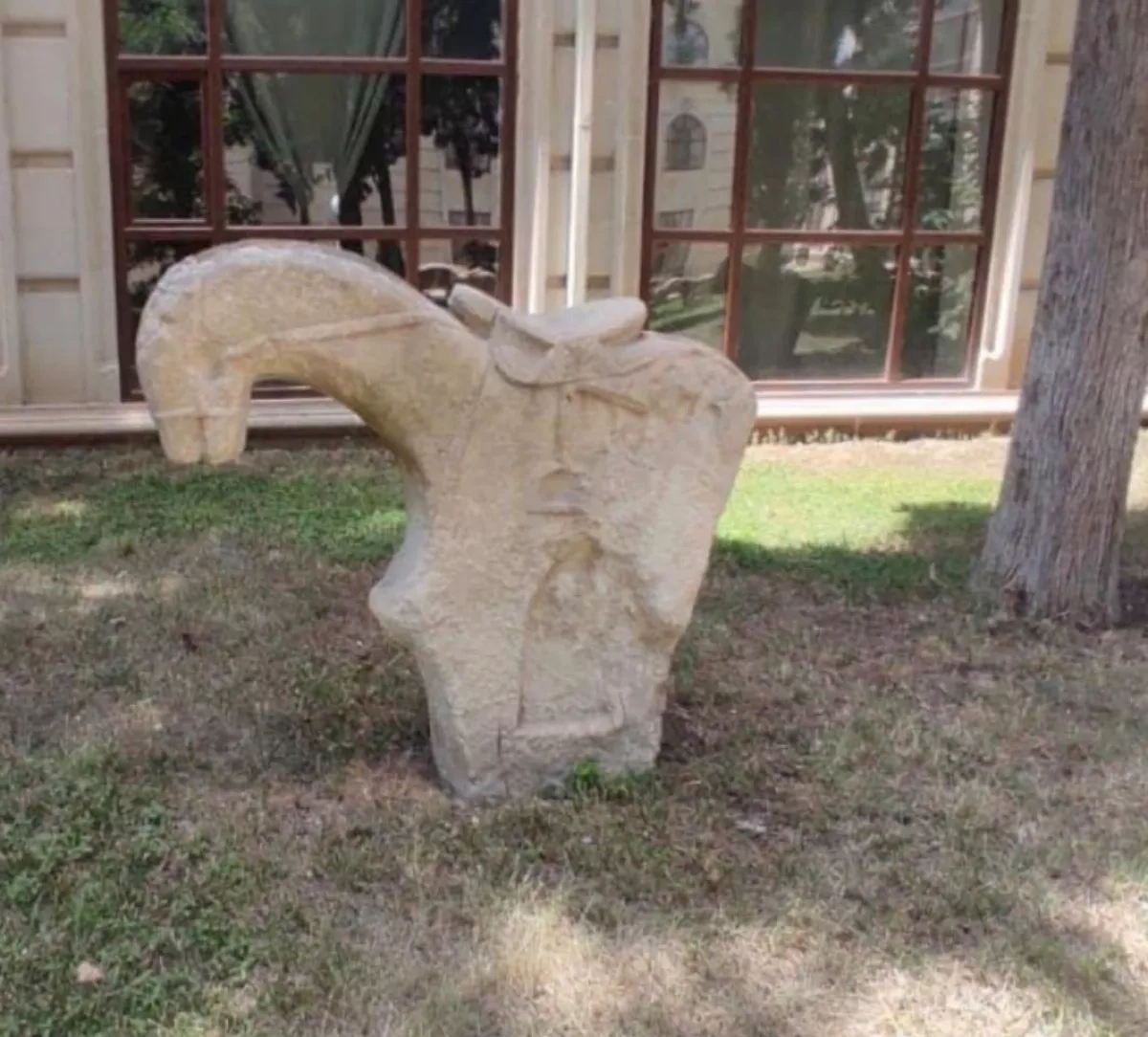
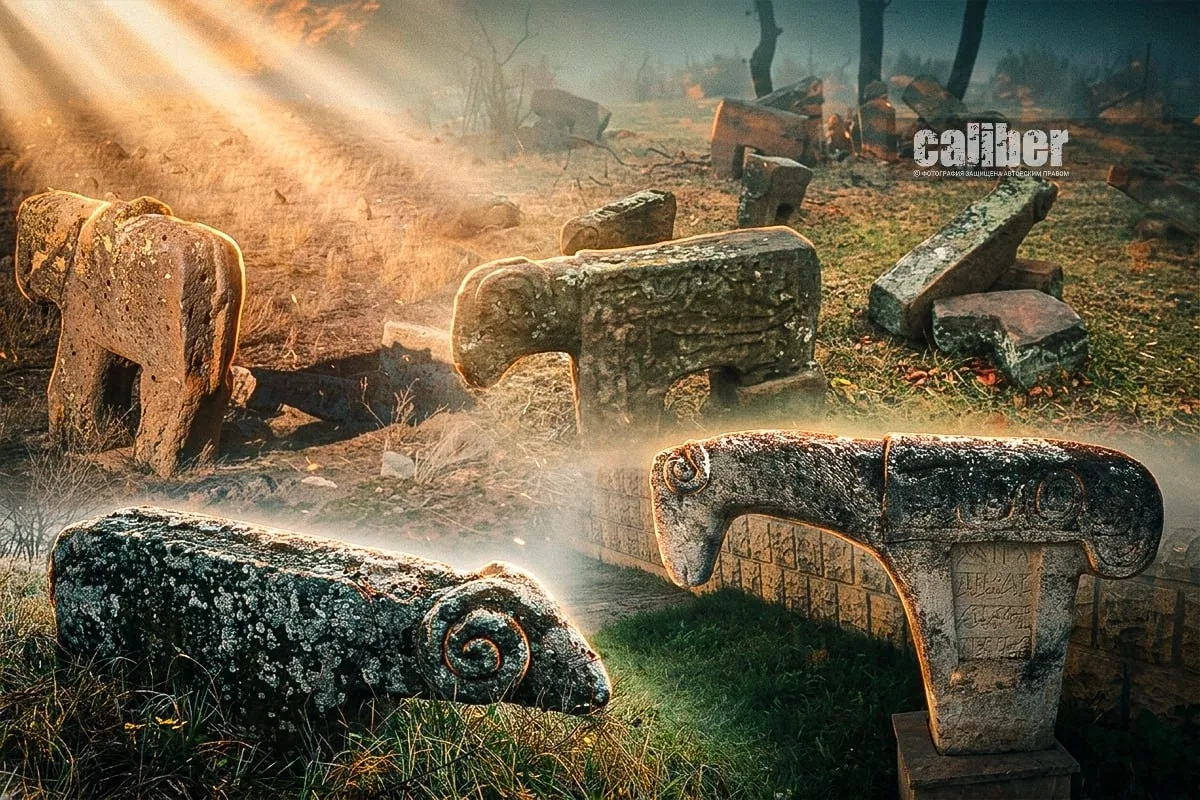
One of the most interesting forms of stone sculpture is the at dash — horse-shaped monuments also known as “stone horses”. Similar monuments have been found in various parts of Eurasia, including Azerbaijan. They have been discovered in Muslim cemeteries in Nakhchivan, Karabakh, Lankaran, the Mil Plain and the Absheron Peninsula.
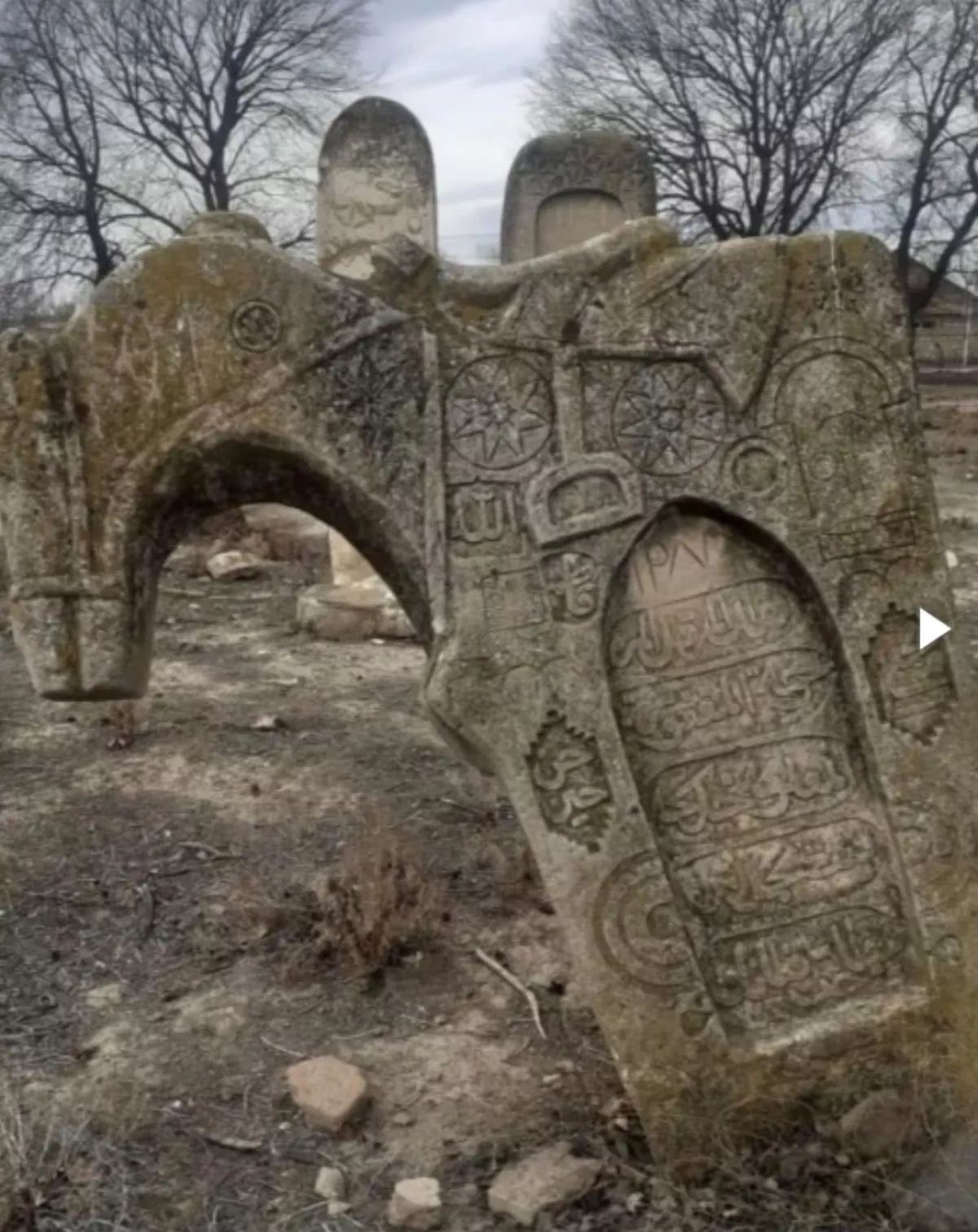
At dash monuments were generally carved from a single block of stone and varied in size, shape and level of detail. Some sculptures feature elements of a warrior’s weapons and equipment, including bows, arrows, swords, shields and quivers, as well as tribal tamgas and various ornamental motifs. These details may have indicated the status, tribal affiliation and military background of the person buried there.
The horse held particular significance because of its central role in the life of nomadic societies. It was not only a means of transport and an essential part of military culture, but also a symbol of strength, freedom and a special connection between humans and nature. This is why horse-shaped stone sculptures are of considerable interest for the study of the history and cultural heritage of Azerbaijan’s Turkic peoples.
Even in the pre-Islamic era, the horse occupied an important place in the religious beliefs and culture of various Turkic peoples. Horse images dating back more than 10,000 years have been found among the rock art of Gobustan, a historical and cultural reserve near Baku. Another example is the petroglyphs of Gamigaya in Nakhchivan, dating from the 4th to 1st millennia BC. Horse remains discovered during excavations of an Eneolithic settlement in the Jalilabad district and on the Mil-Mughan plain, dating to the 2nd millennium BC, attest to the antiquity of horse breeding in Azerbaijan. Archaeological finds also point to the important role of the horse in the economic and cultural life of the region’s population.
According to ancient beliefs, the soul of the deceased could travel to the afterlife on horseback or in a horse-drawn chariot. Researcher M. N. Pogrebova identifies a group of burial mounds among Azerbaijan’s Late Bronze Age and Early Iron Age funerary monuments in which horses were buried alongside people. This group includes 11 burial mounds near Ganja, three near Khanlar (today’s Goygol - ed.), five in Mingachevir, several in the Khankendi area, as well as a burial mound in Khojaly. In most of these burials, archaeologists discovered horse remains, harnesses and chariot fittings, indicating their ritual significance. Numerous finds also point to the cult of the horse, including a horse-shaped ceramic vessel from Mingachevir, a vessel from Khynysli dating to the 1st millennium BC, and clay figurines from Kultepe I and Mahta I in Nakhchivan.
The horse was regarded as a guide for the soul of the deceased to the afterlife, while its sacrifice was seen as a means of establishing a connection with the other world. This tradition persisted among Turkic peoples for a long time. Ibn Fadlan, who witnessed such a ritual, recorded the words of those taking part: “These are his horses, on which he will ride to paradise.” According to one theory proposed by N. I. Rzayev, horses were later replaced by stone sculptures as a result of wars and a decline in the number of live horses.
The symbolism of the horse continued to be significant in medieval Azerbaijan. Horse tails were used as protective talismans, while the horse itself remained an essential element of pastoralism, hunting and warfare. Its importance is also reflected in the epics Dede Gorgud and Koroglu, where the image of Gyrat occupies a special place. After the adoption of Islam, ancient horse symbolism continued to survive in popular beliefs: horse figurines were used as amulets, while horse skulls were believed to possess protective properties. These beliefs may have contributed to the spread of horse-shaped gravestones.
Horse-shaped stone sculptures are also known among the local population as oğuz qəbirləri (“Oghuz graves”). Most of these monuments in Azerbaijan date from the 13th to the early 19th century. In October 2012, Azerbaijan presented UNESCO with stone sculptures of a horse and a ram dating from the 12th–13th centuries from the village of Ashagi Ayibli in the Tovuz district, marking the 20th anniversary of the country’s membership in the organisation.
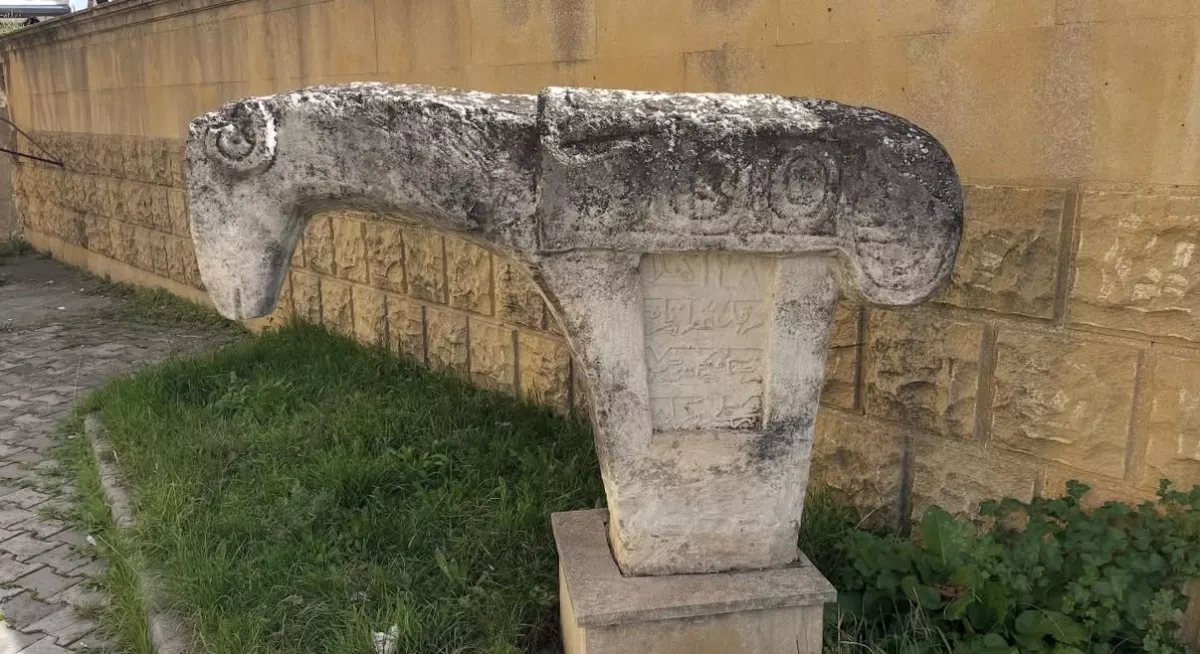
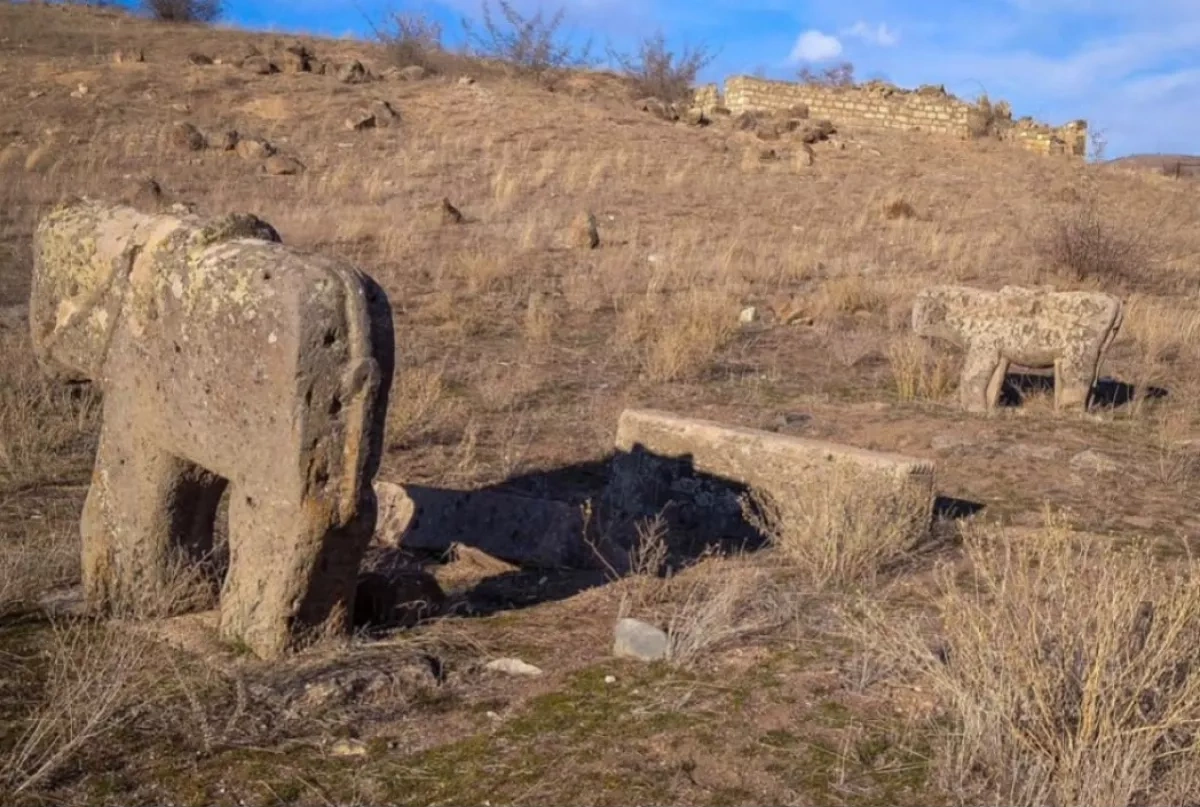
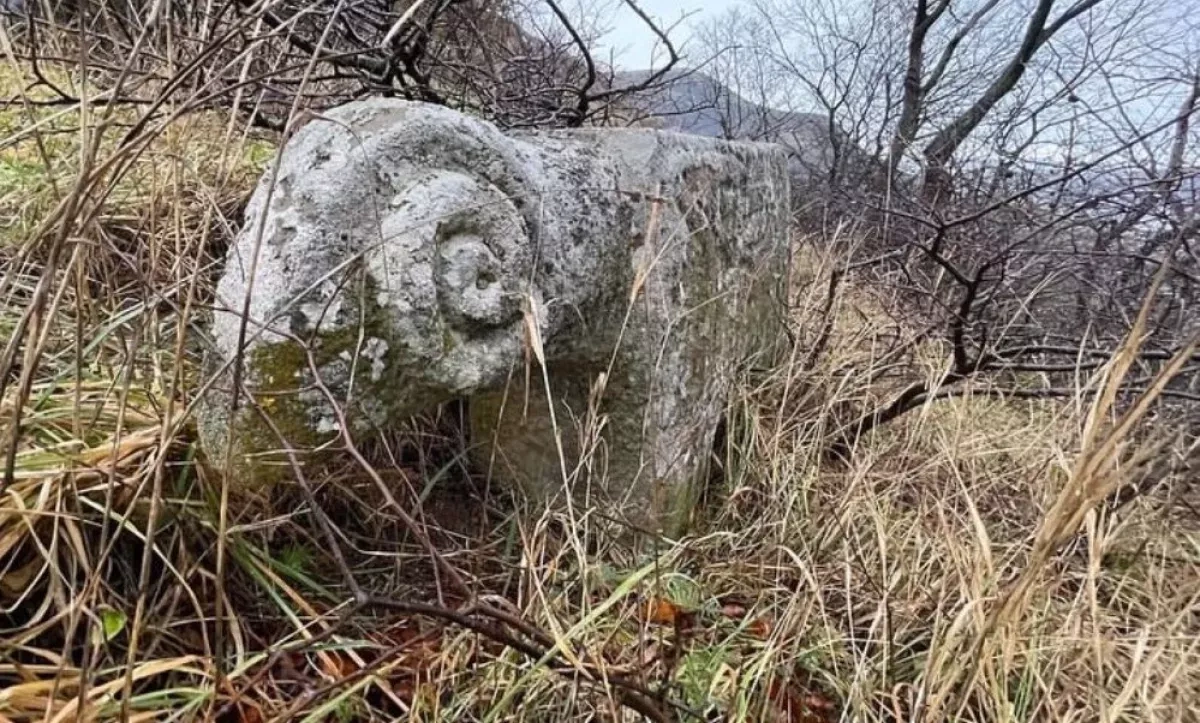
Alongside at dash, a special place in this heritage is occupied by stone sculptures of rams, known as goch dash. Similar zoomorphic monuments became widespread across a vast area, including Azerbaijan, Türkiye, Iran, Kazakhstan, Kyrgyzstan, the Altai and Khakassia regions, as well as what is now Armenia.
While studying Azerbaijan’s archaeological monuments, archaeologist V. M. Sysoyev documented stone sculptures of horses and rams on the Absheron Peninsula and in Muslim cemeteries in Karabakh, Nakhchivan, Shirvan, Lankaran and Yardimli. Most of these monuments date from the 13th to the 19th centuries. At the same time, zoomorphic depictions of rams are known in Azerbaijan from much earlier periods. In particular, similar finds dating from the 5th to 3rd millennia BC have been discovered at the Khudutapa archaeological site in the Jalilabad district.
The image of the ram has occupied an important place in the beliefs and symbolism of Turkic peoples since ancient times. It was associated with strength, courage, protection and power, and was also used in funerary and sacrificial rituals. In popular beliefs, the ram could serve as a protective talisman against evil forces. Particular importance was attached to the black ram, while depictions of animals with large, curled horns were reproduced by potters and stone carvers for centuries.
This symbolism is also reflected in folklore. The hero of the medieval epic Koroglu is known as “Goch Koroglu”, with the word qoç emphasising his strength and bravery. A stone sculpture of a horned ram placed on a grave could likewise symbolise the courage and martial prowess of the deceased.
The widespread use of ram-shaped gravestones in Azerbaijan is associated, among other things, with the cultural traditions of the Oghuz tribal confederations of the Qara Qoyunlu and Aq Qoyunlu, and later with the Safavid state. Inscriptions, ornamental designs and hunting scenes were often carved into the surfaces of these monuments.
References to stone rams can also be found in the works of European travellers and researchers of the 19th century. Robert Ker Porter, an English artist, traveller and diplomat, sketched and described a stone ram bearing inscriptions that he saw in an old cemetery in Julfa. In 1825, naturalist Eduard Eichwald also reported similar monuments, later publishing illustrations of stone figures of a horse and rams from the Lori Plain.
The sculptures vary considerably in size and artistic execution, ranging from schematic figures to finely crafted works featuring elaborate relief decoration. Their sides and backs often bear ornamental designs, depictions of weapons and hunting scenes, as well as inscriptions in Arabic script.
Particular interest attaches to the stone ram sculptures dating from the 14th to 17th centuries that were discovered in Yardimli. They are distinguished by their carefully rendered forms and ornamental details. Some monuments even depict the animals’ tails and other minor anatomical features. At the same time, their artistic styles vary: alongside finely decorated figures, there are more restrained and schematic sculptures.
Today, zoomorphic gravestones remain an important source for studying the history, funerary traditions and artistic culture of Azerbaijan. At the same time, their systematic registration, documentation and comprehensive study are needed. Research into the distribution, dating, artistic styles, epigraphy and symbolism of at dash and goch dash monuments would provide a fuller understanding of their place in the cultural heritage of Azerbaijan and the wider Turkic world.
By Vahid Shukurov, specially for Caliber.Az