To see where the world is heading, one only needs to look at schools today. For several days now, Western countries have been debating the results of a regular large-scale assessment of the quality of school education. The findings show that performance has once again declined significantly in the West, while China and several Asian countries have emerged as leaders in educational quality. This is already affecting economic performance, science and technological development, undermining the foundations of the West’s global hegemony. Azerbaijan was also highlighted in the study for its rapid progress in improving the state of school education.
Acknowledging its own moral collapse
Last week, the Organisation for Economic Co-operation and Development (OECD) published the latest results of its assessment of the state of school education worldwide under the Programme for International Student Assessment (PISA). It is based on measuring the ability of 15-year-old students not simply to memorise facts, but to solve specific problems. Despite the soundness of its methodology, such rankings should nevertheless be treated critically: broad generalisations can lead to distortions, while the results are also convenient for manipulation aimed at discrediting opponents.
However, the assessment is conducted by the OECD, one of the principal organisations of the “collective West”. It comprises 38 countries around the world that are closely integrated into Western blocs and alliances. In other words, the OECD has no reason to understate the West’s achievements; on the contrary, it has an interest in demonstrating the advantages of the Western liberal model. Fortunately, since 2000, the assessment has examined school education not only in the collective West but also in other countries. Last year, the programme covered 91 countries and economies.
And the opposite has happened. According to the results of the assessments conducted last year, student performance in OECD countries declined again, reaching an all-time low in the history of the assessment programme in both mathematics and reading. The report’s authors stress that the pandemic is not to blame: there is no correlation between the length of time schools were closed and the decline in student performance.
In any case, the results have continued to deteriorate even compared with the first post-pandemic years, when the effects were at their most pronounced. For example, while 16% of students in OECD countries demonstrated low performance in science, mathematics and reading in 2022, the figure has now risen to 20%. In science, meanwhile, the situation actually remained stable for some time immediately after the pandemic, before deteriorating again last year, following a prolonged decline between 2009 and 2022.
The EU has been particularly badly affected, with its carefully constructed ideology of liberal “European education”, built around gender radicalism and individualism. Ultimately, this has ground down even Germany’s education system, which had been painstakingly developed over two centuries. As a result, for example, in an ordinary Berlin school, roughly a third of children have in recent years completed the fourth grade struggling to read, able to write only in block letters and being given simplified maths exercises — for instance, only just beginning to learn the multiplication table. And this is in Germany, where mathematics is already taught according to a curriculum that is simplified compared with those used in Soviet and post-Soviet schools — roughly a year behind them.
The Chinese standard
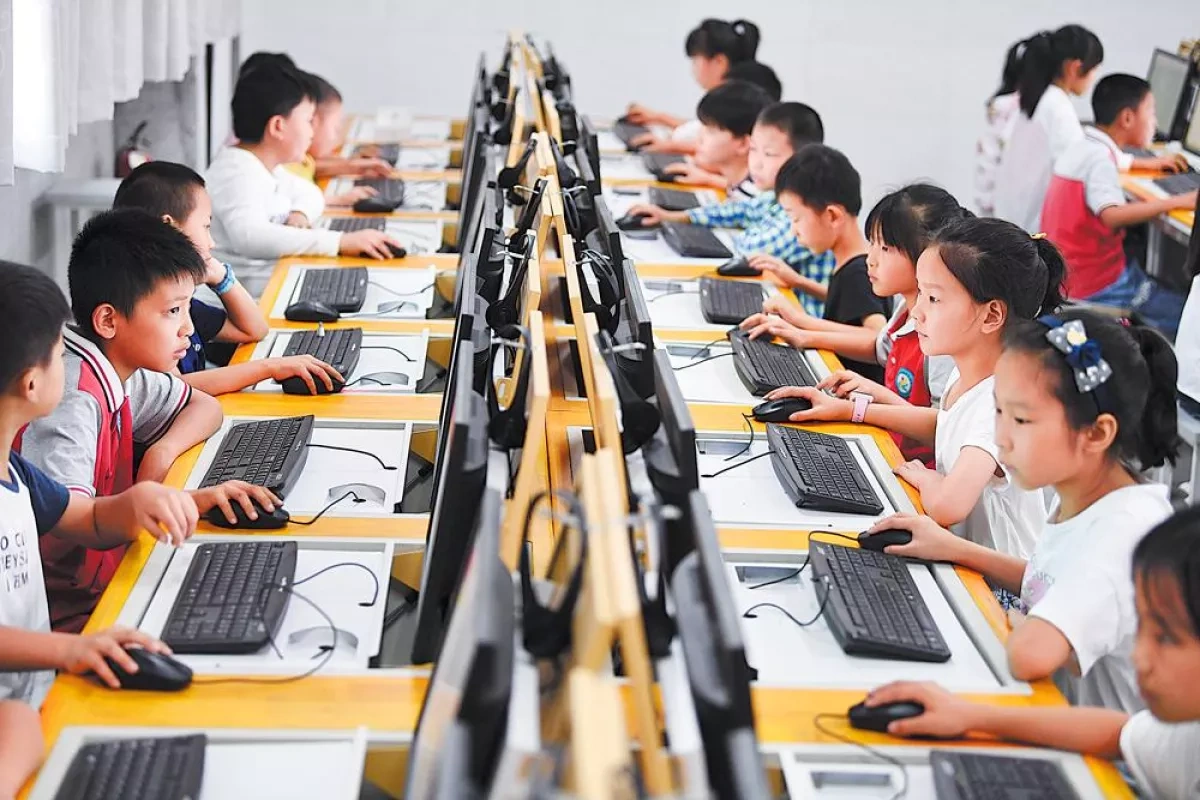
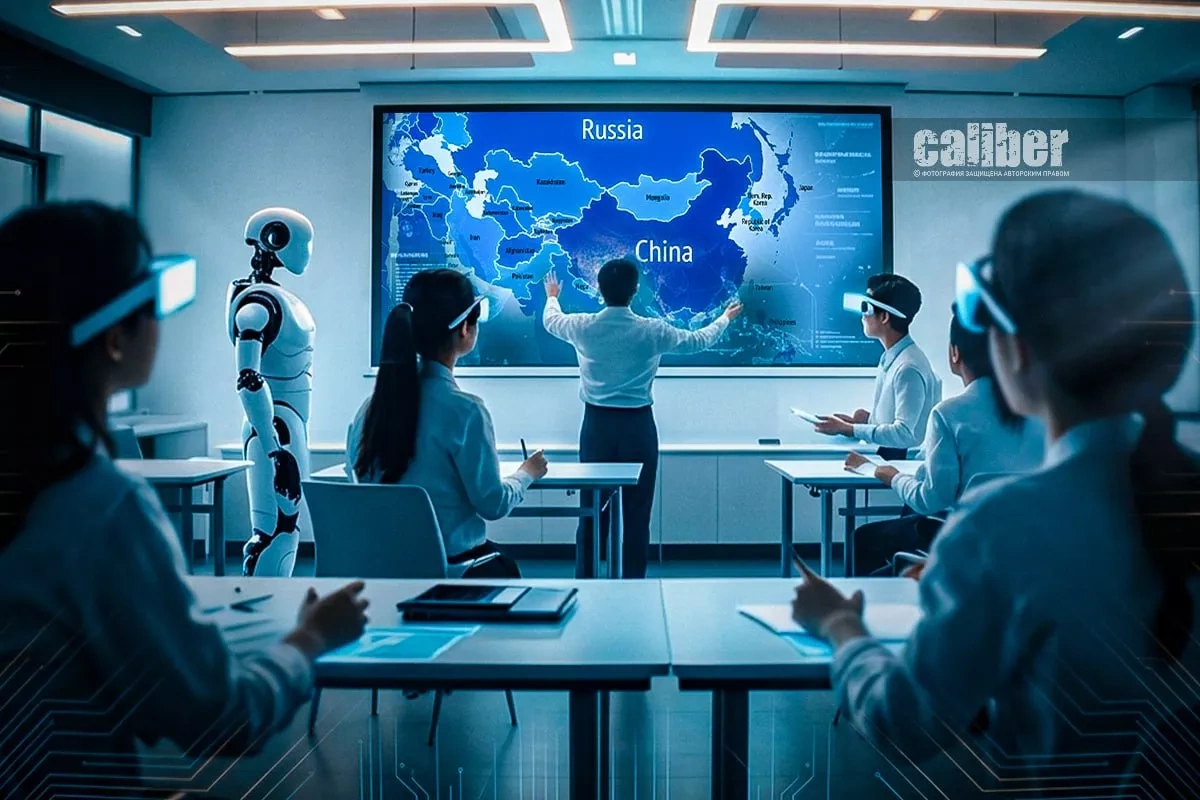
This dry statistical data on school education contains numerous parallels with the political, economic and strategic changes taking place in the modern world. If we look at the opposite end of the rankings, we find that the global leaders in science, mathematics and reading are primarily countries that have consistently rejected liberal dogmas. These include China and its separate jurisdictions — Macau, Hong Kong and Taiwan — as well as Singapore.
Both have occupied and long maintained the top positions in the rankings, and they have much in common in terms of their approaches. If you think Singapore lags behind China in challenging Western liberal dogmas, you need only visit the country once. Upon entering Singapore, you are given an immigration card whose opening lines warn of the existence of the death penalty for drug trafficking. In this respect, the EU appears to be their complete opposite, gradually legalising drugs. In other words, the difference in approaches has produced different outcomes in Asia and Europe, leaving the latter at a historic dead end in virtually every sphere.
Secondly, the list of leaders in global school education includes countries that have distanced themselves from the broader Western drive to impose liberal dogma in education, while remaining members of the collective West. These are Japan and South Korea.
In some respects, the United Kingdom was long a variant of this model, having occupied a special position within the EU. However, after leaving the bloc in 2020 (Brexit), British education faced a number of new restrictions, including its withdrawal from Erasmus+.
As for Estonia — the only EU member among the leaders — its success is more likely to be linked to a pragmatic approach to reform and its ability to adapt pan-European initiatives to national conditions.
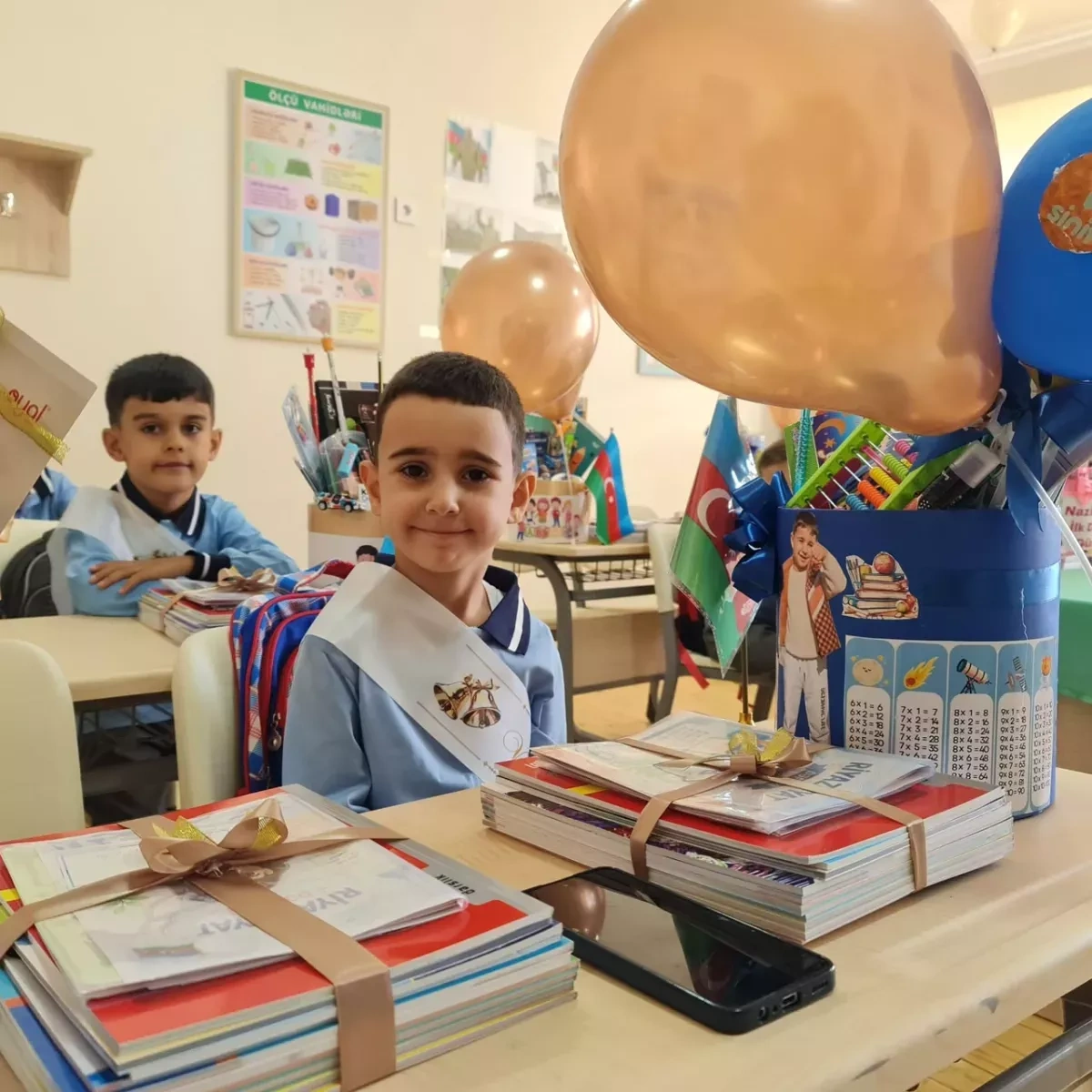
Azerbaijan also belongs to this category of countries that do not follow the achieved the second-largest overall improvement in education in the world compared with the previous assessment in 2022. Its average mathematics score rose by 63 points, to 422; its science score increased by 60 points, to 409; and its reading score rose by 40 points, to 374. Only Albania achieved a greater improvement — but EU funding was injected there, whereas Azerbaijan did everything on its own.
But the bad news for the West does not end with the fact that the best school education systems currently found in the world are far removed from liberal ideals. The problem is that the quality of school education is declining much more sharply in the West than outside it. In reading, proficiency in OECD countries fell by 28 points between 2015 and 2025. This is equivalent to roughly one and a half years of schooling, meaning that 15-year-olds are reading at the level of children aged around 13 and a half. In mathematics, proficiency across OECD members fell by 22 points — slightly more than one year of schooling — while in science it fell by seven points.
The situation outside the West is also worrying, but the decline has been less severe. Outside the OECD, reading performance fell by 16 points, mathematics by eight points, while science performance remained roughly unchanged. In fact, the West’s problems are even more serious, since its overall figures are being bolstered by Japan, South Korea and Singapore, which are formally OECD members.
Moreover, Western countries are seeing a growing proportion of schoolchildren who may later form a huge pool of functionally illiterate people with limited capacity to work in complex professions. According to PISA estimates, around 29% of 15-year-olds in OECD countries demonstrate low performance in all three subjects. In 2022, the figure was only 25%. And this is by no means about their failure to know certain theorems or chemical formulas. It is about basic skills and abilities: they struggle to understand even simple texts, are unable to grasp the relationship between units of measurement and prices, let alone interpret simple data in tables or charts.
Most worrying, of course, is the decline in reading performance, because regardless of the particular subject, the further a person progresses in their education, the more their learning depends on reading. According to the PISA report, both Western and non-Western education systems show a direct correlation between declining reading performance and declining performance in mathematics and science.
“Children outsourcing their learning and their thinking to a bot”
Of course, not all of the problems facing Western education can be attributed solely to the introduction of liberal dogma. Neoliberal reforms in the economy and public administration have also contributed to the current situation, as they have led to cuts in spending on education systems. As a result, last year around 40% of students in OECD countries attended schools where the educational process was affected by shortages of teachers or other staff. And this is in high-income countries!
Yes, in recent years the teaching profession has become one of the more stable and relatively well-paid occupations in Western Europe — but this was preceded by a long period of underfunding for schools and kindergartens. As a result, by the mid-2010s, even in relatively prosperous Germany and even in socially stable areas, classes of more than 30 children had become commonplace as early as primary school. At the same time, many of these children did not have a proper command of German, the language of instruction — a consequence of underfunding in kindergartens. Under such working conditions, even stable employment and decent pay failed to attract sufficient numbers of new staff.
Over the past couple of years, German teachers have gone on strike almost every month, yet the government has continued to do little beyond allocating tens of billions of euros more for arms.
These developments have been compounded by other damaging consequences of the widespread adoption of the neoliberal economic model around the world, particularly the uncontrolled spread of technological innovations among children. In education, this has resulted in students becoming catastrophically immersed in the virtual reality created by digital technologies, as well as the equally catastrophic use of artificial intelligence (AI) technologies to complete school assignments. The PISA 2025 study highlights both of these aspects.
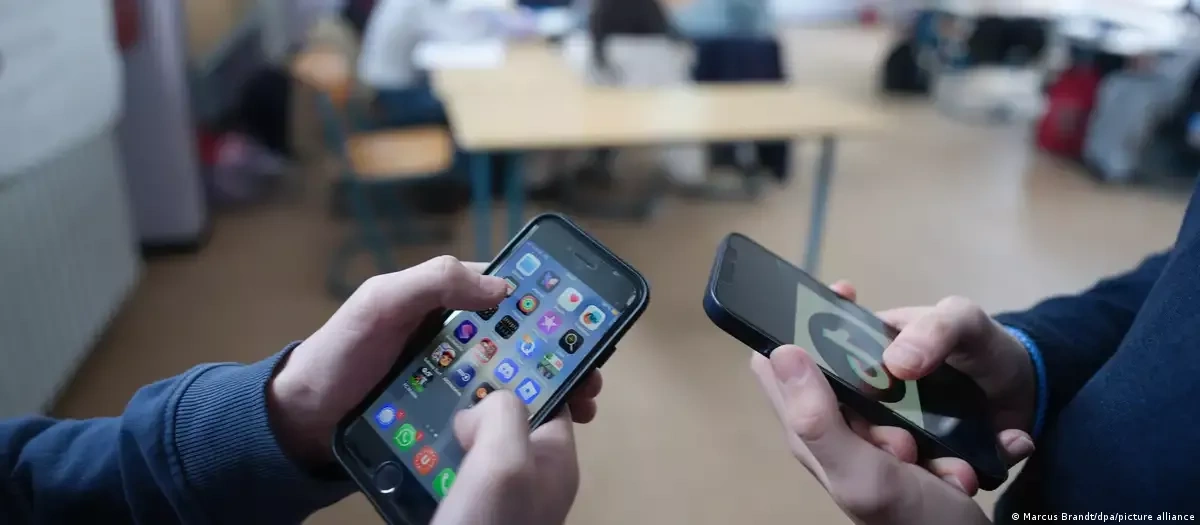
In the name of the noble goal of ensuring children’s rights and their “free development”, children have effectively been left to their own devices when it comes to using digital devices, from smartphones to tablets. According to the OECD study, more than a quarter of students said their classmates were distracted by gadgets either in every science lesson or in most of them. This also affected those sitting nearby: students seated next to distracted classmates likewise performed worse and participated less in the learning process.
It is hardly surprising that all high-quality schools in Germany began tackling the use of gadgets long ago, without waiting for legislation and even at the risk of facing complaints from “human rights activists”. In a reasonably good German Gymnasium where everything has not yet been destroyed by pseudo-liberal innovations and some of the old standards have been preserved, students are not even required to hand in their smartphones and other devices. Instead, their use is simply prohibited throughout the school premises for everyone, including visitors, even for making phone calls. Only staff members may use them, and only in their own offices.
Of course, not every school has the resources and staff needed to enforce such a policy, and in those cases gadgets simply end up disrupting the entire learning process.
On the other hand, the learning process is also being undermined by the use of AI. The myth of AI as a technology that enhances human capabilities is also beginning to unravel in education. According to PISA 2025, more than 40% of students used AI to write texts for written assignments once or twice a week, and sometimes every day. Those who used AI-powered chatbots received lower average scores in science than those who did not use AI. As David Edwards, Education International General Secretary, noted, “While the global teacher shortage remains unaddressed, AI is being pushed as the magic solution when in fact excessive use results in children outsourcing their learning and their thinking to a bot.”
Of course, these problems are largely related to the fact that gadgets are too closely associated with entertainment, and children simply fail to develop the skills needed to use them for other purposes. As Andreas Schleicher, OECD Director for Education, notes, “it is particularly concerning that large and significant declines in success rates have been observed in reading tasks that are the most essential for today’s world of artificial intelligence: Skills such as evaluating information, reflecting critically and integrating multiple pieces of evidence, which require careful reading and sustained attention.”
To sum up, it can be said that after the global spread of the Western liberal model in education and culture, what we are getting is not communities of conscious, critical-thinking and free citizens, but masses of individuals who are easily influenced and manipulated. And these statistics tell us more about the geopolitical changes to come than any secret plans devised by the most powerful politicians. The future of the world is tied to knowledge, and without knowledge, it has no future.