Prime Minister Narendra Modi’s government is poised to introduce new charges for using India’s popular homegrown instant digital payment system for certain merchant transactions, raising concerns among businesses.
India’s quasi-governmental National Payments Corporation of India (NPCI) has announced that a 0.4% fee will apply from October 15 to UPI (Unified Payments Interface) transactions above 2,000 rupees ($21) made to businesses, as Indian media reports.
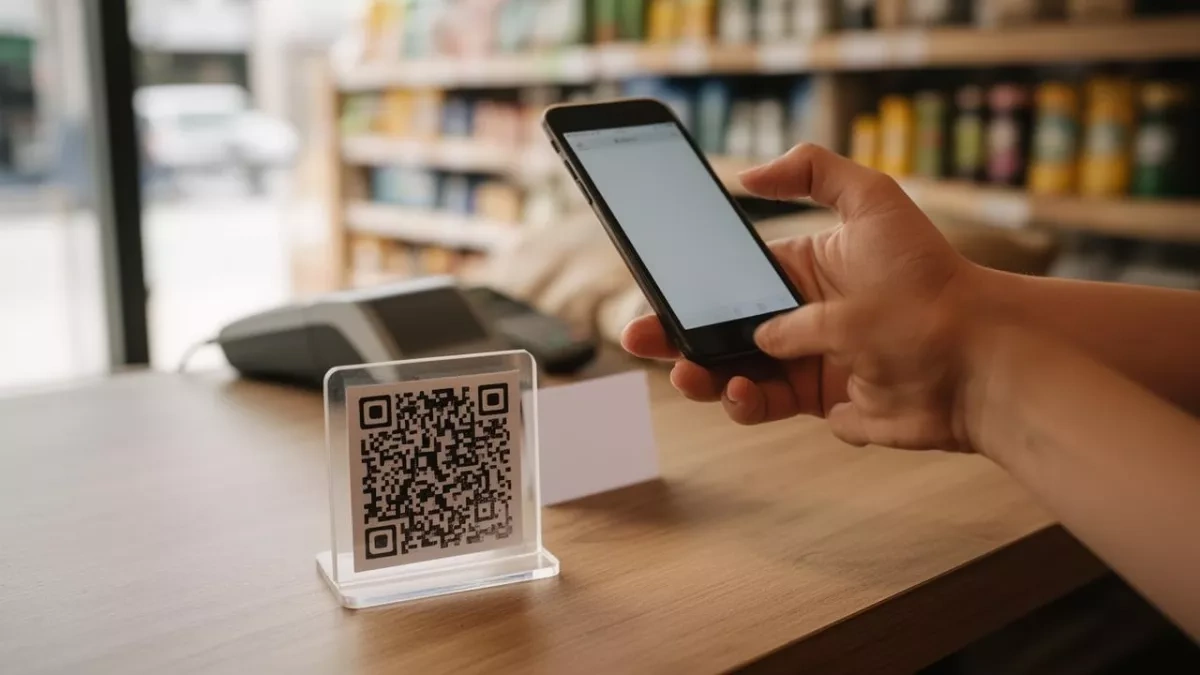
Since its introduction a decade ago, UPI, which allows customers to make instant payments through apps at no cost, has transformed the way people across the world’s most populous country make payments. From street vendors to global brands in shopping malls, QR codes are now ubiquitous in India as cash increasingly gives way to digital payments.
However, experts warn that the new charges could push businesses away from the system. The move has also triggered a political storm in India, with the opposition accusing Modi’s government of passing costs on to merchants under foreign pressure.
All person-to-person transactions will remain free. Other payments, including those made at fuel pumps, for railway tickets and telecom bills, will carry a flat fee of five rupees per transaction.
The government is calling the new levy the Merchant Discount Rate (MDR), through which the cost of maintaining digital payment infrastructure is shifted to businesses.
So far, the costs of operating UPI have been borne by banks and fintech companies, which have also benefited commercially from the system, while government incentives have supported its zero-MDR model.
Under the new MDR, analysts estimate an annual revenue pool of about 170 billion rupees ($1.7 billion), with around 60% going to banks, 25% to app providers and 15% to aggregators.
Foreign pressures
The move has also triggered a political storm, with the principal opposition Congress party accusing the Modi government of bowing to US pressure.
“Here, the Modi government has given in to a US demand to get rid of zero MDR and charge for UPI. Why 0.4 percent MDR? Is this being done to enable US card companies to compete with UPI?” said Jairam Ramesh, a Congress spokesperson.
The US has previously criticised India’s UPI framework, arguing that policies governing the system favour domestic payment providers and create an uneven playing field for US payment companies.
While two US-owned payment apps — Google Pay and PhonePe — already process more than 80% of UPI transactions, the US Trade Representative’s National Trade Estimate Report 2026 noted that US payment providers face unequal access to parts of the UPI ecosystem, particularly credit-card transactions on UPI.
Massive payment system
The sheer scale of UPI sets it apart from other digital payment systems around the world.
The Al Jazeera network has reported that UPI processed a record 24.51 billion transactions last month alone, equivalent to 791 million transactions per day and worth more than $10 billion daily.
The government said it processed 241.6 billion transactions in the last financial year, worth nearly $3.3 trillion, while supporting 741 banks across the country.
The transaction volume accounts for nearly half of all global real-time digital payment transactions each day.
The government frequently showcases the system, with Modi demonstrating the interface to foreign dignitaries. UPI is now live for merchant payments in 10 countries, including Singapore, the UAE, France, Sri Lanka and Qatar.
“UPI has emerged as the backbone of India’s digital payments ecosystem and a critical driver of financial inclusion,” the government said in a statement marking a decade of the interface last month.
Under the new policy, the government will bar merchants from passing the additional cost on to customers. However, the reality is already shifting, with some merchants having raised their prices.
By Nazrin Sadigova