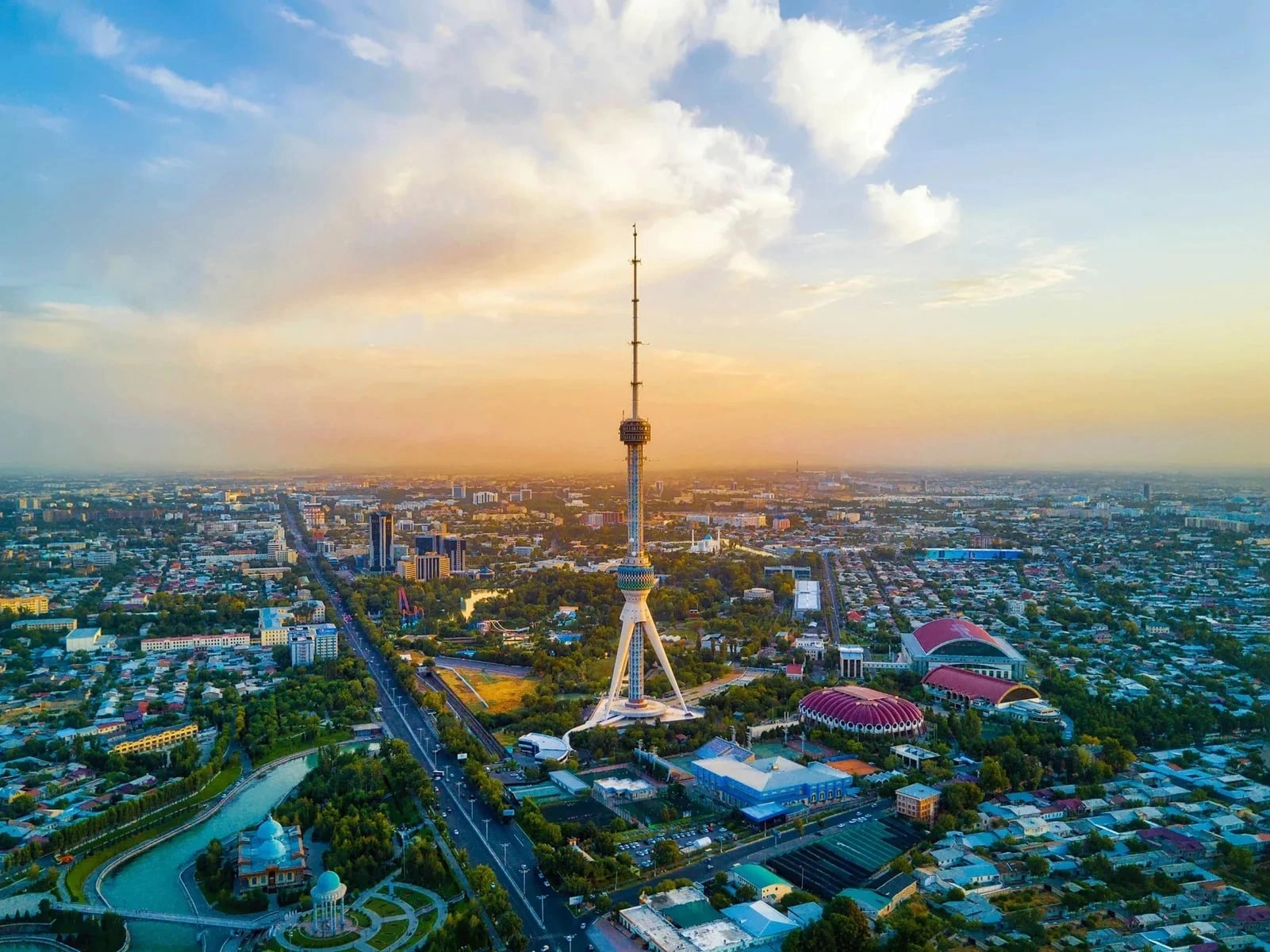
BAKU, Azerbaijan, September 18. Tashkent city’s
economy grew 13.3% year on year to 226 trillion soums (about $19.2
billion) in January-June 2026, with the services sector accounting
for nearly 68% of the capital’s gross regional product (GRP).
This was reflected in the statement by the Uzbekistan’s National
Statistics Committee.
Tashkent made the largest contribution among Uzbekistan’s
regions to national economic output during the period, accounting
for 21.1% of the country’s GDP. The capital’s services sector had
the highest share of GRP among all regions at 67.9%, followed by
industry at 20.1% and construction at 12%.
According to Trend’s calculations, services generated approximately
153.5 trillion soums (around 13 billion) of Tashkent’s GRP in the
first half of 2026, based on their 67.9% share of the total.
Industry accounted for about 45.4 trillion soums (approx. $3.8
billion), while construction contributed approximately 27.1
trillion soums (about $2.3 billion).
The structure highlights the capital’s distinct economic profile
compared with more industrially oriented regions of Uzbekistan.
Services accounted for more than three times the combined output of
industry and construction, which together represented 32.1% of
Tashkent’s GRP.
The concentration is also visible in Uzbekistan’s broader
services market. National Statistics Committee data show that
Tashkent city generated 274.4 trillion soums (around $23.4 billion)
in market services in January-June 2026, significantly ahead of the
next-largest contributor, Samarkand region, at 47.3 trillion soums
(approx. $4 billion).
Trend’s analysis shows that Tashkent is increasingly functioning
as Uzbekistan’s main services and economic hub. The capital’s large
contribution to national GDP, combined with the dominant role of
services in its own economic structure, points to strong
concentration of higher-value commercial activity, finance, trade,
information and other services in the city.
In Trend’s assessment, the services-led structure provides
Tashkent with a broad base for continued economic growth,
particularly as Uzbekistan expands financial, digital, trade and
business services. At the same time, the relatively smaller share
of industry means that maintaining strong links between the
capital’s service economy and productive sectors across the country
will be important for spreading the benefits of growth beyond
Tashkent.