Azerbaijan has called for stronger international efforts to uphold international law and ensure accountability for serious crimes committed during armed conflicts.
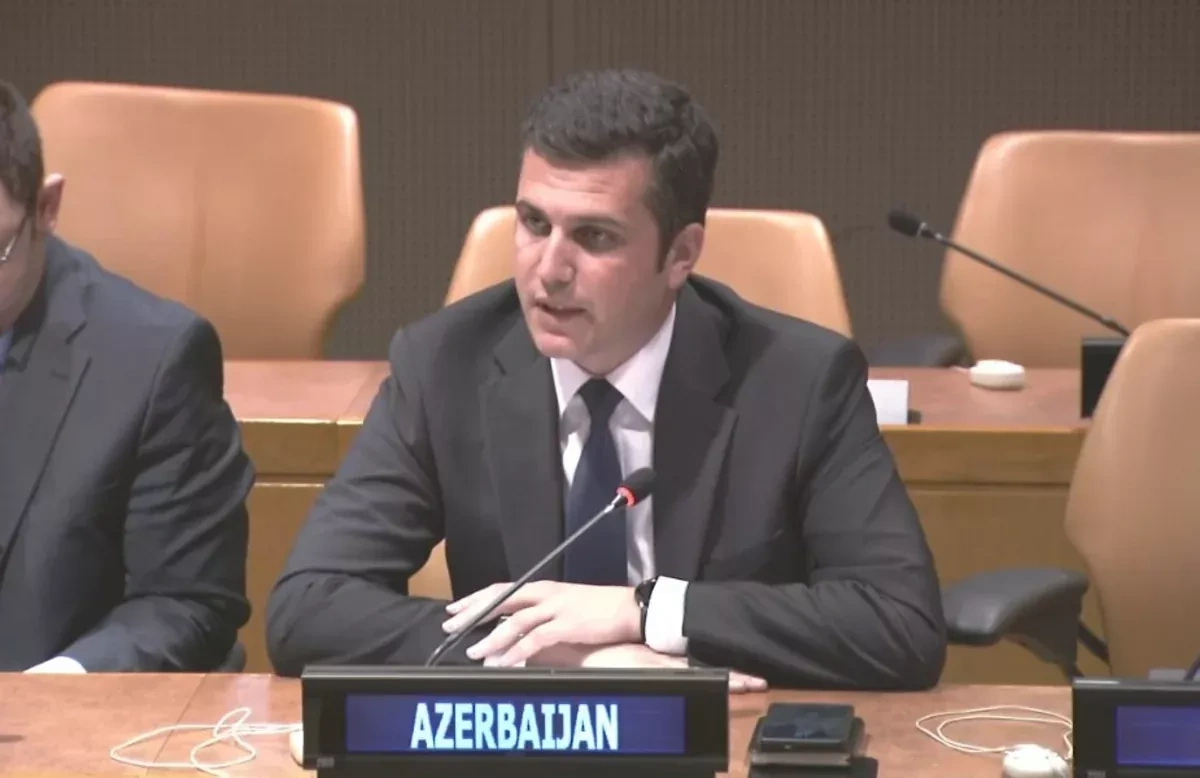
Tale Aliyev, First Secretary at Azerbaijan’s Permanent Mission to the United Nations, made the remarks at a UN Security Council Arria-formula meeting on “Upholding International Law in Situations of Armed Conflict” held on September 16, Caliber.Az reports, citing the mission.
At the outset of his statement, Aliyev thanked Pakistan’s Permanent Mission to the UN for convening the meeting.
“Armed conflicts continue to be characterized by serious violations of international law and high levels of civilian death, injury and deliberate or indiscriminate targeting of civilian objects and essential civilian infrastructure, including in situations of occupation,” he said.
Referring to Azerbaijan’s experience, Aliyev said the country’s history demonstrated what he described as limitations in the international system.
“Azerbaijan's experience underscores the limitations of the international system, as the United Nations and other international organizations were unable to prevent the aggression and serious violations of international law committed against our country, or to bring an end to the nearly three decades-long occupation of our territories,” he said.
Aliyev stressed that political will was essential to strengthening compliance with international law and accountability.
“What is needed, first and foremost, is the political will to uphold international law and ensure accountability,” he said.
He argued that certain conduct during armed conflicts constitutes serious crimes under international law and may involve violations of peremptory norms, or jus cogens, as well as obligations owed to the international community as a whole, known as erga omnes obligations.
According to Aliyev, states have obligations under international law to investigate such offences, prosecute those responsible and ensure that perpetrators are brought to justice.
“These obligations arise from a range of legally binding instruments, as well as customary international law,” he said.
Aliyev further argued that blanket amnesties, de facto impunity, immunity and early release for those responsible for the most serious international crimes are incompatible with states’ obligations under international law.
He called on the international community to oppose impunity, support victims and survivors and their families, assist national accountability efforts and counter disinformation campaigns aimed at securing the release of individuals responsible for serious international crimes.
“Experience demonstrates that atrocities left unpunished or unacknowledged can impede peace, obstruct reconciliation and create conditions conducive to renewed conflict,” Aliyev said.
He warned that allowing genocide, war crimes, crimes against humanity, ethnic cleansing or international terrorism to go unpunished could undermine the foundations of lasting peace.
“Peace and accountability are not competing objectives. The pursuit of peace must not come at the expense of justice. There can be no genuine reconciliation without accountability, and no lasting peace without justice,” Aliyev stressed.
By Vugar Khalilov