BAKU, Azerbaijan, September 16. The first-ever
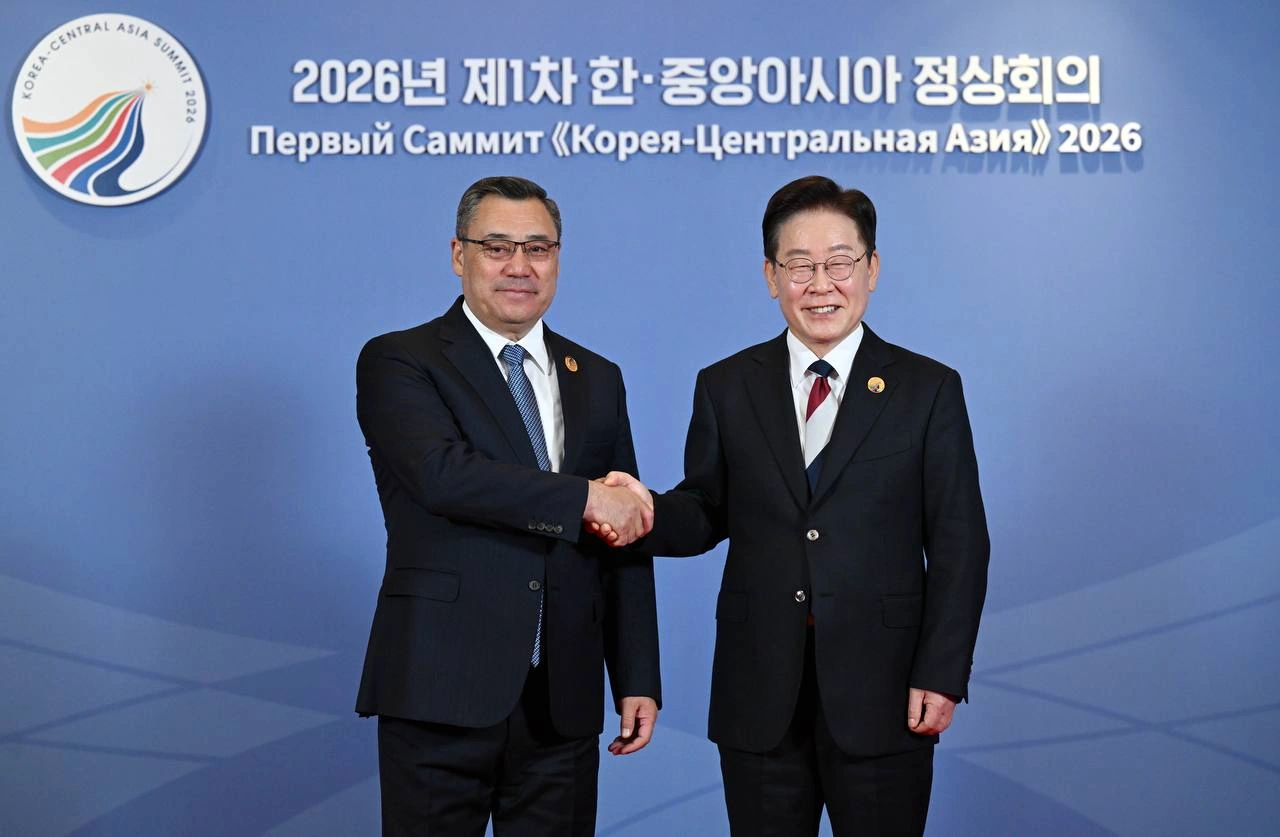
Central Asia-Republic of Korea summit, to be held in Seoul on
September 16–17, reflects the region's growing economic weight and
expanding cooperation in technology, investment, industry and
emerging supply chains.
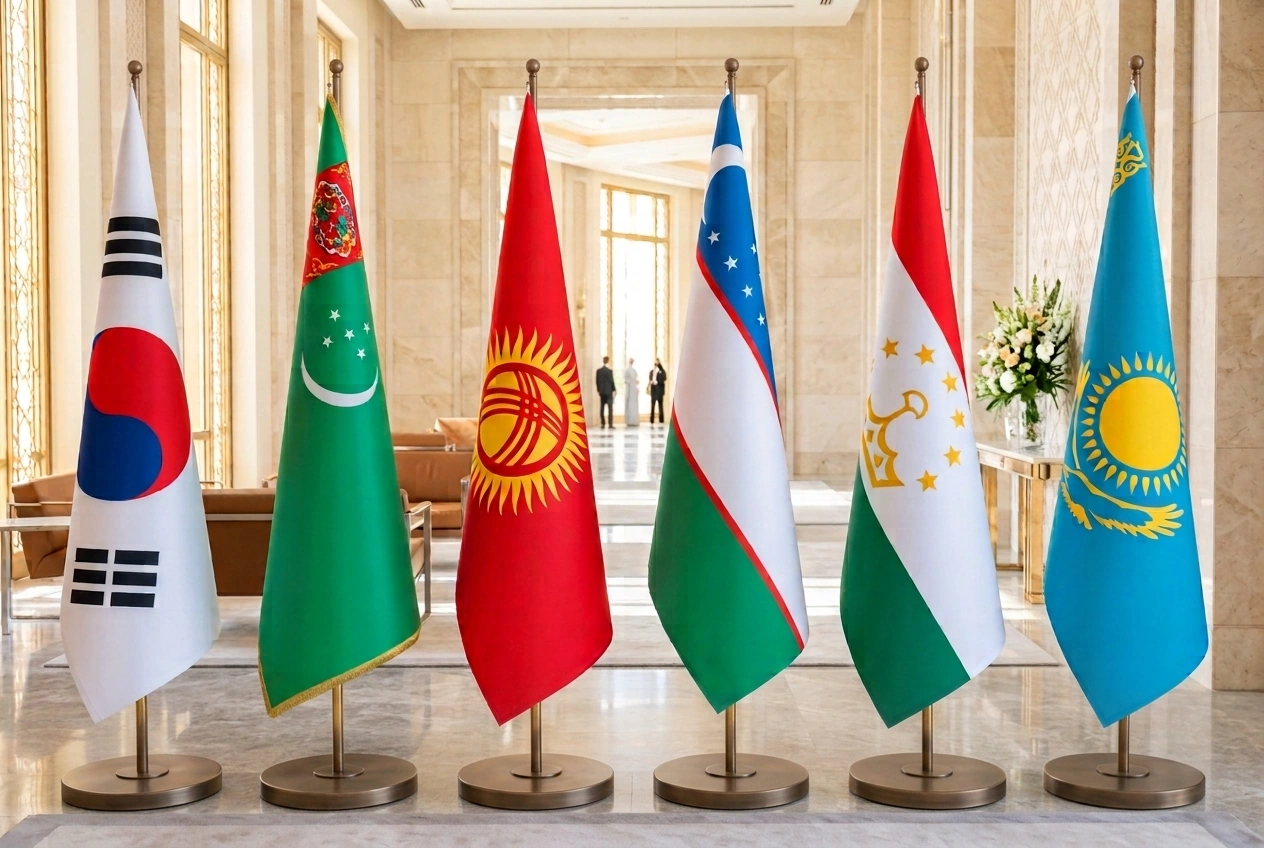
The meeting between the leaders of the five Central Asian
countries and South Korea comes as the region's economic potential
continues to expand. Kazakhstan, Uzbekistan, Kyrgyzstan, Tajikistan
and Turkmenistan are steadily developing their industrial sectors,
attracting foreign investment, upgrading infrastructure and
broadening their international economic ties.
These developments are driven in large part by the priorities
set by the leaders of Central Asian countries, who are focusing on
economic diversification, industrial development, technology
adoption and greater investment cooperation. Against this backdrop,
ties with South Korea are gradually moving beyond individual
bilateral projects toward a broader regional framework.
The combined GDP of the five Central Asian countries exceeded
$500 billion in 2025. Kazakhstan's economy surpassed the $300
billion mark for the first time, while Uzbekistan's GDP reached
about $150 billion. Kyrgyzstan and Tajikistan recorded economic
growth of 11.1% and 8.4%, respectively. Turkmenistan's GDP reached
$77.4 billion, with the economy growing by 6.3%.
For South Korea, Central Asia is of interest primarily as a
source of critical minerals and other resources, as well as a
growing market and potential base for manufacturing and logistics
projects. For the countries of the region, Korean technology and
expertise are particularly relevant to industry, energy, artificial
intelligence, digitalization, transport and raw-material
processing.
The economic foundation of ties between the two regions is also
expanding. According to one estimate, trade between the five
Central Asian countries and South Korea reached $5.7 billion in
2025, up 1.7 times from 2017.
Kazakhstan and Uzbekistan account for the bulk of Central Asia's
economic ties with South Korea, representing about 87% of the
region's total trade with Seoul.
Kazakhstan remains one of South Korea's largest economic
partners in Central Asia. According to Kazakhstan's Ministry of
Industry and Construction, bilateral trade reached $1.3 billion in
the first half of 2026.
At the same time, economic cooperation is moving beyond trade.
The Kazakhstan-South Korea industrial project portfolio has grown
to 51 joint projects, 23 of which have already been launched. The
projects have created about 4,400 jobs.
New agreements were reached on September 15 at the
Kazakhstan-Korea Business Council. The two sides signed about 80
agreements worth a total of $19 billion, including $11 billion in
projects involving the Samruk-Kazyna sovereign wealth fund.
The agreements include the construction of a gas processing
plant with Hyundai Engineering, the expansion of the Pavlodar
Petrochemical Plant with Samsung E&A, the construction of a
1,000-megawatt combined heat and power plant with Doosan
Enerbility, joint drilling at the Bakkenoye lithium deposit with
the Korea Institute of Geoscience and Mineral Resources (KIGAM),
and a memorandum with POSCO on rare-earth processing.
Cooperation is therefore gradually shifting from trade in
finished products toward joint industrial projects, energy and the
processing of mineral resources.
Kazakh President Kassym-Jomart Tokayev has repeatedly stressed
the strategic nature of the country's relations with Seoul. "The
Republic of Korea is a strategic partner of Kazakhstan. We view
Korea as a country that enjoys high standing on the international
stage. Our multifaceted cooperation is growing stronger every
year," Tokayev said during his state visit to Seoul, where he
presented state awards to prominent South Korean figures.
Speaking about South Korea's development, the Kazakh leader also
highlighted the role of economic policy, hard work and major
businesses in shaping the country's economic model. "The Korean
economy has been developing successfully, overcoming competition
and challenges. This has been made possible by the hard work of its
people and the efforts of major businesses. The people of
Kazakhstan and its authorities have sincere respect for friendly
Korea," Tokayev said.
Uzbekistan is another key economic partner for South Korea in
the region. More than 700 companies with Korean capital operate in
the country, while the portfolio of prospective projects ahead of
the summit is estimated at about $12 billion.
The two sides have also agreed on an $8 billion strategic
partnership program with the Export-Import Bank of Korea. The new
agreements cover critical minerals, transport, industry, artificial
intelligence, biotechnology, healthcare and other areas.
Specific projects include the delivery of additional high-speed
trains by Hyundai Rotem, expanded cooperation on critical minerals,
the establishment of a national genomics center and biobank, as
well as industrial AI and robotics projects.
Uzbek President Shavkat Mirziyoyev has described South Korea as
a reliable friend and one of the country's most important economic
partners. "The Republic of Korea has become a reliable friend and
one of the most important economic partners of our country over the
years," Mirziyoyev said during talks with South Korean President
Lee Jae Myung.
He also stressed the need to further expand investment
cooperation. "We hope to reach breakthrough agreements on expanding
investment cooperation," the Uzbek president said, calling for a
"joint push for development" through technology, investment and
human capital.
Cooperation on critical minerals is becoming an important part
of the new economic agenda. Central Asia has significant reserves
of uranium, rare-earth metals and other resources that are
important for modern manufacturing supply chains.
At the same time, the countries of the region are seeking to
develop not only resource extraction but also processing. For South
Korea, this creates an opportunity to diversify its supply chains,
while for Central Asia it provides an avenue to attract technology
and capital for higher-value-added production.
Kazakhstan is already discussing lithium and rare-earth projects
with Korean companies. Uzbekistan has also identified critical
minerals as one of five key areas of cooperation with Seoul.
For Kyrgyzstan and Tajikistan, the summit creates additional
opportunities to develop joint projects with South Korea in trade,
investment, infrastructure, digitalization and human capital
development.
In Kyrgyzstan, a trade and investment cooperation agreement was
signed on September 15 between the country's Ministry of Economy
and Commerce and South Korea's Ministry of Trade, Industry and
Energy.
According to the South Korean ambassador to Bishkek, bilateral
trade reached $3.4 billion in 2025.
Kyrgyz President Sadyr Japarov has previously described the
Republic of Korea as one of his country's priority partners in the
Asia-Pacific region. "I fully support the K-Silk Road initiative
aimed at expanding ties between our regions. Holding a summit of
the presidents of our countries will be an important step toward
further deepening political and economic cooperation at the highest
level," Japarov said.
Tajikistan, meanwhile, sees investment, digitalization,
education, infrastructure and human capital development as key
areas for expanding relations with South Korea.
Tajik President Emomali Rahmon has previously highlighted the
role of the Korea International Cooperation Agency (KOICA) in
implementing socioeconomic projects in Tajikistan. Talks with the
South Korean side have also covered digitalization,
industrialization, investment, education and labor migration. "We
regard the Republic of Korea as an important partner of ours on the
international stage. Strengthening and expanding relations of
friendship and broad-based constructive cooperation with it remains
a constant focus of our attention," Rahmon said.
Turkmenistan, for its part, offers significant potential for
cooperation on major industrial and infrastructure projects. In
2025, Daewoo Engineering & Construction secured a $784 million
contract to build a mineral fertilizer plant in Turkmenabat.
On September 15, during Turkmen President Serdar
Berdimuhamedov's state visit to South Korea ahead of the summit,
the two countries signed an investment protection agreement, as
well as documents covering industry, infrastructure, customs
cooperation and intellectual property. A total of 13 documents were
signed.
President Serdar Berdimuhamedov has previously highlighted the
importance of the country's partnership with Seoul. "The Republic
of Korea is one of our close partners, and productive relations
with it are steadily developing," Berdimuhamedov said.
South Korean President Lee Jae Myung highlighted the potential
to combine Turkmenistan's resource base with South Korean
technology. "Building on Turkmenistan's abundant resources and the
technology and expertise of the Republic of Korea, we will open up
new horizons for cooperation," Lee said.
The economic agenda of the first summit is therefore shaped not
only by trade volumes but also by a shift toward more sophisticated
forms of cooperation, including joint manufacturing, resource
processing, technology localization, digitalization and the
development of regional supply chains.
For the leaders of Central Asian countries, the summit is also
an opportunity to present the region as a combined market and
production base rather than simply a group of separate national
economies. Rising GDP, increased investment flows and industrial
development are creating greater room for projects that require
larger markets and long-term commitments.
The Central Asia-Republic of Korea format has existed at the
ministerial level since 2007, but the 2026 summit is the first to
bring cooperation to the level of heads of state. The agenda
includes critical minerals and supply chains, energy, artificial
intelligence and digitalization, infrastructure and logistics,
innovation, climate and water resources.
The move to a leaders' summit shows that the economic foundation
built over previous years has now gained a high-level political
platform for further development. For Central Asia, this reflects
the results of economic reforms pursued by its leaders and the
opening of new avenues for international partnerships. For South
Korea, it offers an opportunity to strengthen its position in a
fast-growing region with significant resources and an expanding
market.
The first Central Asia-Republic of Korea summit will test how
effectively the new format can turn growing economic interest into
long-term projects in industry, technology, energy, transport and
resource processing.