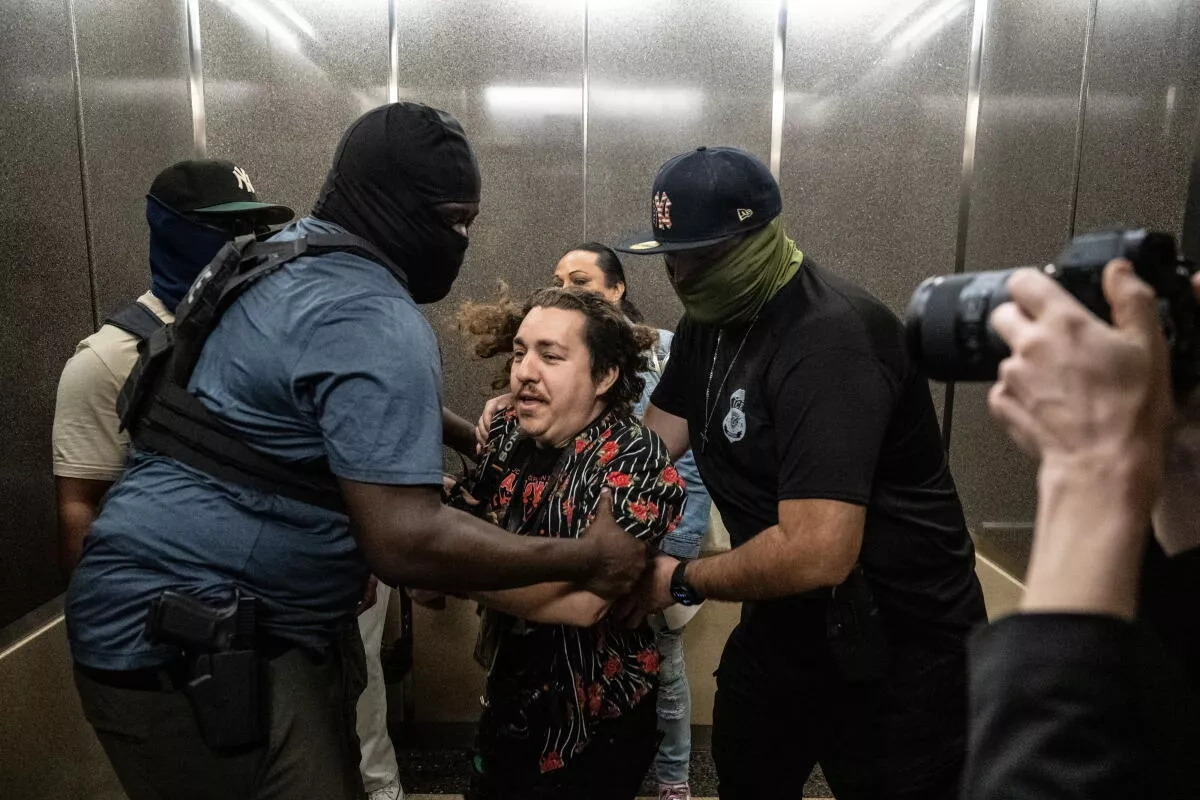
Illegal deportations have become increasingly common under President Donald Trump’s mass deportation campaign, with federal judges ordering the administration to return people who were deported in violation of court orders, due process protections or safeguards against persecution and torture.
Since last year, judges have found that the administration improperly deported more than 170 people, according to an analysis by POLITICO. Most of those cases stemmed from a single operation last year, but POLITICO said it has tracked nearly 30 individual cases since then, including at least three in the past week.
In many cases, judges have ordered the administration to “facilitate” the return of people who were wrongly deported.
The Department of Homeland Security said it takes “every reasonable step” to safely return people when ordered by a court, while accusing “activist judges” and “radical NGOs” of driving litigation over deportations.
“We are a nation of laws, and we follow the law, even when activist judges warp it for political purposes,” a DHS spokesperson said.
Immigration lawyers, however, say the growing number of cases reflects the speed and scale of the administration’s deportation campaign.
“The machine is running at 110 percent,” said Simon Sandoval-Moshenberg, a Maryland-based immigration lawyer who represents Kilmar Abrego Garcia, who was illegally deported to El Salvador last year despite an immigration judge’s finding that he was likely to be targeted by a dangerous gang there.
Sandoval-Moshenberg said he handled about three illegal deportation cases during his previous 17 years of practice. His firm now handles about three such cases a month and has created a dedicated practice area to help people who were deported in violation of the law, due process or court orders.
One such case involved Jose Ojeda Duarte, a Venezuelan who had spent seven months in four detention facilities before being deported to Venezuela despite having a pending asylum application and no final order for his removal.
Ojeda said ICE officers woke him at about 3 a.m. and told him: “Let’s go, you’re going to court.”
“Liars,” he said. “They were taking me to Arizona to send me back to Venezuela.”
The administration later acknowledged in court that Ojeda should not have been deported, attributing the mistake to a “data quality issue”.
A federal judge later ordered the administration to facilitate his return. Ojeda returned to the United States on June 1 and was released on bond days later.
The Justice Department and ICE have acknowledged errors in several other cases, citing administrative or technical failures. Those have included incorrect information in detainees’ immigration files, failures to pass court orders to officials handling deportations and oversights that left orders barring deportation out of detainees’ files.
In one case, a college student, Any Lopez Belloza, was deported to Honduras despite a court order protecting her. An ICE officer later said he had been under the “mistaken impression” that he did not need to alert officials in another state about the order.
Lawyers say some cases go beyond administrative mistakes.
“They’re in such a hurry to kick people out and expel people from the United States that they aren’t actually looking at the legality of some of this stuff,” said Javier Rivera, whose client was deported to Nicaragua despite legal protections linked to her status as a victim of domestic violence. A federal judge ordered her return.
Federal judges across the ideological spectrum, including several appointed by Trump, have ordered the administration to return people who were wrongly deported.
In some cases, the administration has worked to correct the mistakes. In others, it has resisted, arguing that cases are moot because the deported individuals are no longer in US custody or that returning them could interfere with diplomatic relations.
“The Trump administration ‘may not ‘deport first, litigate later,’” US District Judge Jill Parrish wrote in a February order.
The cases include a 50-year-old man with profound mental disabilities who was sent to Mexico despite having no deportation proceedings pending against him. A judge later ordered his immediate release after his return to the United States, citing an “egregious lack of due process”.
A DACA recipient who had arrived in the United States from Mexico as a teenager was also deported after officials discovered an old deportation order entered shortly after her arrival 27 years earlier. A judge ruled that deporting someone with active DACA status violated due process.
In another case, 12-year-old US citizen twins were deported to Guatemala after accompanying their mother to an ICE check-in. Their mother had been properly deported but had chosen to leave the children in the United States with their grandmother. The administration returned the children within about 24 hours after a judge ordered their return.
Another Mexican man who had lived in the United States for 26 years was arrested at a Walmart in Minnesota and taken to El Paso. Despite a federal judge’s order requiring his return to Minnesota, ICE later transported him to a border crossing for deportation to Mexico.
The administration has at times blamed the surge in litigation on an “unprecedented onslaught” of immigration cases created by its mass deportation drive.
DHS has also continued to defend its broader enforcement campaign.
“He will receive full due process,” the department said of Ojeda. “Despite a historic number of injunctions, DHS is working rapidly and overtime to remove aliens like this from our streets and to their final destination—home.”
For some deportees, returning to the United States has brought only temporary relief. Most still face immigration proceedings and the possibility of eventual deportation.
Some have also refused offers to return, fearing they could be detained again and face another deportation. Others remain detained in the countries to which they were deported, beyond the effective reach of their lawyers and US courts.
Ojeda, who eventually returned to his family, said his future in the United States remains uncertain.
“I’m a worker here in the U.S. I’m honorable. I’m responsible,” he said. “I’m really happy to be back — sharing with my family, eating well, moving forward and trying to help my family … and now I’m getting to it, to get legal status.”
By Aghakazim Guliyev