BAKU, Azerbaijan, September 8. Artificial
intelligence (AI) can be applied to predict flood risks in
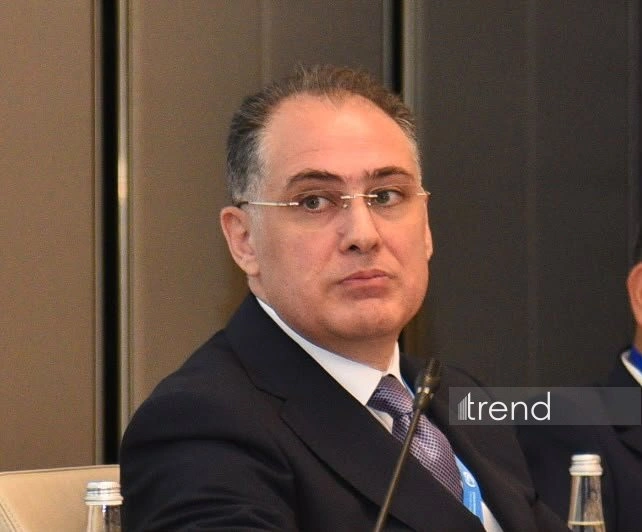
Azerbaijan, First Deputy Chairman of the Azerbaijan State Water
Resources Agency Khayyam Mammadov said during a high-level
roundtable on "Advantages and Challenges of AI-integration to the
Multi-hazard Early Warning Systems" within the framework of the 4th
Baku Climate Action Week (BCAW), Trend's correspondent reports from the
event.
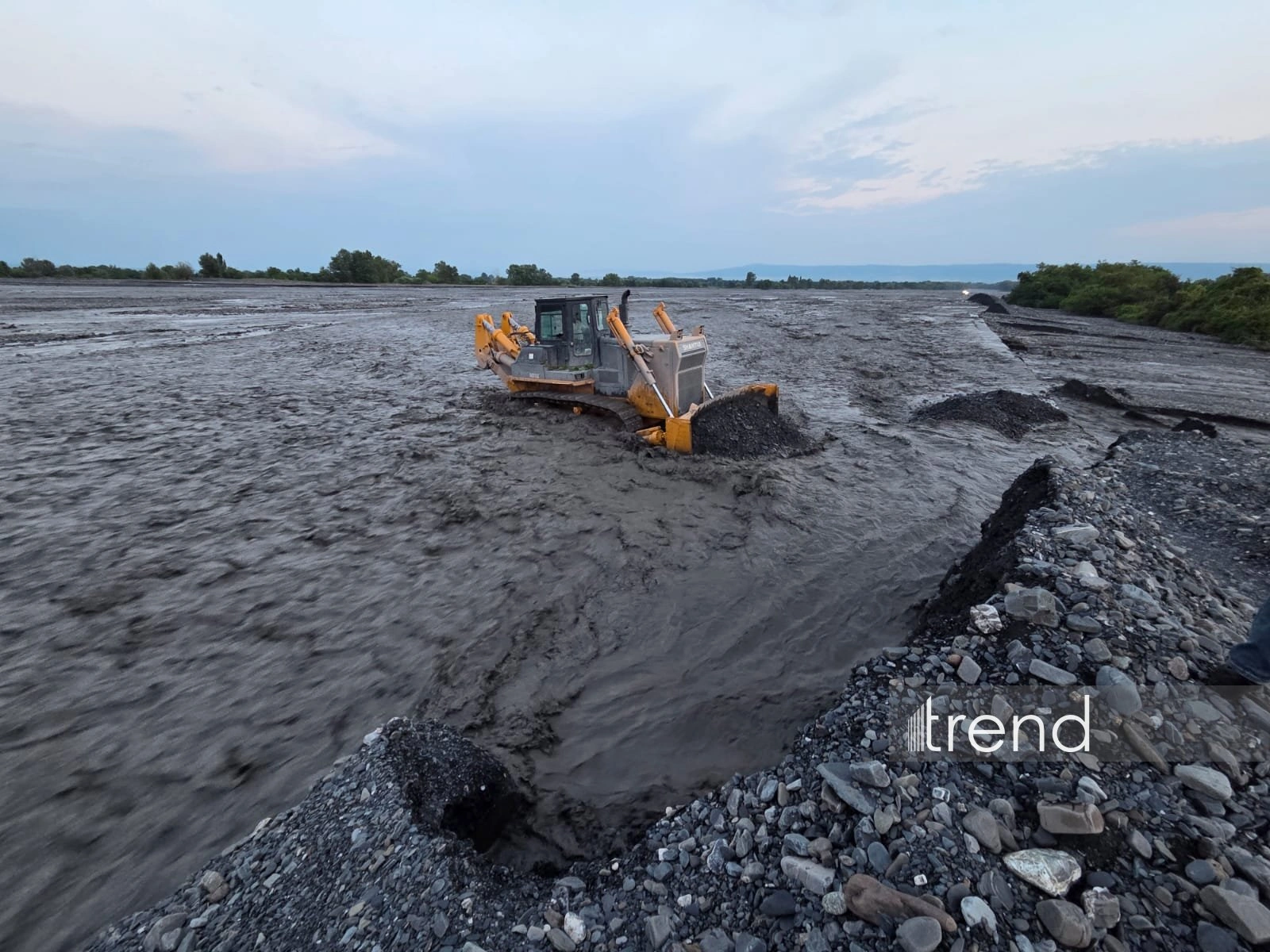
He noted that the significant increase in flood events in
Azerbaijan in recent years necessitates the wider use of AI and
early warning systems to predict these risks in advance and take
preventive measures.
According to him, if previously flood events were observed in
the country about 10-20 times a year, in recent years this
indicator has increased by 10-15 times.
"These indicators show that only the development of
infrastructure and operational response to events isn't enough, and
require us to switch to a more proactive approach. We need to
monitor the processes taking place in the atmosphere and river
basins in real time, predict what will happen in the next stage in
advance, and take necessary preventive measures by identifying
possible threats in advance," said Mammadov.
He pointed out that climate change is increasing both the
frequency and intensity of extreme weather events around the
world.
"Longer droughts, more severe flood and flood events, and
intensive precipitation have serious impacts on various sectors of
the economy, including agriculture, urban infrastructure, and the
well-being of the population," emphasized the first deputy chairman
of the agency.
According to Mammadov, Azerbaijan is also a country sensitive to
climate change in terms of the water sector, and the implementation
of adaptation measures is of particular relevance.
He said that Azerbaijan is highly dependent on transboundary
rivers. Fluctuations in the level of the Caspian Sea, the reduction
of the region's snow reserves, the shrinking area and volume of
glaciers, and changes in precipitation regimes create additional
pressure on the formation of water resources.
The official also said that currently, 84 hydrological stations
operate across the country to assess water flows in rivers.
"40 of them use automated measuring devices, and 44 use
traditional gauges," he noted.
Mammadov further noted that one of the main goals within the
framework of the "National strategy for ensuring the efficient use
of water resources" is to expand and modernize the observation
network, form a more flexible, accurate and operational
database.
According to him, these steps can allow for the prediction of
water consumption and water levels in rivers, earlier
identification of flood and drought risks, detection of risky
areas, and preliminary assessment of possible impact zones.
"In the next stage, analysis with the support of artificial
intelligence, taking into account historical hydrological data,
meteorological observations, satellite data, GIS maps and climate
scenarios, may allow for the identification of climate risks at an
early stage," added Mammadov.
Mammadov noted that a number of strategic steps are being taken
in Azerbaijan to manage the emerging flood waters.
According to him, the "State program on the improvement of water
supply, rainwater and wastewater systems in Baku city and the
Absheron peninsula for 2026-2035" was adopted at the initiative of
President Ilham Aliyev.
The program envisages the construction of 12 new sewage
collectors with a total length of 346 kilometers and the repair and
rehabilitation of existing infrastructure, as well as the
separation of rainwater and wastewater systems from each other.
He noted that the construction and reconstruction works carried
out at the Sugovushan, Khachinchay, Zabukhchay and Kondalanchay
reservoir complexes located in the Karabakh and East Zangezur
economic regions, as well as the construction of the Yengija
reservoir in the Gabala district, Alijanchay reservoir in the Oghuz
and Shaki districts, will be of great importance in the fight
against floods, in addition to improving water supply.
Mammadov noted that work on the construction of the Aghsuchay,
Zayamchay, Hakarichay and Bargushadchay reservoirs is also
ongoing.
He stressed that the water resources of the rivers of the East
Zangezur and Karabakh economic regions, which amount to 2.35
million cubic meters, constitute 24% of the country's internal
water resources.
"Their use is of great importance in solving the problem of
water shortage in the country and combating floods," the official
said.
He added that President Ilham Aliyev's decree No. 1016 dated
April 28, 2026, instructed to ensure the continuity of the work
done to combat the dangerous and harmful effects of floods and
landslides and to implement appropriate measures to prevent similar
situations from recurring in the future.
The First Deputy Chairman of ADSEA noted that the application of
artificial intelligence systems requires a large amount of
high-quality information, computing capabilities, technical
expertise and financial resources.
He said that in this regard, international cooperation should be
aimed not only at technology transfer, but also at the development
of national potential and human resources.
"Strong regional cooperation is especially important between
countries that share river basins and climate-related risks.
Because the establishment of an early warning system within one
country alone cannot fully provide the expected effect," Kh.
Mammadov emphasized.
According to him, dangerous hydrometeorological events are the
result of broad regional atmospheric and hydrological processes and
are not limited to state borders.
Mammadov added that joint cooperation and coordinated
information exchange can have a positive impact on forecasting
river flows, identifying periods of water scarcity, optimizing
reservoir management, and assessing the impacts of climate change
on water resources.
"The combination of all these factors can allow us to predict
climate events earlier, manage water resources more effectively,
protect communities, and strengthen climate resilience," he
added.