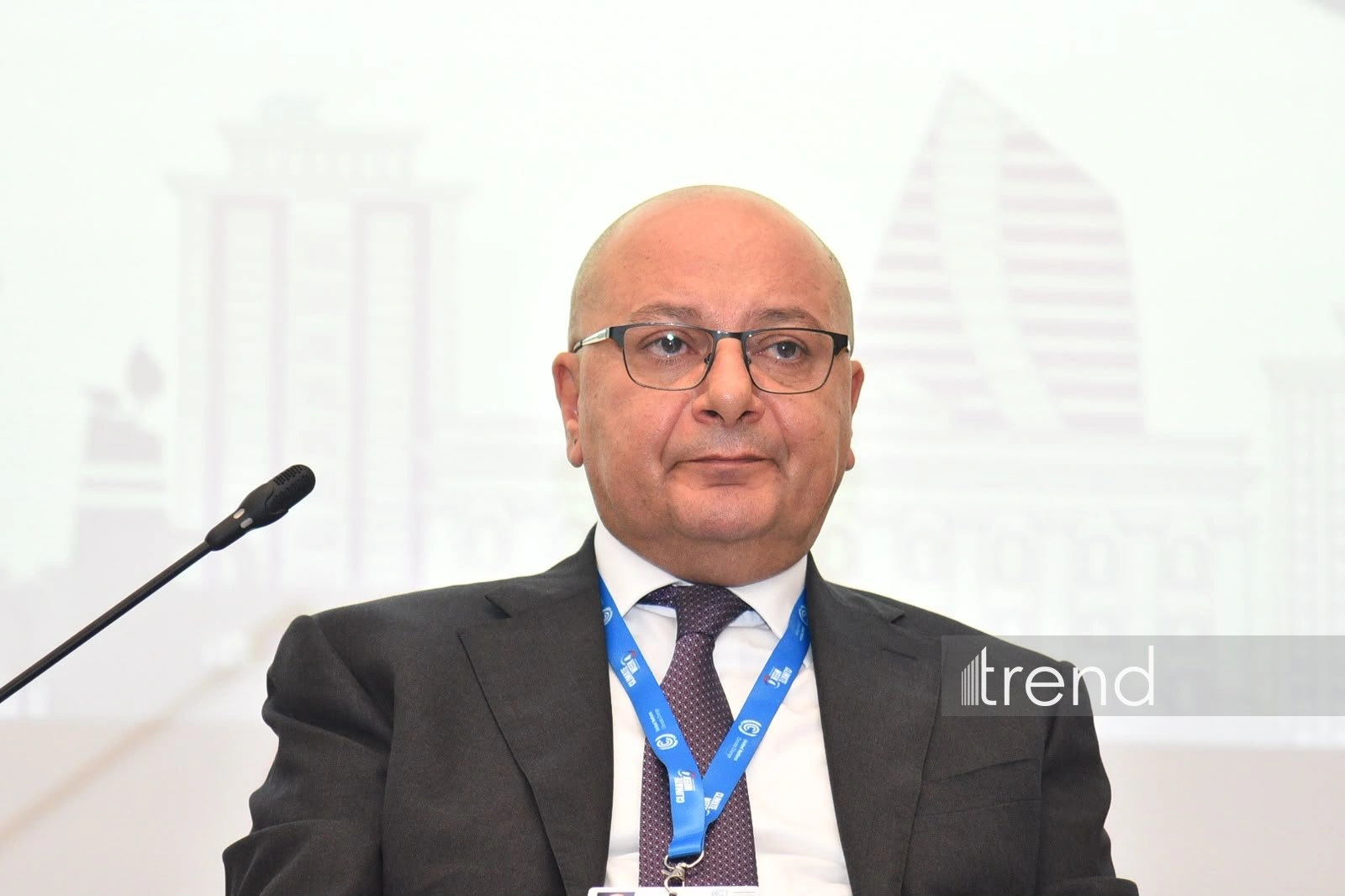
BAKU, Azerbaijan, September 8. A total of 438
people have become victims of mines and other explosive ordnance in
Azerbaijan, 73 of whom lost their lives, since the end of the
Second Karabakh War, Chairman of the Board of Directors of the
Azerbaijan National Agency for Mine Action (ANAMA), Vugar
Suleymanov, said during a high-level roundtable on "Advantages and
Challenges of AI-integration to the Multi-hazard Early Warning
Systems" within the framework of the 4th Baku Climate Action Week
(BCAW), Trend's
correspondent reports from the event.
He noted that ensuring security, identifying risks in advance
and informing people about dangers in a timely manner is a general
approach that combines various areas.
According to Suleymanov, as a result of climate change, the
intensity of floods, landslides, droughts, forest fires and other
natural disasters is increasing. At the same time, mines and other
explosive ordnance left after conflicts create serious obstacles to
the safety of the population, infrastructure projects, agriculture,
the urban development process and the return of people to their
native lands.
"Azerbaijan is among the countries most contaminated with mines
in the world. According to preliminary estimates, during the
occupation of our territories, the Karabakh and East Zangezur
economic regions had been contaminated with more than 1 million
mines," the ANAMA chairman noted.
He emphasized that the scale of the mine threat is not measured
only by the number of mines and explosive devices.
"Mine threat is a problem that affects the safety of soil,
water, biodiversity and the ecosystem as a whole," Suleymanov
said.
The ANAMA chairman noted that mine-contaminated areas pose a
threat not only to the clean ecological environment, but also to
the right to life of people who are part of the ecosystem.
According to him, since the end of the 44-day Second Karabakh
War, ANAMA and other organizations involved in humanitarian
demining activities have cleared 300,565 hectares of land and
neutralized 261,705 mines and other explosive ordnance.
He said that 31,037 hectares have been cleared of explosive
ordnance for the installation of early warning systems, 132,447
hectares for agriculture, 71,202 hectares for the development of
residential infrastructure, 12,443 hectares for energy
infrastructure, and 8,447 hectares for land reclamation and water
management projects.
Suleymanov noted that in order to ensure a safe and sustainable
return to the liberated territories, along with the demining
process, areas highly contaminated with mines and other explosive
ordnance are being conserved and fenced off.
"Every hectare of land cleared of mines is a new opportunity for
the future," he emphasized.
Besides, the ANAMA chairman said that humanitarian mine
clearance activities in Azerbaijan are carried out in accordance
with the International Mine Clearance Standards using the most
modern and advanced technologies available in the world.
According to him, during clearance operations, detectors and
magnetic locators, deep search devices, and DGPS equipment are used
to accurately obtain geographical coordinates in the areas.
Moreover, special-purpose mechanical mine clearance vehicles are
used in survey and clearance operations, and unmanned aerial
vehicles are used for more accurate study and exploration of the
area.
"Azerbaijan is ready to develop its experience in this area and
expand cooperation with international partners. We believe that
artificial intelligence, digital technologies and early warning
mechanisms can make a significant contribution to protecting
people's lives, reducing risks and ensuring safe development,"
Suleymanov added.
The second day of the Fourth Climate Week (CW4) of the UN
Framework Convention on Climate Change is being held in Baku.
The main focus of the second day is on sustainable cities,
transport, water resources and agriculture.
Representatives of governments and international organizations,
experts, financial institutions, the private sector, and civil
society from various countries are attending the events.
Now in its third year, Baku Climate Action Week is being held in
parallel with the UN Framework Convention on Climate Change
(UNFCCC) Climate Week for the first time this year. The Fourth
Climate Week and Baku Climate Action Week will feature a series of
sessions, panel discussions and other events on climate change,
climate finance, sustainable development and accelerating climate
action.
Baku Climate Action Week (BCAW 2026) will continue until
September 11.