BAKU, Azerbaijan, September 8. Azerbaijan plans
to increase the number of meteorological stations operating to
provide data for accurate weather forecasts to 181, Trend's correspondent
reports from the event.
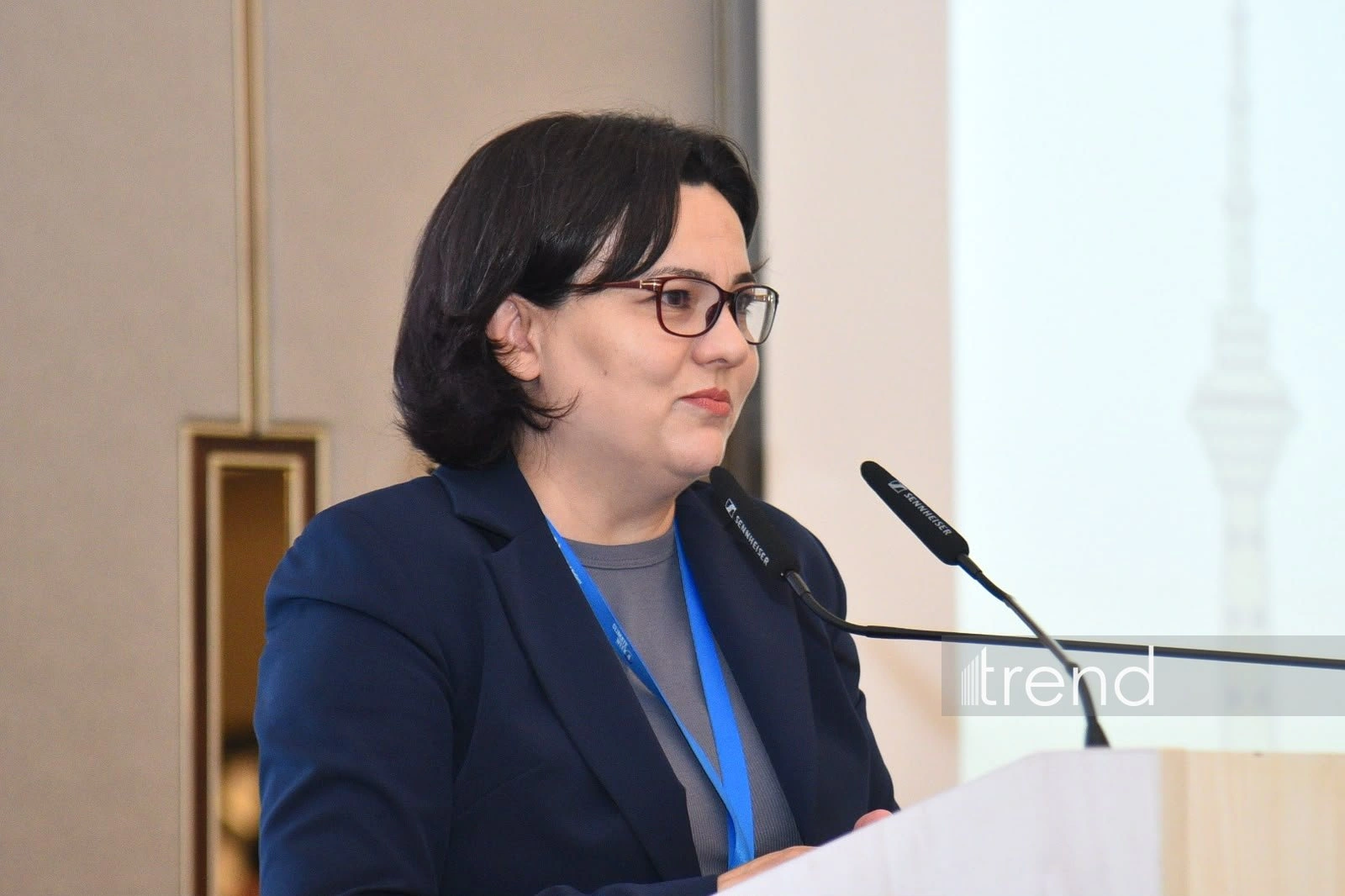
Deputy Agriculture Minister Ilhama Gadirova said this during a
panel session titled “Advantages and Challenges of AI-integration
to the Multi-hazard Early Warning Systems,” held as part of Baku
Climate Action Week 2026.
She said 151 meteorological stations currently provide data for
accurate weather forecasts, while 30 additional stations are
planned to be installed.
“Today, 151 climate stations provide data for accurate weather
forecasts. Another 30 stations are planned to be installed,
bringing the total number of stations in the network to 181.
However, data only becomes valuable when we turn it into a service
for farmers,” Gadirova said.
The deputy minister noted that the Agriculture Ministry’s
artificial intelligence program covers a number of practical
applications in agriculture.
“For this reason, our artificial intelligence program includes
practical applications such as crop health monitoring, assessing
disease and pest risks, yield forecasting, forecasting water demand
and managing irrigation,” she said.
According to Gadirova, crop health monitoring solutions will
allow farmers to receive warnings up to 72 hours in advance, before
disease and pest risks reach critical levels, depending on the
crops they grow.
“Our irrigation management tools support more efficient use of
water resources by using real-time data on water demand and
irrigation activities,” the deputy minister said.
She emphasized that this approach represents a shift in
agriculture from general data to targeted recommendations, from
monitoring to forecasting, and from reacting to losses to
preventing them as much as possible.
“However, technology itself will not make agriculture resilient
to climate change. This is also one of the key messages. Azerbaijan
raised this message at COP29 as well. Together with its partners,
the Agriculture Ministry contributed to the development of the Baku
Harmony Climate Initiative — the Initiative for Farmers, presented
as part of COP29 in 2024,” Gadirova said.
The deputy minister said the initiative’s main goal is to
coordinate existing climate initiatives in agriculture, strengthen
cooperation and ensure that opportunities related to climate
finance, knowledge, technology and capacity building reach those
who need them most, particularly smallholder farmers, women living
in rural areas and young people.
“Harmony was created around a simple but important idea: the
world does not necessarily need more fragmented climate initiatives
in agriculture. We need to coordinate existing efforts, strengthen
cooperation and ensure that opportunities for climate finance,
knowledge and technology, as well as capacity building, reach those
who need them most,” she said.
Gadirova emphasized that one of the key challenges for
agriculture in relation to early warning systems is ensuring that
all farmers can benefit from these systems.
“Azerbaijan’s goal is to cover all farmers, including
smallholder farmers, rural women and young farmers, with these
systems and ensure that they have the opportunity to use and
benefit from these technologies,” the deputy minister said.
She added that the opportunities offered by artificial
intelligence must be considered alongside its limitations.
“Artificial intelligence should enhance human decision-making,
not replace it. A reliable early warning system requires
high-quality data,” Gadirova said.
The second day of the Fourth Climate Week (CW4) of the UN
Framework Convention on Climate Change (UNFCCC) is being held in
Baku.
The second day has focused primarily on sustainable cities,
transportation, water resources and agriculture.
Government and state representatives from various countries,
international organizations, experts, financial institutions, the
private sector and civil society are participating in the
events.
Baku Climate Action Week, which is being held for the third
time, is taking place this year for the first time in parallel with
the UN Framework Convention on Climate Change (UNFCCC) Climate
Week. A number of sessions, panel discussions and other events on
combating climate change, climate finance, sustainable development
and accelerating climate action will be held as part of the Fourth
Climate Week and Baku Climate Action Week.
Baku Climate Action Week (BCAW 2026) will continue through Sept.
11.