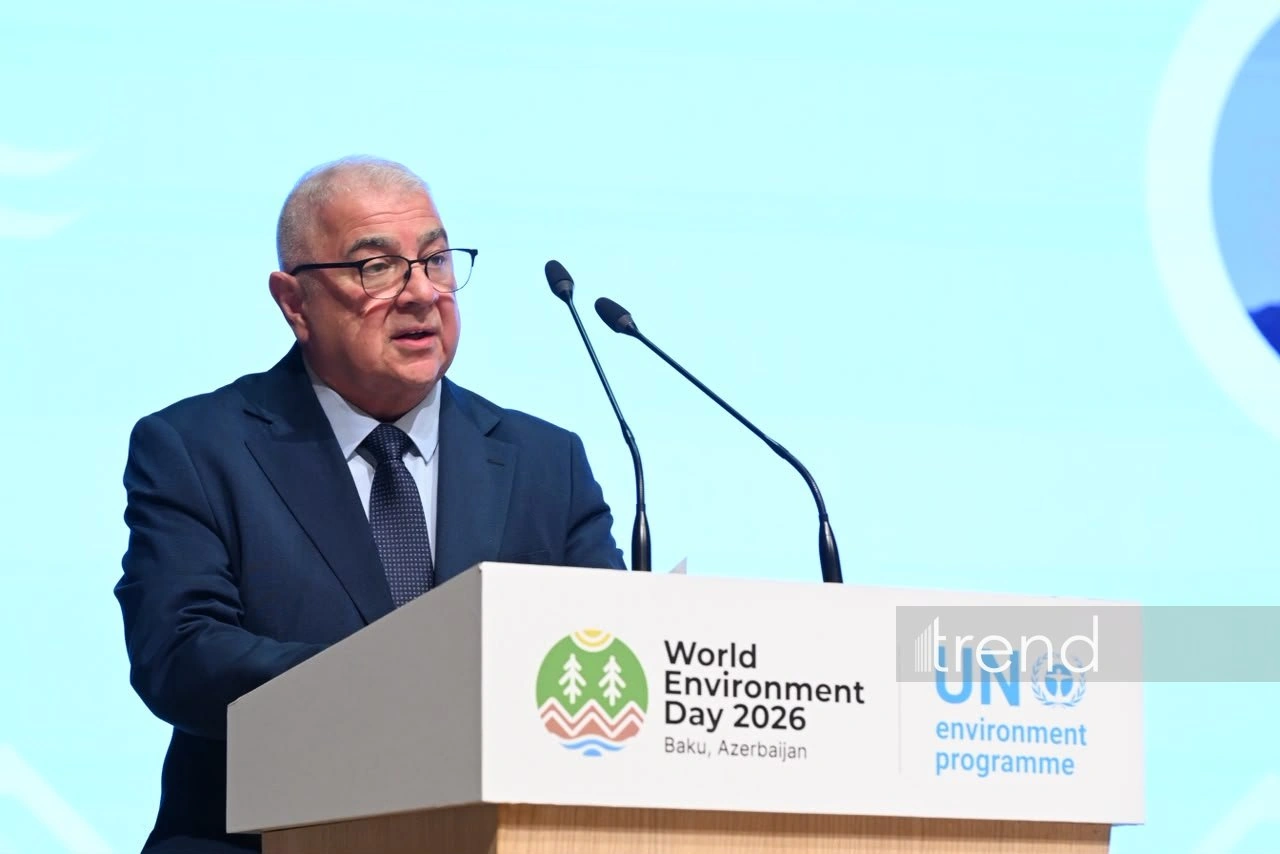
BAKU, Azerbaijan, September 8. The continuous
decline in the water level of the Caspian Sea in recent decades is
no longer a forecast for the future, but an observed reality,
Deputy Minister of Ecology and Natural Resources Rauf Hajiyev said
at a panel discussion on "Climate change challenges on the inland
water bodies: Caspian Sea case" within the framework of the 4th
Baku Climate Action Week (BCAW), Trend reports.
According to him, climate change is increasingly affecting water
resources in many regions of the world.
"Increasing temperatures, changes in precipitation regimes and
river flows, and increased evaporation not only affect the state of
water resources, biodiversity and ecosystems, but also create new
challenges for the well-being of the population, food security and
economic development," Hajiyev noted.
The deputy minister pointed out that the decline in the water
level of the Caspian Sea results in the retreat of the coastline,
changes in coastal zones, and the narrowing of ecosystems and
habitats.
He stressed that valuable species such as the Caspian seal and
sturgeon are also facing risks from this process.
"The impact of these changes is not limited to the environment.
The shallowing of the Caspian can have serious impacts on the lives
of coastal communities, cities, infrastructure, transport, the
operation of ports, and coastal economic activity as a whole,"
Hajiyev explained.
According to him, this situation necessitates a reassessment of
future investment and development plans, taking into account
climate risks.
Hajiyev further noted that the causes and consequences of the
processes taking place in the Caspian are not limited to national
borders.
"Along with climate change, anthropogenic factors are
intensifying existing risks. Therefore, an effective approach to
the future of the Caspian cannot be limited to steps taken only at
the national level," the deputy minister clarified.
He emphasized that the Caspian is a common water basin, and its
protection, ensuring ecological sustainability and adaptation to
emerging challenges require joint efforts of all Caspian littoral
states.
According to the deputy minister, more effective integration of
scientific research results into the policy and decision-making
process, a clearer assessment of water level changes, and possible
future scenarios are of particular importance.
"At the same time, it is important to identify practical
adaptation measures for different water level scenarios and expand
opportunities for their implementation at the local level," Hajiyev
added.
He said that the experience gained in relation to the challenges
faced by the Caspian Sea could serve as an example for other inland
water basins that are sensitive to climate change.
Hajiyev expressed hope that the panel discussions would yield
useful results for broader regional and international
cooperation.