BAKU, Azerbaijan, September 7. Baku Climate
Week will connect regional leadership with global momentum,
contributing to a faster, fairer and more inclusive climate
transition, UN Framework Convention on Climate Change (UNFCCC)
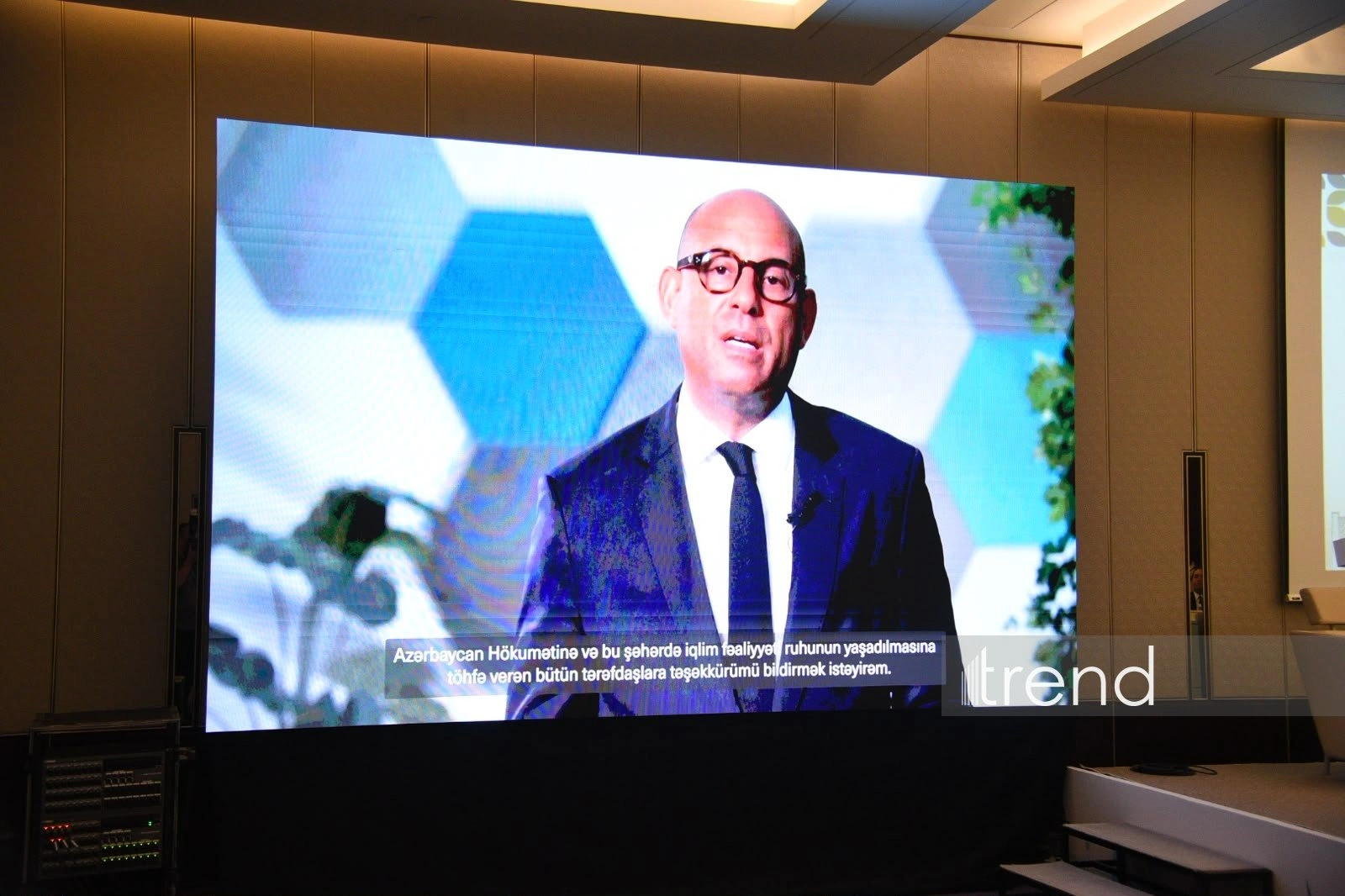
Executive Secretary Simon Stiell said, Trend's correspondent reports from the
event.
He made the remarks in a video address at the opening ceremony
of Baku Climate Week 2026.
Stiell praised Azerbaijan and all partners whose efforts have
helped maintain the momentum of climate action. “During COP29,
Azerbaijan helped countries achieve significant progress on climate
finance. The agreement on a new collective quantified goal of at
least $300 billion annually in climate finance by 2035, the call
for all actors to work towards scaling climate finance to at least
$1.3 trillion annually by 2035, and the launch of the Baku to Belém
Roadmap to achieve this goal represent important steps forward,” he
said.
The UNFCCC executive secretary emphasized that finance is the
main driver of climate action. “Finance turns plans into projects,
project pipelines into electricity grids, resilient infrastructure,
early warning systems, cleaner transport, more sustainable food
systems and safer communities,” Stiell said.
He noted that the impacts of climate change are threatening
people’s lives around the world. “From record heat in North Africa
to unprecedented wildfires in Europe and deadly storms in Chile,
climate impacts are threatening lives everywhere. These events
destroy lives and livelihoods, damage infrastructure, disrupt
economic activity and increase inflation,” he said.
According to Stiell, the response should not be retreat, but
leadership, cooperation and transformation. “The global energy
transition is already accelerating. Investment in clean energy now
exceeds $2 trillion annually. Renewable energy sources have
overtaken coal as the leading source of electricity generation,” he
said.
He added that the benefits of climate action are reflected in
safer energy systems, cleaner air, new jobs, healthier societies
and greater resilience.
Stiell noted that at COP30 all countries reaffirmed that the
energy transition is irreversible and that the Paris Agreement is
delivering results. “From Baku to Belém and beyond, we must turn
this commitment into real action. The Action Agenda can bring
governments together with business, the financial sector, cities
and civil society to accelerate changes in the real economy — from
electrification to cities and food systems,” the UNFCCC executive
secretary said.
The Fourth Climate Week of the UN Framework Convention on
Climate Change (CW4) is being held in Baku, hosted by Azerbaijan
and organized by the Ministry of Foreign Affairs of Azerbaijan.
Representatives of governments, international organizations,
experts, financial institutions, the private sector and civil
society from various countries are participating in the events.
The Fourth Climate Week and Baku Climate Action Week feature
sessions, panel discussions and other events focused on climate
change mitigation, climate finance, sustainable development and
accelerating climate action.
The events are expected to further strengthen Baku’s active role
in the global climate agenda and contribute to enhancing
international climate cooperation ahead of COP31.