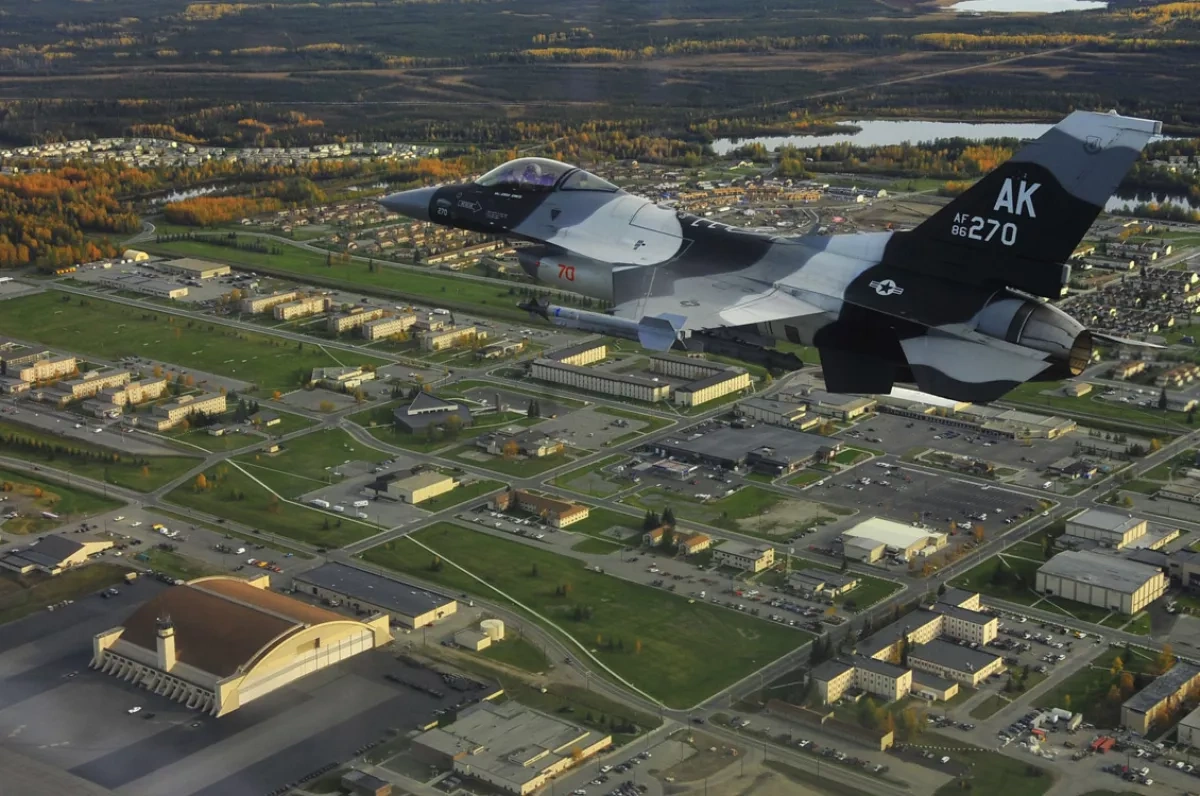
A future permanent US military base in Poland would most likely be established in the country's western region, Deputy Defence Minister Stanisław Wziątek has stated, as Warsaw continues efforts to strengthen the American military presence on NATO’s eastern flank.
Speaking to Polish Radio, Wziątek said several potential locations are being considered, but noted that the facility would “certainly” be situated in western Poland, Caliber.Az reports.
He identified Szczecin as a particularly attractive option due to its proximity to Germany and well-developed transport infrastructure, including a seaport capable of handling heavy military equipment.
"A base is essentially a small city," Wziątek noted, explaining that a facility hosting between 3,000 and 5,000 US troops, together with family members and support staff, could create a community of around 30,000 residents.
According to him, preparations would require not only military and logistical infrastructure but also access to schools, healthcare services and recreational facilities, factors that US officials take into account when assessing potential sites.
His comments followed recent remarks by Polish Deputy Prime Minister and Defence Minister Władysław Kosiniak-Kamysz, who said the Pentagon had shown openness to Poland’s proposal for the permanent deployment of US forces.
Kosiniak-Kamysz stressed that Poland is ready to provide land and make the necessary investments for the project, describing it as a long-term, multibillion-dollar undertaking requiring coordination among the government, parliament and presidency.
He described a permanent American military presence as "the strongest deterrent" available to Poland and said it should be viewed as an investment in national security.
Last month, US President Donald Trump announced plans to deploy an additional 5,000 troops to Poland.
Around 10,000 US service members are currently stationed in Poland, the majority serving on a rotational basis.
For years, Poland has advocated for a larger permanent US military presence, arguing that it would strengthen deterrence against Russia and reinforce NATO’s eastern defenses.
By Bakhtiyar Abbasov