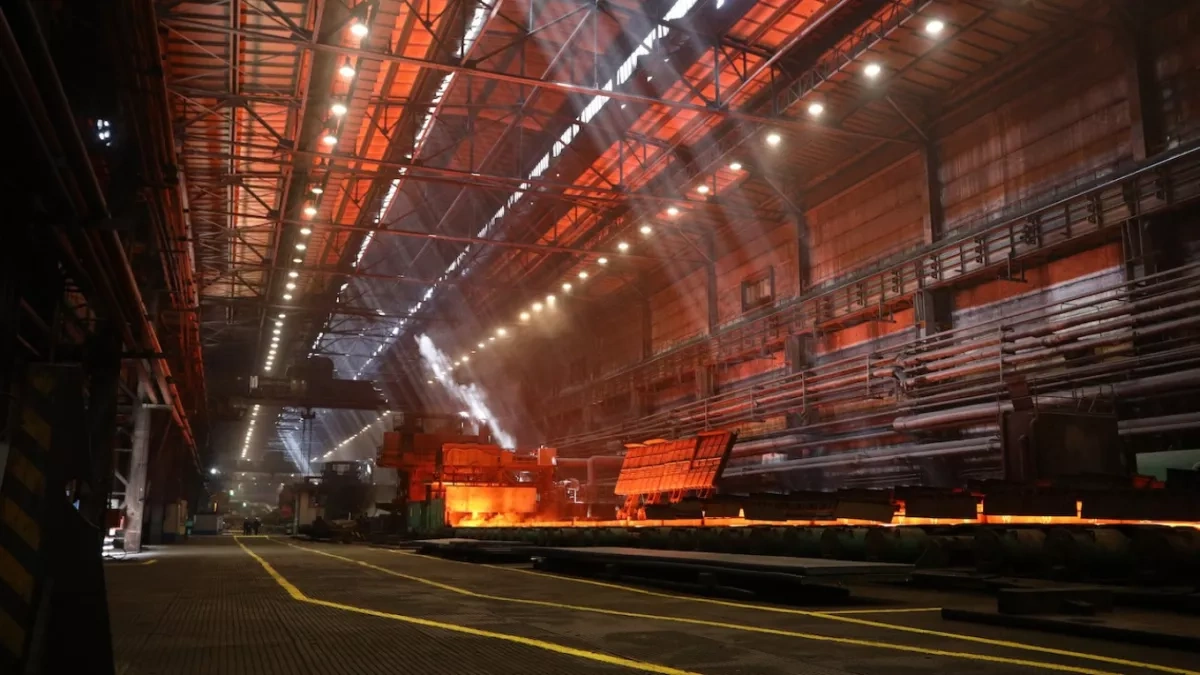
Russia’s steel production has dropped to its lowest level in 15 years amid Western sanctions, slowing economic growth, and high interest rates, according to data from the Chermet Corporation.
The data showed steel output in Russia fell to 67 million tonnes in 2025, declining by 12%, or around 9 million tonnes compared with 2021, Caliber.Az reports, citing Russian media.
Senior Vice President of the Industrial Metallurgical Holding (PMH) Aleksei Parshukov said two key factors are putting pressure on the market: shrinking domestic demand in metal-intensive industries such as construction, machinery, oil and gas, shipbuilding, agricultural machinery, and railcar production, as well as the closure of most export markets.
Domestic steel consumption fell by 14% last year and dropped a further 15% in the first quarter of 2026. Due to sanctions, buyers in the European Union, United Kingdom, United States, Canada, Japan, and other countries stopped purchasing Russian steel. Producers redirected part of exports to Türkiye, CIS countries, and China, but overall steel exports fell by one-third, or 10 million tonnes, between 2021 and 2024.
Parshukov noted that nearly all major steel companies reported declines in revenue and profit over the past financial year.
The Magnitogorsk Iron and Steel Works recorded a net loss of 14.9 billion rubles in 2025, while Severstal saw its profit fall fivefold and reported negative cash flow of 30.5 billion rubles.
Analysts from the Centre for Strategic Research say the Russian steel industry—employing around 700,000 people and supporting about 100 single-industry towns—is now operating in “survival mode.”
Last year, steelmakers borrowed 2.7 trillion rubles from banks, mostly short-term loans used to cover liquidity gaps.
According to the Central Bank of Russia, problematic debt in the sector increased by 600 billion rubles.
Analysts warn that the crisis could last for years, and without state support, the industry risks reverting to conditions seen in the early 2000s. Some experts say a potential end to the war in Ukraine could boost demand for steel through reconstruction projects, though this remains a longer-term and uncertain prospect.
By Bakhtiyar Abbasov