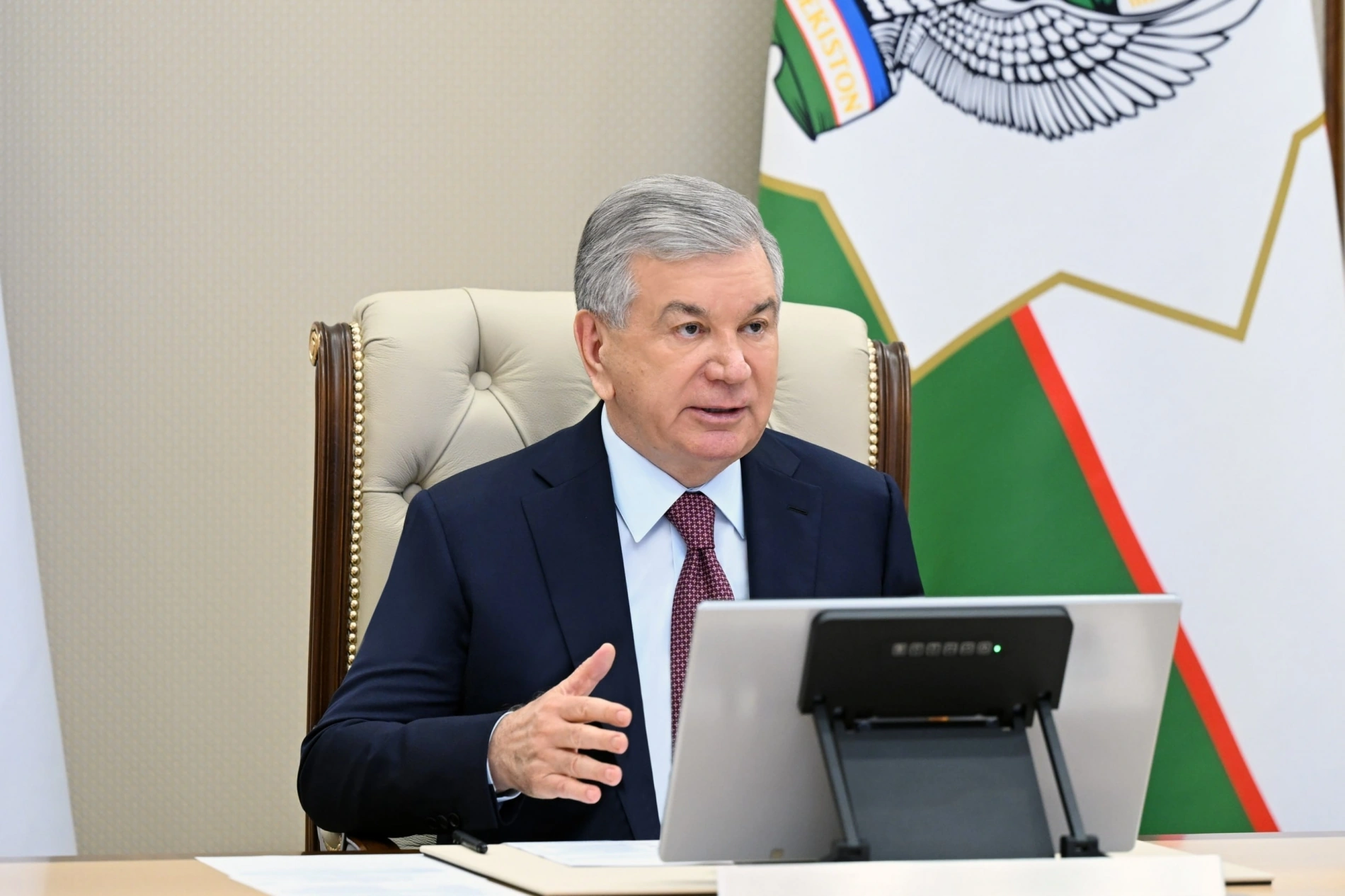
TASHKENT, Uzbekistan, May 26. President Shavkat
Mirziyoyev reviewed proposals aimed at expanding financial support
for small and medium-sized businesses and improving access to
financial services through new digital tools and artificial
intelligence technologies, Trend reports, citing the presidential press
service.
The presentation focused on reducing barriers that still limit
access to financing for entrepreneurs despite recent reforms under
Uzbekistan’s broader economic modernization agenda.
Officials said the country’s total loan portfolio for small and
medium-sized enterprises (SMEs) has reached 218 trillion soms
(approximately $18 billion), equivalent to around 12% of gross
domestic product. However, the share of unsecured online microloans
remains low, while approval processes can take up to seven
days.
Under the proposed reforms, Uzbekistan plans to launch a digital
financial platform that would allow entrepreneurs to apply for
loans, receive offers from multiple banks, compare terms, and
choose the most suitable financing option online.
The platform will be integrated with the country’s e-government
databases, enabling banks to automatically access verified business
information. Officials said the system is expected to reduce
paperwork, save time, and minimize human involvement in loan
decisions.
Beginning Dec. 1, 2026, authorities plan to introduce an
alternative AI-based scoring model through the platform.
Unlike traditional credit scoring, which relies mainly on credit
history, the new system would evaluate business activity, utility
payments, turnover, tax data, and other digital indicators. The
government says the approach will help entrepreneurs without formal
credit histories gain greater access to financing.
Artificial intelligence tools are also expected to generate
recommendations for improving borrowers’ credit profiles, assessing
risks, and supporting business development.
Commercial banks are additionally expected to launch an “AI
Consultant” program designed to help entrepreneurs develop business
ideas and identify financing opportunities based on the economic
specialization and growth potential of local neighborhoods, or
mahallas.
The government also announced additional incentives under its
continuous small business support program. Entrepreneurs with
positive repayment records who previously received microloans will
see the unsecured portion of available financing doubled from 100
million to 200 million soms (about $16,660).
In addition, the state will subsidize part of interest expenses
on loans and leasing agreements worth up to 5 billion soms
(approximately $416,000), regardless of the total financing
amount.
Officials also proposed awarding annual grants of up to 300
million soms (around $25,000) to 100 businesses that successfully
expand operations and implement digitalization, international
standards, and green technologies.
Mirziyoyev approved the proposals and instructed officials to
expand access to financial services for entrepreneurs without
credit histories while ensuring the platform’s cybersecurity and
data protection measures.