BAKU, Azerbaijan, May 21. Achieving the
Sustainable Development Goals (SDGs) is impossible without the
active participation of local authorities and the effective
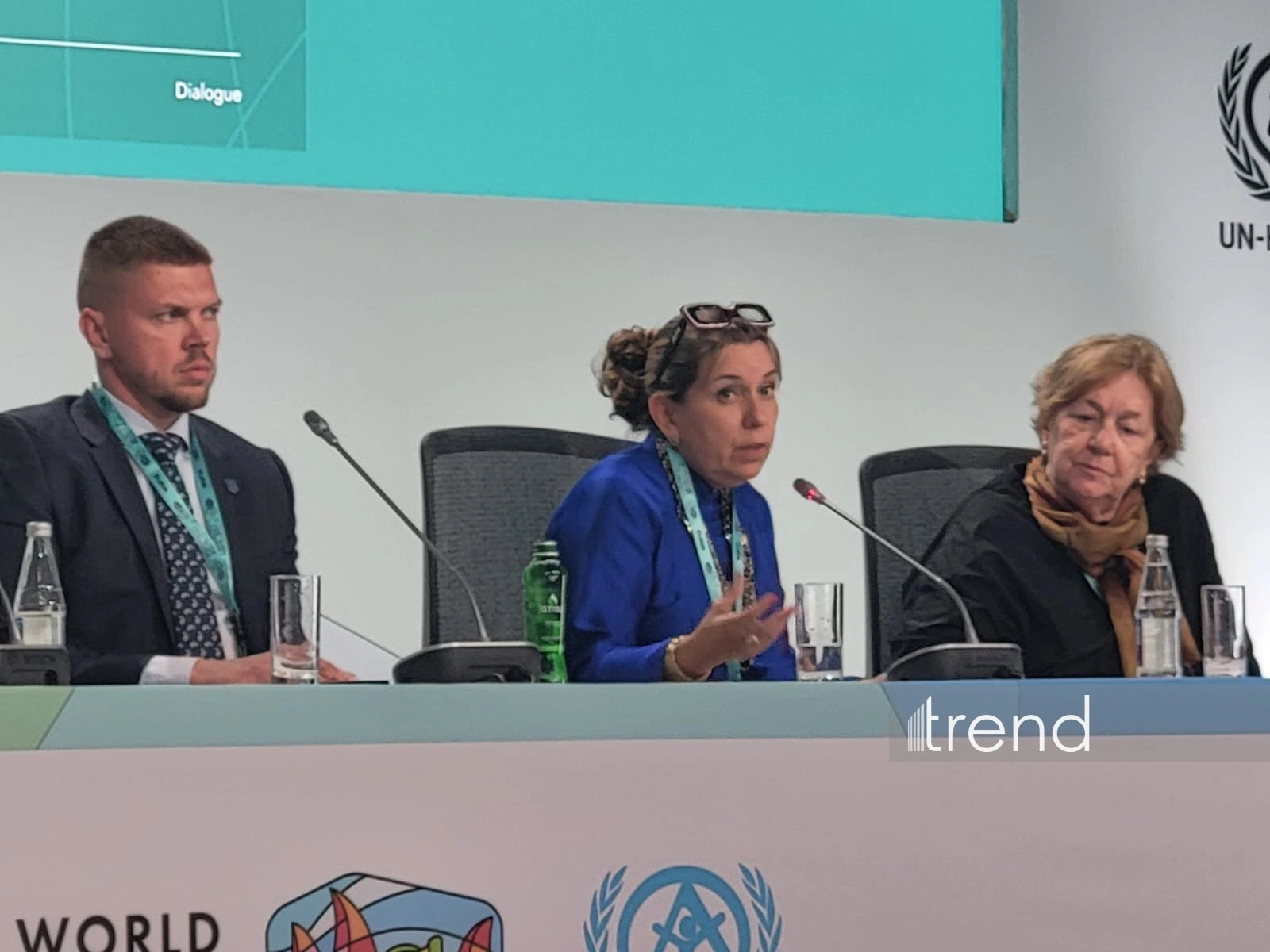
implementation of the SDGs at the city level, Paloma Silva de
Anzorena, Lead Specialist, Housing and Urban Development Division,
Climate Change and Sustainable Development Sector of the
Inter-American Development Bank said, Trend reports.
She made the remark at a panel discussion titled ““Financing
Housing Needs in Cities: New Approaches to Social and Affordable
Housing”” at WUF13 in Baku.
According to her, about 65% of the Sustainable Development Goals
cannot be achieved without the participation of local authorities,
which is why support for cities and regions is becoming one of the
key areas of international cooperation.
She noted that one of the most effective tools for localizing
the SDGs are Voluntary Local Reviews (VLRs), which help cities
assess progress, identify gaps, and coordinate collaboration among
various entities.
Silva de Anzorena reported that as part of this work, support
was provided to a number of cities in Asia and the Pacific region,
including Surabaya in Indonesia, Ormoc in the Philippines, as well
as Almaty and Astana in Kazakhstan.
According to her, VLRs not only improve data collection and
analysis systems but also strengthen institutional coordination
among local authorities, the academic community, civil society, and
the private sector.
She also highlighted existing challenges, including a lack of
high-quality local data, limited financial resources, and
insufficient institutional capacity in a number of cities. The bank
representative noted that special tools and technical assistance
programs are being developed to address these challenges, including
methodological guidelines for preparing VLRs. According to her, the
next step should be to translate the results of local reviews into
concrete investment projects and infrastructure initiatives aimed
at improving the quality of life for the population.
Today marks the fifth day of WUF13 in Baku.
The first day included a ministerial meeting dedicated to the
New Urban Agenda, a ministerial roundtable, assemblies for women
and civil society, business sessions, and discussions on urban
prosperity. An official ceremony marking the raising of the UN and
Azerbaijani flags also took place.
The second day stood out for the inaugural Leaders' Summit,
featuring high-level discussions on the global housing crisis,
urbanization policy, and urban resilience. Concurrently, the
opening of the Mexico City pavilion took place, serving as a
significant platform for expanding cooperation with the Latin
American region and preparing for WUF14.
The third day of WUF13 featured a comprehensive program of
events covering the global housing crisis, the formation of safe
and inclusive cities, climate resilience, artificial intelligence
and urban governance, green urbanization, social equity, and
sustainable transport.
One of the highlights of the third day was the signing of a
sister-city memorandum between the Azerbaijani city of Shusha and
the Turkish city of Trabzon.
The fourth day of WUF13 featured a broad program of events
dedicated to urbanization, climate change, inclusive urban
development, housing policy, and sustainable governance.
One of the important events of the UN Special Program for the
Economies of Central Asia (SPECA) Cities Forum, held on the fourth
day, was the announcement of Almaty’s official accession to the
“Declaration of Intent on the Establishment of the SPECA Smart
Climate-Resilient Cities Forum.”
Also, for the first time in WUF history and at Azerbaijan’s
initiative, the “WUF13 NGO Forum: Global Partnership and
Decision-Making” was held.
WUF13, which has attracted more than 40,000 registered
participants from 182 countries, will continue until May 22. Held
under the theme “Housing the world: Safe and resilient cities and
communities,” the forum brings together governments, international
organizations, experts, and representatives of civil society to
strengthen global cooperation in the field of sustainable urban
development.