BAKU, Azerbaijan, May 21. Tajikistan has
successfully instituted a centralized, unified online property
registration network engineered to safeguard private asset rights
and establish structural transparency across the national real
estate marketplace, said Bobojon Gulzoda, Director of the State
Unitary Enterprise (SUE) "Registration of Immovable Property" of
Tajikistan, Trend
reports.
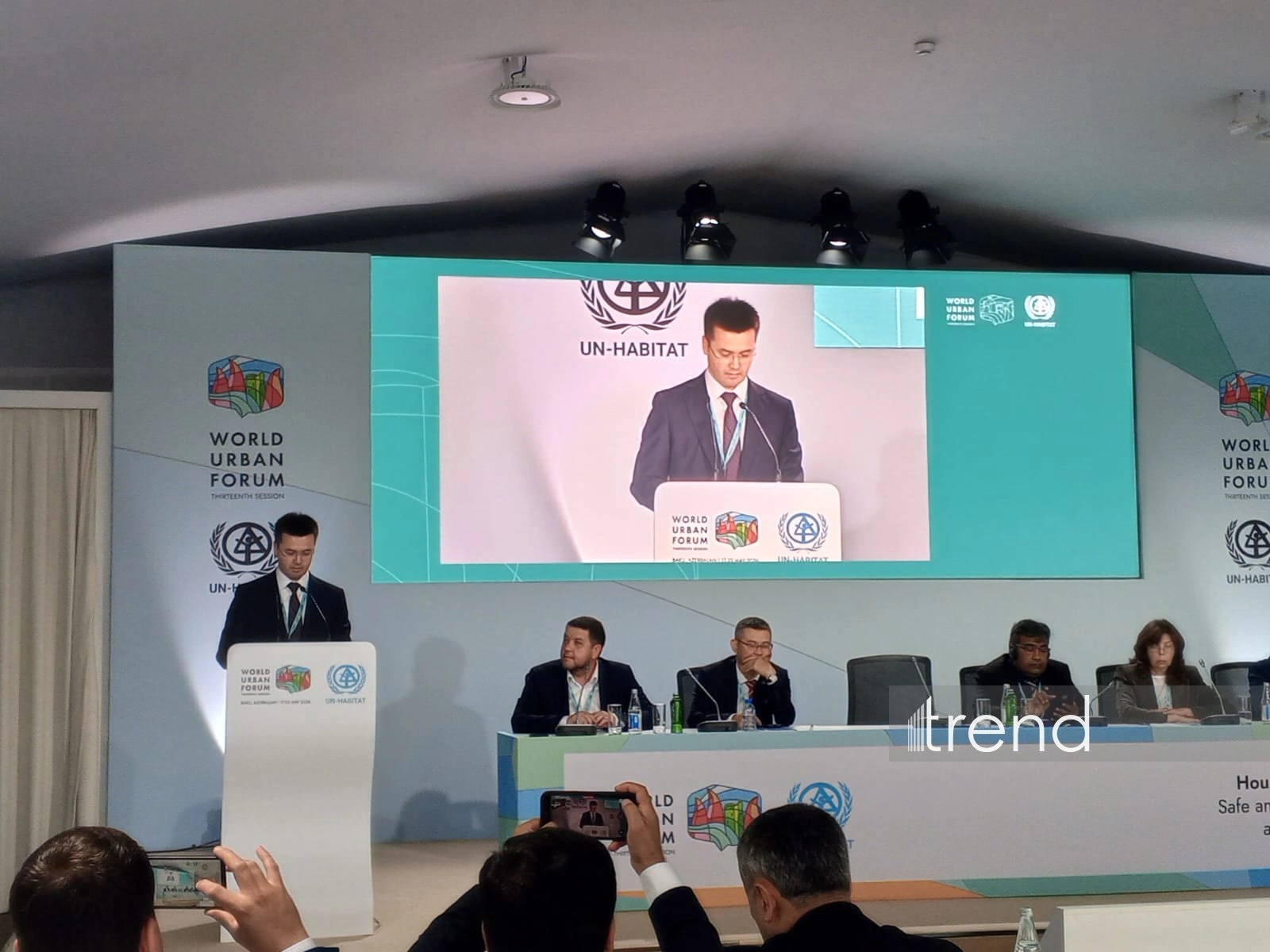
He made the remark during a panel discussion titled "Fair
Property Taxation as a Driver of Sustainable Urban Development,"
held within the framework of the 13th session of the World Urban
Forum (WUF13) in Baku.
According to him, the State Unitary Enterprise "Registration of
Immovable Property" was originally established under an executive
decree by the government of Tajikistan dated March 2, 2017, while
operational deployment of registration procedures utilizing
modernized methodologies officially commenced in January 2016.
Gulzoda noted that state engineers initially rolled out pilot
administrative zones to test the framework, after which the
architecture underwent comprehensive national deployment in strict
compliance with the statutory law of the Republic of Tajikistan "On
State Registration of Immovable Property."
He emphasized that following a meticulous review of
international best practices—incorporating the specialized
administrative workflows of Belarusian land management
agencies—Tajikistan successfully developed its proprietary
electronic property registration platform between 2015 and
2016.
"Subsequently, in February 2025, our agency commissioned a
completely upgraded information network for registering immovable
property. Within this refreshed digital architecture, engineers
successfully eliminated the operational structural deficiencies of
the legacy system while integrating entirely new specialized
modules to manage technical inventories and land management files,"
Gulzoda reported.
According to the director, all regional subsidiary branches now
maintain continuous data links to a centralized server network,
operating seamlessly via a real-time online "Single Window"
administrative layout.
He pointed out that the platform yields vital macroeconomic
utility by guaranteeing the legal protection of property titles,
facilitating secure notary transactions, streamline collateral
verification for commercial bank financing, and driving market
transparency alongside highly efficient municipal tax collection
workflows.
Gulzoda concurrently announced that building upon this primary
digital framework, the state enterprise has engineered unified
personnel and financial management sub-systems, which currently
undergo active deployment in a test-bed phase.
"Furthermore, our technical teams are aggressively compiling a
comprehensive digital repository. Textual records and historical
paper registries preserved since the Soviet era are undergoing
systematic data entry into our centralized master database," the
director concluded.
Today marks the fifth day of WUF13 in Baku.
The first day included a ministerial meeting dedicated to the
New Urban Agenda, a ministerial roundtable, assemblies for women
and civil society, business sessions, and discussions on urban
prosperity. An official ceremony marking the raising of the UN and
Azerbaijani flags also took place.
The second day stood out for the inaugural Leaders' Summit,
featuring high-level discussions on the global housing crisis,
urbanization policy, and urban resilience. Concurrently, the
opening of the Mexico City pavilion took place, serving as a
significant platform for expanding cooperation with the Latin
American region and preparing for WUF14.
The third day of WUF13 featured a comprehensive program of
events covering the global housing crisis, the formation of safe
and inclusive cities, climate resilience, artificial intelligence
and urban governance, green urbanization, social equity, and
sustainable transport.
One of the highlights of the third day was the signing of a
sister-city memorandum between the Azerbaijani city of Shusha and
the Turkish city of Trabzon.
The fourth day of WUF13 featured a broad program of events
dedicated to urbanization, climate change, inclusive urban
development, housing policy, and sustainable governance.
One of the important events of the UN Special Programme for the
Economies of Central Asia (SPECA) Cities Forum, held on the fourth
day, was the announcement of Almaty’s official accession to the
“Declaration of Intent on the Establishment of the SPECA Smart
Climate-Resilient Cities Forum.”
Also, for the first time in WUF history and at Azerbaijan’s
initiative, the “WUF13 NGO Forum: Global Partnership and
Decision-Making” was held.
WUF13, which has attracted more than 40,000 registered
participants from 182 countries, will continue until May 22. Held
under the theme “Housing the world: Safe and resilient cities and
communities,” the forum brings together governments, international
organizations, experts, and representatives of civil society to
strengthen global cooperation in the field of sustainable urban
development.