BAKU, Azerbaijan, May 20. Integrating efforts
to combat plastic pollution into broader waste management and
sustainable urban development projects is essential for
effectiveness, whereas isolated initiatives focused exclusively on
plastic will not yield the desired results, an industrial
development expert at UNIDO’s Energy Systems and Industrial
Decarbonization Division, Marijan Gajsak, said, Trend reports.
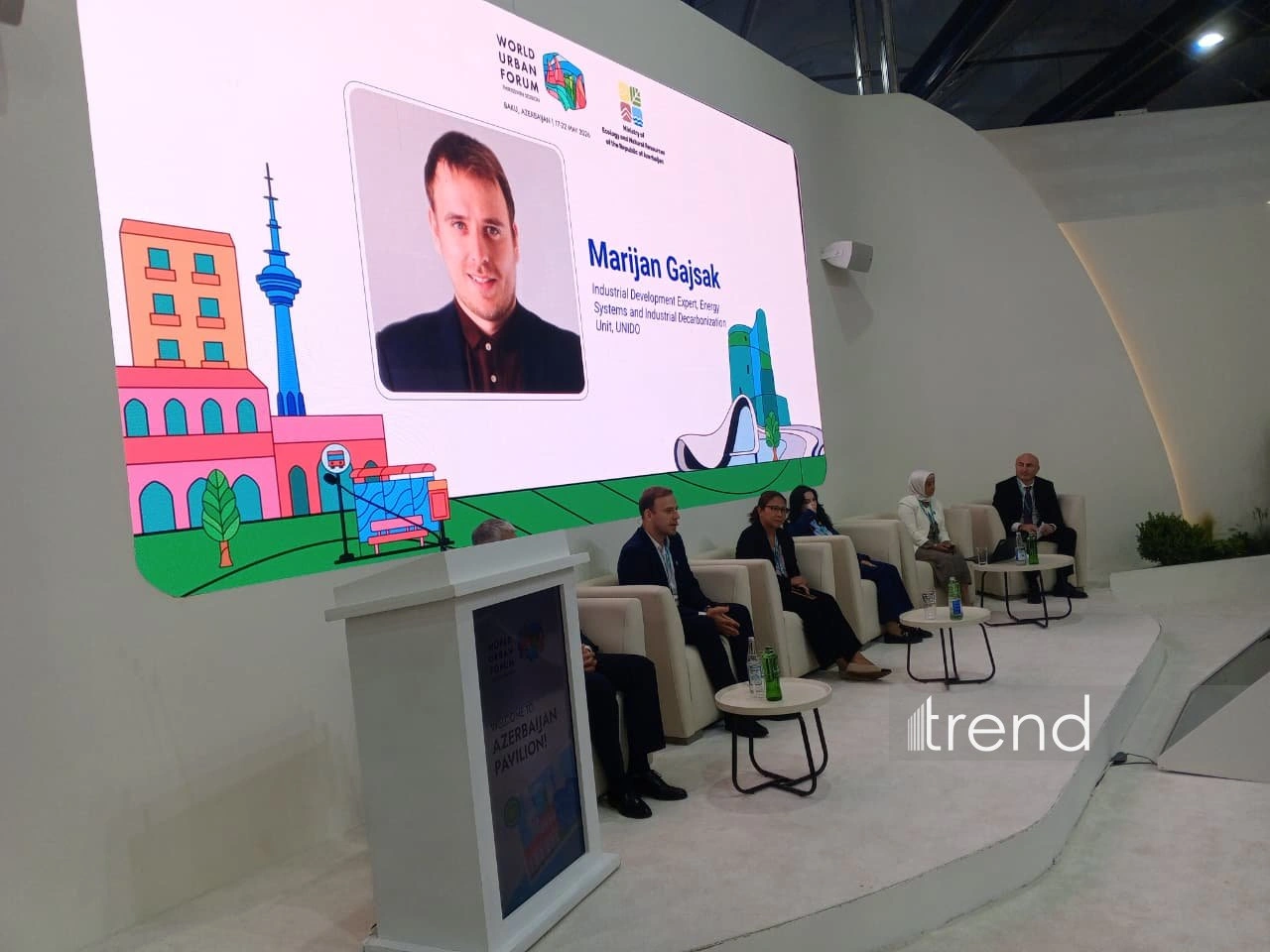
He made the statement at the panel session “Tackling plastic
pollution: promoting liveable cities and a circular economy” as
part of WUF13 in Baku.
According to him, UNIDO takes a comprehensive approach to
addressing the problem of plastic pollution, combining work with
industry, the implementation of resource and energy efficiency
practices, and the development of urban policies.
“As an industrial development organization, we have a unique
mandate that allows us to address the issue of plastic pollution
from multiple angles simultaneously. We work directly with industry
to implement resource efficiency, energy efficiency, and other
measures, while also focusing on the urban dimension and policy
issues,” he noted.
Gajsak emphasized that the organization has come to recognize
the need for closer internal integration among the various
departments dealing with the circular economy, decarbonization, and
sustainable urban development.
“We realized that our efforts were not sufficiently coordinated,
so we decided to bring together initiatives related to plastic
pollution, decarbonization, and sustainable cities into a single
concept, the Industrial Climate Cities Nexus by People, which was
launched last year,” the UNIDO representative said.
He noted that the new initiative has become a roadmap of sorts
for partner countries, enabling them to develop projects that
simultaneously address plastic pollution, waste management, and
sustainable urban development.
“Experience shows that projects focused exclusively on plastic
pollution will be less effective than initiatives that are part of
a broader strategy for sustainable development and urban
modernization,” Gajsak added.
Today, the fourth day of the WUF13 conference is taking place in
Baku.
The first day included a ministerial meeting dedicated to the
New Urban Agenda, a ministerial roundtable, assemblies for women
and civil society, business sessions, and discussions on urban
prosperity. An official ceremony marking the raising of the UN and
Azerbaijani flags also took place.
The second day stood out for the inaugural Leaders' Summit,
featuring high-level discussions on the global housing crisis,
urbanization policy, and urban resilience. Concurrently, the
opening of the Mexico City pavilion took place, serving as a
significant platform for expanding cooperation with the Latin
American region and preparing for WUF14.
The third day of WUF13 featured a comprehensive program of
events covering the global housing crisis, the formation of safe
and inclusive cities, climate resilience, artificial intelligence
and urban governance, green urbanization, social equity, and
sustainable transport.
WUF13, which has attracted more than 40,000 registered
participants from 182 countries, will continue until May 22. Held
under the theme “Housing the world: Safe and resilient cities and
communities,” the forum brings together governments, international
organizations, experts, and representatives of civil society to
strengthen global cooperation in the field of sustainable urban
development.