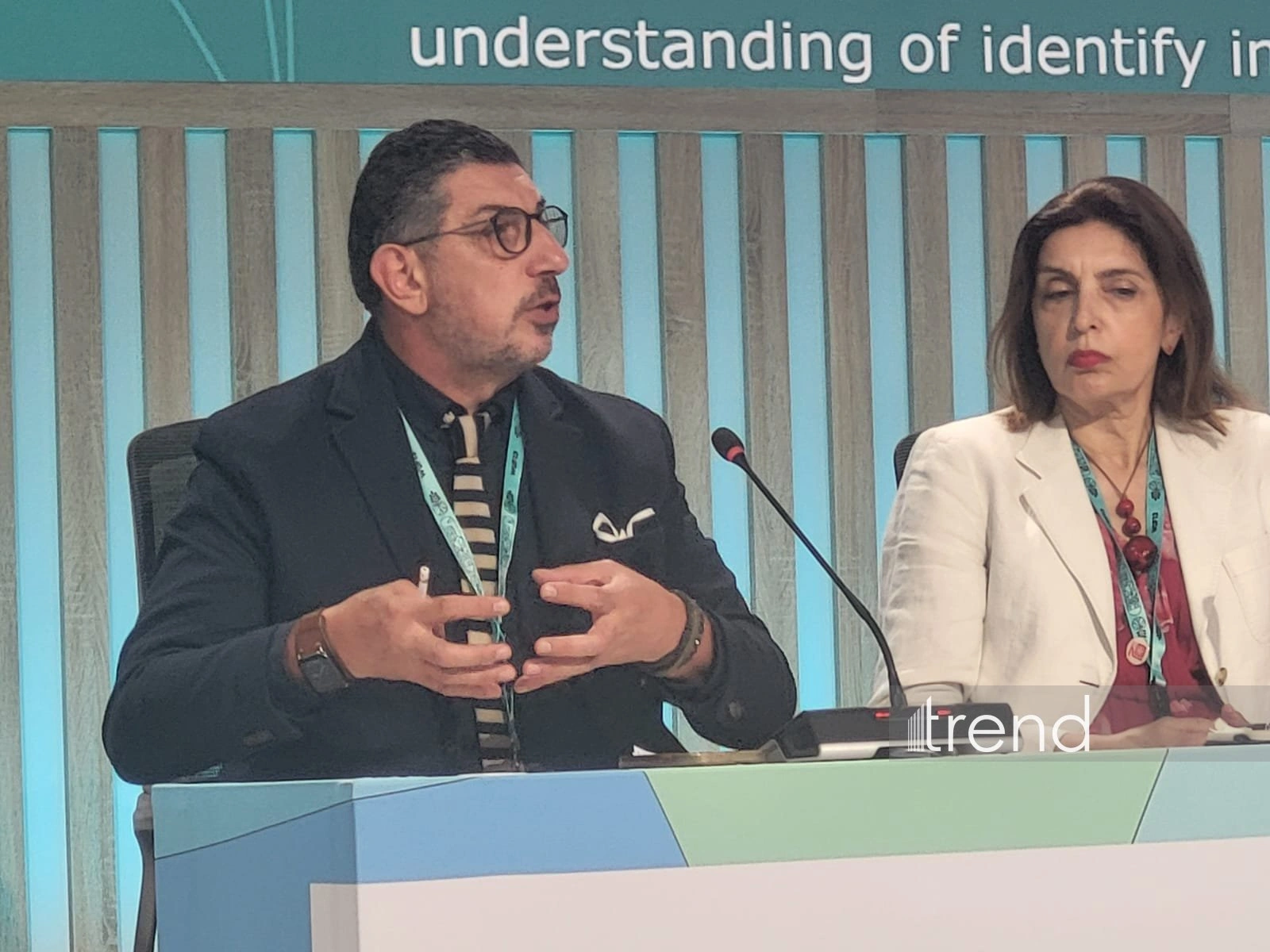
BAKU, Azerbaijan, May 19. The International
Urban Planning Forum (IUPF) aims to build a more inclusive and
global platform for discussing urban issues, with an emphasis on
young professionals and local communities, Ali Alraouf, a board
member of IUPF, said during a panel discussion titled "Bridging
Grassroots Communities and Global Urban Expertise" held within the
framework of the 13th session of the World Urban Forum (WUF13) in
Baku, Trend
reports.
"This is a forum for the people who will be making decisions in
the future. Young professionals and young urban planners are a
crucial part of this platform," he said.
According to Alraouf, IUPF seeks to move away from the
traditional hierarchical model of interaction and create a platform
based on the principles of equal dialogue and community
participation.
"We want to transition from a classic top-down vertical system
to a grassroots approach, where the opinion of the participants
becomes a key factor in the viability and development of the
institution," he noted.
He also emphasized the importance of an interdisciplinary
approach to urban planning issues.
"We do not want urbanists talking only to each other. We need
economists, sociologists, politicians, and representatives of other
professions. That is precisely why we speak about urban development
specialists, and not just urban planners," Alraouf said.
According to him, the forum strives to become a truly global
platform, not limited to the European or American context.
"We are proud that the majority of our participants today
represent Africa rather than Europe. We also want to expand our
presence in Latin America and Asia," he stressed.
Alraouf noted that one of the forum's key objectives is to
change the approach toward interacting with local communities.
"We must not arrive in countries of Asia, Africa, or Latin
America to impose our solutions. These societies already possess
their own knowledge, wisdom, and historical experience," he
stated.
He also compared urban identity to a novel consisting of
different chapters.
"Heritage and local culture are an important part of urban
identity, but modern aspirations and the ability to respond to new
challenges must also become a part of this story," Alraouf
added.