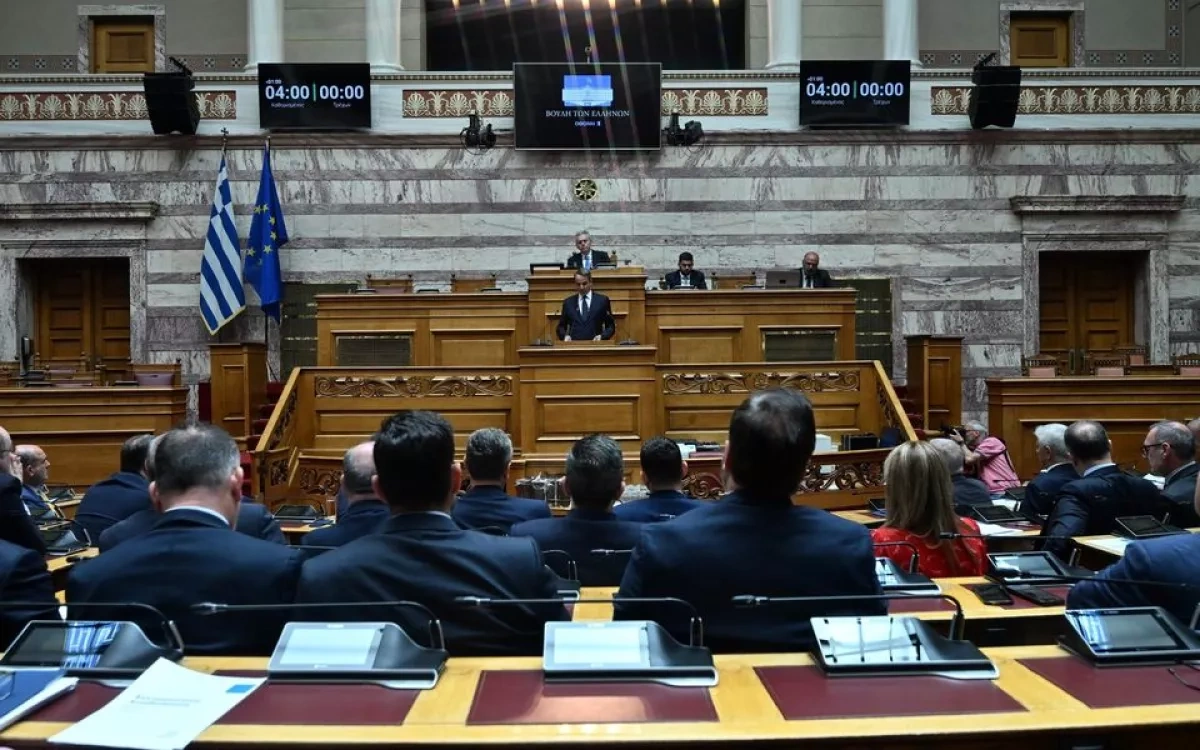
Greece’s Prime Minister Kyriakos Mitsotakis has launched a political debate on a wide-ranging constitutional revision package, outlining proposed changes to around 30 articles that would affect the judiciary, electoral rules, public administration and environmental policy.
Presenting the plan to the governing New Democracy parliamentary group on Thursday (May 7), Mitsotakis said the initiative marks the start of a multi-stage process expected to formally begin in May, when the party submits its proposal backed by at least 50 lawmakers, Caliber.Az reports via foreign media.
A constitutional revision committee would then be established.
Among the most significant proposals is a restructuring of Article 86 on ministerial responsibility. The government suggests removing the requirement for Parliament to act “without delay” in related cases and ending its role in preliminary investigations.
Instead, early-stage inquiries would be handled by an appellate prosecutor, with prosecution decisions requiring an absolute majority vote in Parliament through a roll-call procedure.
The draft also includes the introduction of postal voting for domestic voters, expanding a mechanism previously used for citizens abroad, and a proposal to set a six-year term for the president.
Judicial reforms feature prominently, with the government proposing that senior judicial appointments be decided by a special parliamentary committee selecting from the most experienced judges, rather than through direct executive involvement. Candidates would be nominated by judicial plenaries.
Other elements of the package cover climate policy, renewable energy, affordable housing and what officials describe as “intergenerational justice”, alongside provisions for fiscal discipline, legislative quality standards and internal regulation of political parties.
In education, the proposals would guarantee a minimum of 11 years of compulsory schooling and open the possibility for higher education institutions with public or non-state, non-profit status operating under independent supervision.
Further changes include redefining public sector job permanence, expanding property protections and altering procedures for appointing heads of independent authorities.
The text also introduces constitutional language stating that artificial intelligence “must serve freedom and the welfare of society”, while media-related reforms aim to “rationalise” regulation across print, broadcast and digital platforms and strengthen protections for journalists in relation to employers.
Opposition reactions are expected to sharpen as the process advances, with critics likely to scrutinise proposals affecting judicial independence and parliamentary oversight, while supporters argue the changes are aimed at modernising state institutions.