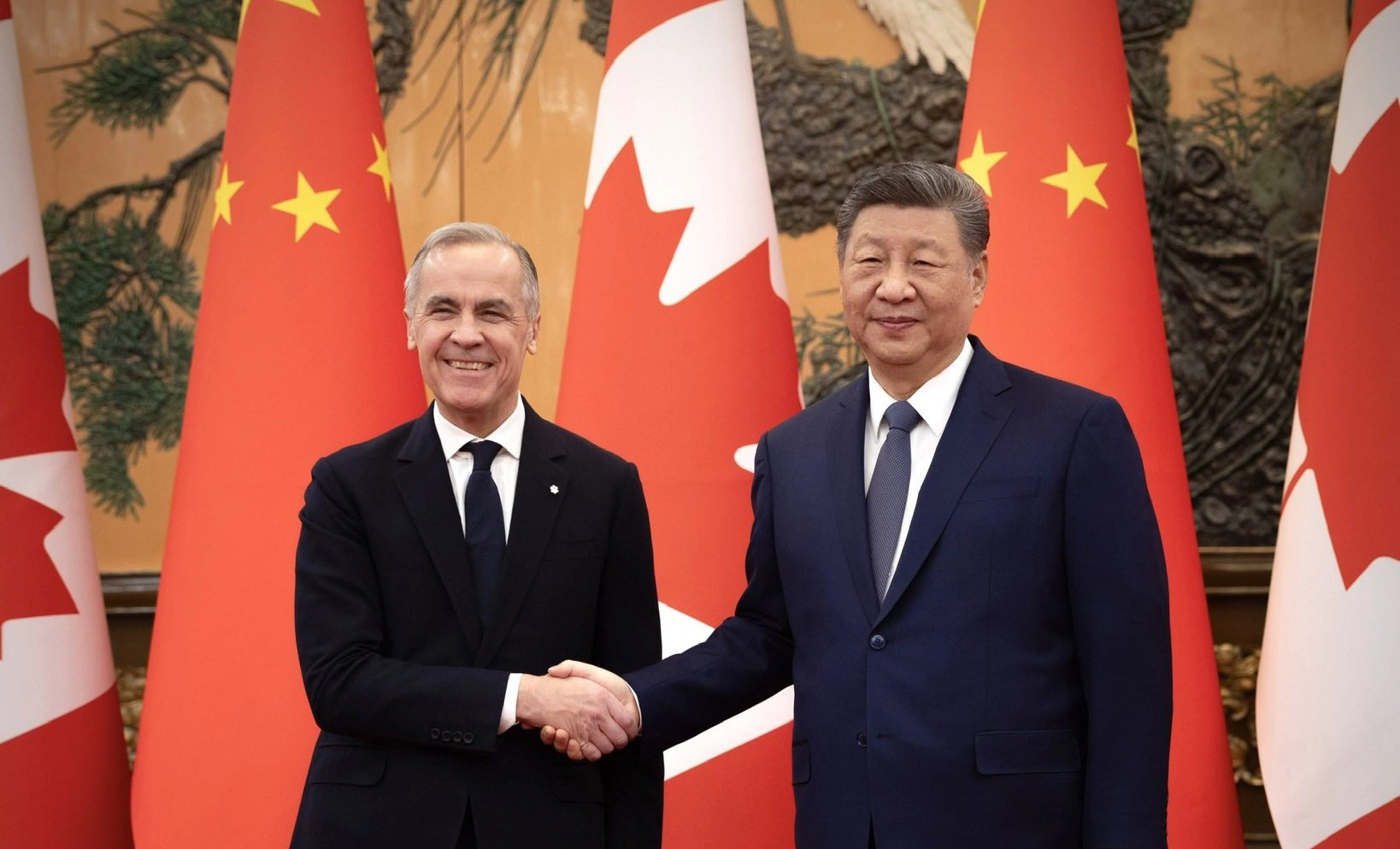
BAKU, Azerbaijan, January 28. As the global
economy begins to recover from a series of trade disruptions, a new
trade initiative between Canada and China has drawn significant
attention from policymakers and analysts across both sides of the
Pacific. On January 16, 2026, Ottawa and Beijing signed an
agreement that, while seemingly pragmatic and narrowly focused, has
already sparked speculation regarding its potential ramifications
for U.S. economic interests and foreign policy.
At the heart of the deal lies a straightforward arrangement:
Canada will reduce tariffs on Chinese electric vehicles, which were
initially imposed in 2024 in coordination with the United States,
while China will lower duties on key Canadian agricultural exports.
Specifically, Canada will permit the annual import of up to 49,000
Chinese EVs at a reduced tariff rate of 6.1%, down from the
previous 100%. This quota is set to gradually rise to 70,000
vehicles over the next five years. Projections suggest that within
this period, more than half of the Chinese EVs entering under the
preferential quota will be priced below $35,000, thus expanding
consumer options and providing a significant boost to Canada's
domestic market.
China, for its part, will lower tariffs on Canadian canola from
84% to roughly 15% starting March 1, 2026, and will eliminate
duties on lobster, crab, flour, and peas. Canadian authorities
estimate that the move will unlock roughly $3 billion in stalled
export orders.
Canadian Prime Minister Mark Carney described the agreement as a
pragmatic step aimed at diversifying trade and reducing reliance on
what he called increasingly volatile relations with the United
States. For farmers and fishers who have faced unpredictable trade
barriers in recent years, the tariff cuts promise a measure of
long-sought stability.
The move, however, provoked an immediate and forceful response
from Washington. On January 24, President Donald Trump took to
Truth Social to issue a stark warning that, should Canada become a
conduit for Chinese goods, the U.S. might impose a 100% tariff on
all Canadian exports. U.S. officials have emphasized that any trade
concessions granted to China could be perceived as an attempt to
bypass existing tariff frameworks.
The following day, the Canadian government swiftly refuted
reports suggesting the imminent preparation of a comprehensive free
trade agreement with China. Carney clarified that the recent
measures were exclusively focused on addressing specific concerns
within agriculture and seafood, and did not represent the
foundation of a broader trade partnership. Ottawa further stressed
that the inclusion of electric vehicle (EV) quotas rendered the
deal highly targeted, asserting that it did not pose a direct
threat to U.S. interests.
Beijing, meanwhile, pushed back against claims that the
agreement carries an anti-American edge. China’s Foreign Ministry
said the cooperation is based on mutual benefit and openness and is
intended to support stability and development in both countries.
Recent trade data adds nuance to that argument: In 2025,
China–Canada trade totaled $89.6 billion. Chinese exports to Canada
rose to $47.9 billion, up 3.2%, while imports from Canada fell to
$41.7 billion, down 10.4%. Overall bilateral trade declined 3.6%
from 2024, underscoring the fragility of traditional trade flows
and the pressure to seek new opportunities.
Against that backdrop, Canada is clearly attempting a delicate
balancing act between economic pragmatism and political risk.
Limited concessions on Chinese EVs and agricultural products leave
room for maneuver, allowing all sides to avoid a sweeping agreement
that could provoke U.S. sanctions. At the same time, deeper
engagement with China could become a longer-term pressure point,
particularly as U.S.– China trade shrank by 18.7% in 2025 to $559.7
billion. Chinese exports to the U.S. fell 20% year over year, while
imports from the U.S. dropped 14.6%, narrowing China’s trade
surplus to $280.3 billion.
This new phase in Canada-China relations manifests a dual
character: a pragmatic attempt to stabilize trade while
safeguarding national interests, coupled with a potential point of
friction with the U.S., where any divergence in tariff policy is
viewed through a lens of strategic risk. The contours of the
situation are sharply delineated. Canada maintains that its
measures are both limited and targeted, while China underscores
their mutually advantageous nature. The U.S., for its part, signals
its readiness to respond decisively should it perceive a
significant shift in the balance.
What remains indeterminate is how this dynamic will unfold,
whether Ottawa can successfully navigate the delicate equilibrium
between economic benefit and political security, and what the
cascading consequences may be for global trade patterns. The
outcome of this balancing act will not only influence the economic
trajectories of Canada and China but also shape Washington’s
strategic calculus within the Asia-Pacific region.