BAKU, Azerbaijan, January 18. In
2025, Uzbekistan continued its large-scale transformation of the
energy sector, focusing on rapid capacity expansion,
diversification of generation sources, infrastructure
modernization, and the accelerated deployment of renewable and
nuclear energy projects.
Over recent years, more than $35 billion in foreign
investment has been attracted to the sector, resulting in the
commissioning of around 9,000 MW of new capacity. Electricity
generation increased from 60 billion kWh in 2017 to approximately
85 billion kWh in 2025, reflecting the country’s growing demand and
industrial expansion.
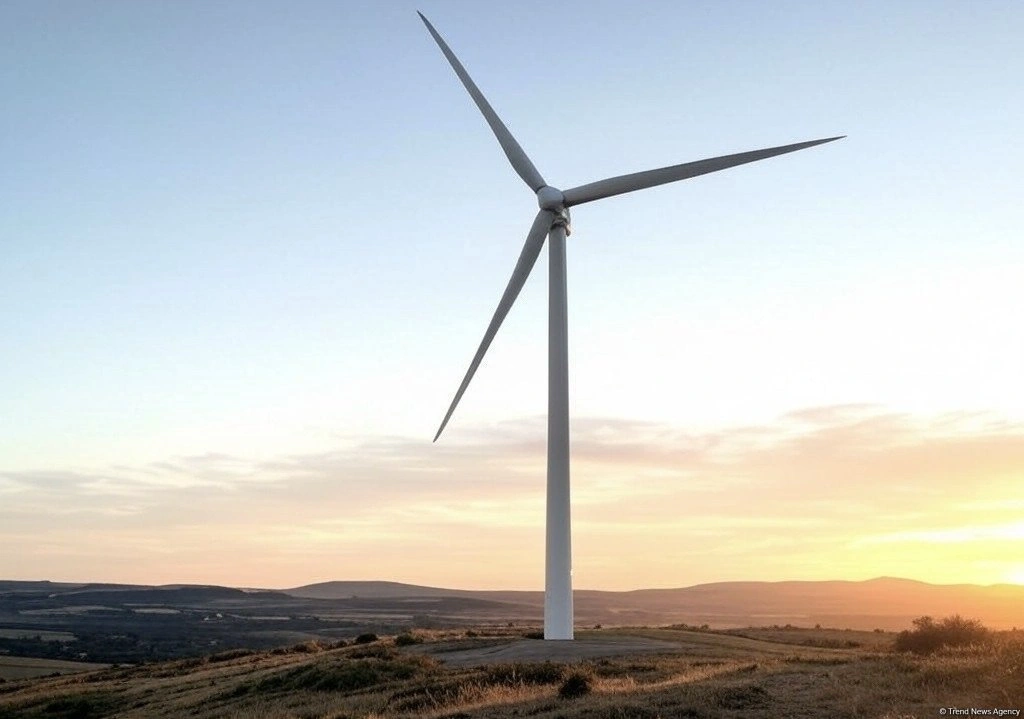
A defining feature of 2025 was the sharp rise in
renewable energy. Nearly 5,000 MW of solar and wind capacity, along
with around 400 MW of hydropower, are now operational. As a result,
the share of green energy in total generation capacity reached 30%,
marking a major milestone in Uzbekistan’s energy transition.
January: hydropower pipeline expands;
groundwork for major projects
At the beginning of the year, Uzbekistan continued to
make progress in electricity. On January 10, Uzbekhydroenergo
announced preparations to launch construction of the Upper Pskem
Hydropower Plant, with a ceremonial groundbreaking planned for
March 10, 2025. The development followed a meeting between
Uzbekhydroenergo Chairman Abdugani Sanginov and China Southern
Power Grid International (HK) Co., Ltd. (CSGIHK) Chairman Chen
Shengran, who confirmed that pre-construction documentation was
nearly ready. In parallel, the sides signed a Joint Development
Agreement for another key hydropower project—the Khojakent
Hydropower Plant in the Bostanlyk district, also expected to start
construction within the year.
Alongside hydropower, Uzbekistan significantly
expanded its renewable energy agenda through high-level
international agreements. On January 14, during President Shavkat
Mirziyoyev’s official visit to the United Arab Emirates,
Uzbekistan, and the Emirati company AMEA Power signed a package of
agreements covering large-scale wind generation and energy storage.
In particular, an investment agreement was concluded for the
construction of a 1-gigawatt wind power plant in Karakalpakstan,
one of the largest wind projects announced in the country. The
document was signed by Uzbekistan’s Minister of Investment,
Industry and Trade, Laziz Kudratov, and AMEA Power Chairman Hussain
Al Nowais.
In addition, AMEA Power signed an investment agreement
and a battery storage service agreement for a standalone 300 MWh
Battery Energy Storage System (BESS) project, reinforcing
Uzbekistan’s strategy to pair renewable generation with storage
solutions to strengthen grid stability.
February: small hydro commissioning;
industrial solar uptake; storage-backed renewables
financing
In early February, Uzbekistan advanced localized
hydropower and solar implementation. On February 1,
Uzbekhydroenergo commissioned the Hisorak small hydropower plant in
Shahrisabz district (Kashkadarya region). The facility has a
capacity of 3.5 MW and is expected to generate 17.5 million kWh
annually. The project costing $1.5 million was implemented under a
localization framework and is expected to save about 5 million
cubic meters of natural gas annually, supplying electricity to
around 7,300 households.
On February 3, the EBRD announced a long-term senior
loan of up to $75 million for a large renewables-plus-storage
package in Samarkand and Bukhara regions: 500 MW solar PV and 500
MWh BESS (with interconnection facilities). The project,
implemented through ACWA Power Sazagan Solar 2 LLC (a
special-purpose vehicle in Uzbekistan), is part of an almost $990
million total cost structure, aimed at scaling renewable generation
and improving grid stability through storage.
At the policy level, the government reaffirmed its
long-term green energy targets. On February 10, a presidential
decree declaring 2025 the Year of Environmental Protection and the
Green Economy set out plans to raise the share of renewable energy
in electricity generation to 26 percent by 2025 and 40 percent by
2030. The targets are to be achieved primarily through the
construction of large solar and wind power plants with a combined
capacity of 4.5 GW, underscoring the central role of utility-scale
renewables in the country’s energy strategy.
On February 19, the private oil and gas major Sanoat
Energetika Guruhi (Saneg) completed the first phase of construction
of the Khodjaobod Solar Power Plant in the Andijan region. Phase 1
has 3 MW (DC), includes 5,000 solar panels and 20 inverter
transformer substations, and is expected to generate 6 million kWh
annually. The second phase is planned to raise capacity to 5 MW.
While the volume is modest compared to utility-scale projects, it
reflects the broadening participation of domestic industrial actors
in solar generation.
March-April: hydropower emerges as a national
flagship; climate diplomacy accelerates
mega-renewables
In March and April, Uzbekistan reinforced its green
energy trajectory by elevating hydropower to a flagship national
priority while expanding its renewable pipeline through regional
cooperation and international climate platforms.
On March 14, President Shavkat Mirziyoyev approved an
agreement on strategic cooperation with Azerbaijan and Kazakhstan
in the development and export of green energy, following a
trilateral presidential meeting held in November 2024. The
agreement assigns the Ministry of Energy as the lead implementing
body and lays the groundwork for coordinated renewable development
and cross-border transmission across the region.
Institutional reforms accompanied these efforts. On
April 2, Uzbekistan announced the establishment of a National
Energy Efficiency Agency under the Cabinet of Ministers to
coordinate state policy and incentive mechanisms in energy
efficiency. Starting from July 2025, the agency will introduce
subsidies for energy audits, solar installations, and heat pumps,
aimed at stimulating energy-saving investments at the building and
household level.
Hydropower took center stage domestically with the
launch of construction of the Norin Hydropower Plant cascade in the
Namangan region on April 5. The project comprises six plants
totaling 228 MW and is expected to generate around 1.03 billion kWh
annually, supply electricity to 430,000 households, and save nearly
277 million cubic meters of natural gas per year. Implemented
entirely by Uzbekhydroenergo, the cascade is notable for its high
level of localization.
At the Samarkand International Climate Forum on April
8, Uzbekistan signed major renewable agreements, including a 1,000
MW wind power plant in Karakalpakstan with China’s SANY Renewables
and a 500 MW solar power plant in the Jizzakh region with China
Electrical Equipment International. The country also reiterated its
goal to raise the share of renewables in electricity generation to
54 percent within the next five years, exceeding its Paris
Agreement commitments.
Smaller-scale projects complemented these initiatives.
On April 8, Uzbekistan also signed an agreement with Xinjiang
Qianyuan Kunyu Construction Engineering for the construction of
nine mini-hydropower plants on the Karadarya River in the Andijan
region.
The spring period culminated on April 22, when ACWA
Power launched full commercial operations of its 1 GW wind power
portfolio, comprising the Bash and Dzhankeldy projects. Completed
nearly two months ahead of schedule, the milestone significantly
strengthened Uzbekistan’s renewable energy base and underscored the
effectiveness of large-scale public–private partnerships.
May: grid- and project-planning intensifies;
nuclear site steps forward; Karakalpakstan lands $660 million
MoUs
In May, Uzbekistan’s agenda widened: renewables,
hydropower, nuclear planning, and investment-linked energy projects
in the regions all moved in parallel.
On May 8, Uzbekistan approved the site plan for the
construction of its Small Modular Nuclear Power Plant (SMNPP), to
be built with Rosatom. The plan designates the location in the
Farish district of the Jizzakh region. The decision was taken at a
joint meeting chaired by Presidential Advisor on Energy Security
Alisher Sultanov, where participants reviewed progress under the
contract with Atomstroyexport and emphasized adherence to
timelines. The SMNPP project in earlier documentation is described
as 330 MW total capacity, based on RITM-200N reactors (55 MW each
in prior outlines).
On May 12, Uzbekistan and Slovenia agreed on
cooperation involving small-scale micro hydropower plants alongside
broader industrial cooperation (pharma, chemicals, infrastructure),
pointing to Uzbekistan’s intention to diversify not only energy
sources but also technology and equipment partnerships.
On May 23, discussions were held with Chinese energy
companies at the Uzeltechsanoat Association on the development of a
500 MW solar plant in the Farish district (Jizzakh). The meeting
focused heavily on localization—cable supply partnerships and use
of domestically produced materials, showing Uzbekistan’s effort to
pair investment inflows with industrial development inside the
country.
On May 27, Karakalpakstan’s Council of Ministers and
Bell Energy signed five MoUs worth $660 million. The package
included energy-linked components such as energy production from
waste, as well as projects spanning underground oil storage,
bioethanol/aviation fuel bamboo plantations, and other initiatives.
While not all items were pure electricity generation, the signing
illustrated how regional diplomacy and investment outreach are
increasingly channels into the energy transition and
circular-economy agenda.
June: nuclear feasibility for large plant;
run-of-river hydro advances; ACWA-backed wind commissioned; green
growth narrative reinforced
June was heavy on both traditional "big energy"
(nuclear) and green capacity.
On June 20, Rosatom and Uzbekistan’s Uzatom signed an
agreement to explore the feasibility of a large-scale nuclear power
plant, with the concept centered on two VVER-1000 reactor units,
with an option to expand to four units in the future. The document
positioned the large-plant feasibility work as complementary to
Uzbekistan’s SMR trajectory, and followed earlier high-level
discussions during 2024–2025.
Also around this period, Uzbekistan advanced
hydropower. On June 20, a strategic renewable energy project
involving three run-of-river SHPPs in Shahrisabz district of
Kashkadarya region was described: Rabat (6 MW), Chappasu (8 MW),
and Tamshush (10 MW) plus mini/micro generators of 1 MW, totaling
25 MW. Construction began in April on a limited basis with
completion projected for September 2025. The plan includes a
cascade along the Aksu River, pipelines, and a transmission line
(35–110 kV) connecting to the Gissarak HPP substation.
On June 21, a major wind power project was inaugurated
in the Ayakagitma desert area of the Bukhara region with
significant support from ACWA Power Bash Wind. Valued at $650
million, the project was described as expected to generate around
1.8 billion kWh annually, reducing gas consumption by roughly 500
million cubic meters per year. The region’s industrial demand and
the project’s scale underscored how renewables are being positioned
not as a "supplement," but as a central pillar for new load.
On June 24, Uzbekistan’s leadership framed the
sector’s trajectory: annual electricity generation rose from about
59 to 82 billion kWh, and the country attracted nearly $6 billion
in foreign investment into green energy. The government highlighted
plans to launch 12 solar and 4 wind plants plus 12 energy storage
systems in 2025 (total investment over $5 billion) expected to
generate around 9 billion kWh annually, while also starting
construction on additional projects worth $7.2 billion. Energy
efficiency was elevated as a parallel priority, including plans to
deploy solar and storage at large pumping stations to reduce
electricity consumption by 2 billion kWh annually (from 6.5 to 4.5
billion kWh in the pumping segment described).
July: a wave of regional projects-wind, hydro
cascades, grids, thermal, storage; Korea partnership
broadens
July saw a very dense pipeline of new energy
announcements across multiple technologies and regions.
On July 6, Uzbekistan confirmed it would build a 20 MW
wind power plant in Burchmulla (Bostanlyk district, Tashkent
region) funded through grants (about $28 million). The plant is
expected to generate 129.6 million kWh annually, saving 811,100
cubic meters of gas (or 3,150 tons of coal) per year.
On July 7, Uzbekistan launched construction of the
Norin Cascade as the country’s largest hydropower project in
Namangan region (six plants, 228 MW total). Officials stressed it
as the first fully national hydropower project, with equipment
produced domestically at the UzHydroPower plant, and commissioning
of the first plant targeted around the Independence Day period. The
cascade is expected to produce around 1.03 billion kWh annually and
save 277 million cubic meters of gas.
Also on July 7, Uzbekgidroenergo commissioned five new
micro-hydropower plants in Karakalpakstan under decree PQ-129
(March 28, 2025). The facilities—ranging from 15 kW to 50 kW units,
were assigned to local neighborhoods, and revenues from electricity
sales were earmarked for socio-economic development, reflecting the
"community benefit" model being applied to micro generation.
On July 8, JSC National Electric Networks of
Uzbekistan signed an EPC contract with China’s Shandong Electrical
Engineering & Equipment Group to design, supply, and install two
220 kV substations—Zafar and Faiziobod—with GIS technology. The
project’s focus was reliability, safety, and modern infrastructure
standards.
On July 9, construction progressed at the Talimardjan
Thermal Power Plant on two combined-cycle units with a total
capacity of 1,065 MW. The units are expected to enable production
of up to 8 billion kWh annually, supported by concessional
financing from the ADB and aimed at strengthening supply for
Samarkand and Bukhara regions and improving efficiency in pumping
stations and key regional hubs.
Also on July 9, Uzbekistan talked to China's CATL,
which is the leader in batteries and storage, about making ESS
batteries in Uzbekistan, making batteries for electric cars, and
recycling technologies. This shows that Uzbekistan sees storage as
a chance for industrial growth and not just as a grid asset.
On July 21, a municipal solid waste thermal processing
plant with electricity generation was launched as an investment
project in the Samarkand region with Shanghai SUS Environment LLC.
The project includes a 30-year guaranteed electricity sale right to
Uzenergosotish JSC, with $150 million investment, processing 1,500
tons of waste per day, and generating 240 million kWh annually,
with commissioning planned between 2025 and 2027.
On July 22, China’s Baibuting Group launched a major
multi-source renewable energy project in Akhangaran district
(Tashkent region), valued at $1.8 billion, planned in phases over
three years. Phase 1 includes two solar units (240 MW each) plus
storage, with later phases adding wind, more storage, hydro, and
biomass. Total expected capacity is 2 GW upon completion.
On July 25, Uzbekistan signed three agreements with
China Energy International Group, including a 500 MW wind farm in
Peshkun district (Bukhara region) and consulting/EPC for a 100 MW
storage system in Tashkent. These projects were framed as aligned
with Uzbekistan’s low-carbon transition strategy.
On July 30, construction of the Charvak Wind Power
Plant (20 MW) was officially launched in the Bostanlyk district,
backed by $28 million grant assistance from China. The plant is
expected to produce about 50 million kWh annually, save roughly 15
million cubic meters of gas, and prevent 22,000 tons of harmful
emissions; completion is planned for 2026.
On July 31, construction progressed at Tashkent’s
CHP-4 on a 100 MW gas-piston power station, expected to generate
876 million kWh and 784,000 Gcal annually and save around 15
million cubic meters of gas per year—demonstrating that Uzbekistan
is still building flexible thermal capacity to balance renewables
and meet peak load, even as it expands green generation.
August–September: Afghanistan power corridor
deepens; IAEA cooperation; nuclear agreements; hydropower pipeline
grows
On August 18, Uzbekistan and Afghanistan signed
contracts for four major energy projects worth about $243 million,
aimed at high-voltage transmission lines and substations enabling
Afghanistan to import 800–1,000 MW of electricity from Uzbekistan.
The package includes the 500 kV Surkhan–Dasht-e-Alwan line (1,000
MW), Argandi substation expansion (800 MVA), the 220 kV Kabul–Sheik
Mesri line (800 MW), and the Sheik Mesri substation in Nangarhar
(126 MVA). This reinforced Uzbekistan’s role as an exporter and
regional system stabilizer.
In September, nuclear and hydropower tracks advanced
together.
On September 16, Uzbekistan’s Energy Minister signed a
roadmap with IAEA Director General Rafael Grossi to strengthen
cooperation in peaceful nuclear energy use, including the
application of nuclear technologies across sectors and the
institutional framework for Uzbekistan’s first NPP. On the same
day, Uzbekistan launched a 280 kW solar plant in Quyi Chirchiq
district to supply clean electricity for a mahalla, emphasizing the
continuation of socially oriented micro-renewables programs.
On September 26, at World Atomic Week in Moscow, two
pivotal agreements were signed for Uzbekistan’s first nuclear power
plant project, including terms for an "integrated" configuration
combining small- and large-scale nuclear units (two VVER-1000
reactors and two RITM-200N reactors in the described configuration)
and key terms for nuclear fuel supply.
On September 30, ACWA Power and L&T Construction
signed an agreement appointing L&T as EPC contractor for
Samarkand’s Sazagan-1 and Sazagan-2 projects, including 500 MW
solar PV and 500 MW BESS elements, with attention to increasing
local content via Uzbek enterprises.
October: US-linked energy package grows; SMR
earthworks begin; Andijan hydro deal in China
In October, Uzbekistan paired energy-sector
modernization with major external partnerships.
On October 1, Uzbekistan’s Energy Minister stated that
Uzbekistan and the United States reached agreements to implement
energy projects worth $3–4 billion, including Air Products-related
initiatives (coal gasification, synthesis gas, ammonia/methanol,
and eco-friendly aviation fuel), as well as cooperation with
Schlumberger and Baker Hughes on drilling technologies and the
planned modernization of compressor stations.
On October 10, earthworks began at the construction
site of Uzbekistan’s first SMR in the Jizzakh region based on
RITM-200N, with "first concrete" for Unit 1 expected in spring 2026
in the described timeline. The SMR project is framed as a
cornerstone for longer-term power security and industrial
capability building.
On October 27, Andijan region’s delegation reached an
agreement in China with Sichuan Power Transmission & Transformation
Construction to launch a $500 million investment project, including
the construction of a 200 MW hydropower plant and modernization of
existing substations, another example of renewables coupled tightly
with grid upgrades.
November: storage goes big with Masdar; China
Datang expands solar+storage; PPP risk guarantees; regional power
coordination
In November, Uzbekistan’s agenda shifted strongly toward
storage, PPP mechanisms, and institutional tools to scale private
capital.
On November 11, Masdar signed a Battery Storage
Service Agreement with Uzenergosotish to develop the Zarafshan
BESS, positioned as Uzbekistan’s standalone storage project and the
first phase of a national BESS program. Phase 1 includes 300 MW /
600 MWh, with a second 300 MW / 600 MWh phase planned. The project
is expected to be operational by Q3 2028 and was framed as
supporting Uzbekistan’s renewables and net-zero pathway and
long-term grid reliability.
On November 12, China Datang Corporation planned a
solar PV plant and storage system in the Tashkent region, with an
already commissioned 263 MW solar plant in the Bukin district
expected to generate 575 million kWh annually and save around 154
million cubic meters of gas. China Datang also planned to establish
a Joint Research Center for Innovative Energy Technologies at the
Bukin solar plant.
Wind power development continued on November 14, when
Uzbekistan launched the 20-MW Charvak Wind Power Plant project in
the Bostanlyk district of the Tashkent region. Scheduled for
commissioning by 2026, the plant is expected to generate around 50
million kWh annually, reduce gas consumption by 15 million cubic
meters, and prevent up to 22,000 tons of CO₂ emissions each year,
supplying electricity to approximately 20,000 households.
On November 18, Uzbekistan reaffirmed its commitment
to continue electricity supplies to Afghanistan in 2026, as the
parties reviewed progress on high-voltage transmission lines and
substations. On the same day, Uzbekistan, the Asian Development
Bank (ADB), and ACWA Power signed agreements introducing a partial
risk guarantee mechanism for major PPP projects, including:
a 200-MW wind power plant with 100 MW of energy
storage in Karakalpakstan;
two 500-MW solar PV projects with 334 MW of storage
each in the Samarkand region (Sazagan Solar 1 and 2).
Decentralized hydropower also advanced. On November
19, Uzbekistan launched a 2-MW micro-hydropower project in the
Namangan region in cooperation with China’s Zenith Hydro Electric,
with an investment of $5 million. In parallel, Uzbekhydroenergo
commissioned five new micro-hydropower plants in Karakalpakstan, in
line with Presidential Decree No. PQ-129, aimed at expanding
small-scale hydropower nationwide.
The month also underscored the continued role of
flexible thermal generation. On November 21, Uzbekistan announced
plans to commission a 100-MW gas-piston power plant at the Tashkent
Thermal Center by year-end, highlighting the balancing role of
thermal capacity alongside the rapid expansion of renewables.
Regional coordination remained a key theme. On
November 24, Kazakhstan and Uzbekistan reaffirmed their readiness
to supply electricity to Kyrgyzstan during the autumn–winter
period, enabling water accumulation in the Toktogul Reservoir for
release during the vegetation season—linking electricity balancing
with transboundary water management across Central Asia.
December: year-end culmination - 42 facilities
launched, 21 new projects started, $11 billion package
The year’s central "capstone" event came on December
5, when President Mirziyoyev attended the ceremony "Powering the
Future: Sustainable Energy for a New Uzbekistan," marking the
inauguration of 42 new energy facilities and the start of
construction for 21 more projects, collectively valued at nearly
$11 billion.
The launched package included:
16 solar, wind, thermal, and hydropower plants
totaling 3,500 MW, expected to generate 15 billion kWh
annually;
10 energy-storage systems totaling 1,245 MW;
11 major substations and 420 km of high-voltage
transmission lines to ensure stability;
Further push for household/social solar and
small/micro hydropower.
According to official estimates, the projects are
expected to reduce natural gas consumption by nearly 7 billion
cubic meters and prevent about 11 million tons of harmful
emissions, underscoring the environmental and efficiency impact of
the year-end package.
Alongside generation, December highlighted a growing
shift toward private participation in electricity distribution.
Uzbekistan pointed to its agreement with Turkish company Aksa
Elektrik on the transfer of regional electricity networks in
Samarkand to private management. The initiative aims to modernize
grids, reduce technical losses by up to twofold, and generate
sustainable operational savings.
Energy efficiency in the water sector emerged as
another priority. On December 15, Uzbekistan announced a phased
replacement of 276 pumping units in Karakalpakstan, where more than
half of the existing equipment dates back to before 1979 and
consumes two to three times more electricity than modern systems.
Pilot replacements have already demonstrated up to 50 percent
reductions in electricity consumption, with the broader program
expected to save around 25 billion soums annually and achieve a
payback period of roughly 14 months.
Industrial decarbonization projects also advanced. On
December 15, Uzbekistan and China signed an investment agreement
for a 60-MW green energy project linked to Namangan Cement Company,
with total investments of $43 million. The project is expected to
supply up to 80 percent of the facility’s electricity demand from
renewable sources and is scheduled for commissioning in September
2026, supporting the greening of energy-intensive industries.
A major financing breakthrough was announced on
December 13, when UNG Overseas (an international subsidiary of
Uzbekneftegaz) and US-based Cargill reached an agreement on
long-term funding of up to $3 billion, with an additional $5
billion potentially available. The financing framework is intended
to support energy security, infrastructure modernization, renewable
deployment, and improved efficiency in energy and water resource
management.
Nuclear energy development reached a tangible
construction phase. On December 2, Uzbekistan confirmed the launch
of construction works at an integrated nuclear power plant site in
the Jizzakh region, comprising two large-capacity VVER-1000
reactors and two small-capacity RITM-200N reactors. Excavation
works for reactor buildings are underway, alongside preparations
for construction infrastructure and workforce accommodation.
Officials also presented plans to localize construction materials,
expand nuclear education programs, and develop a dedicated
mono-city for plant employees. According to government estimates,
the combined nuclear facility is expected to generate over 15
billion kWh annually by 2035.
Summary: 2025 as a turning point toward a
storage-backed green system
In 2025, Uzbekistan made major progress in
transforming its energy sector, moving from planning to large-scale
implementation of new projects.
The country rapidly expanded solar, wind, hydropower,
and energy storage, while continuing to invest in grids and
flexible thermal generation to ensure reliability. Energy storage
moved from pilot concepts to real projects, becoming an important
tool for integrating renewables and stabilizing the power
system.
Hydropower advanced through both large national projects and
small local plants, while nuclear energy moved closer to reality
with site approvals, feasibility studies, and the start of
construction works. At the same time, Uzbekistan modernized
transmission networks, pumping stations, and distribution systems
to reduce losses and improve efficiency.
Uzbekistan also strengthened its role in regional power
cooperation, supplying electricity to neighboring countries and
coordinating energy and water management across Central Asia.
Overall, 2025 marked a clear shift toward a more diversified,
reliable, and greener energy system, supporting economic growth and
positioning Uzbekistan to increase the share of renewables to over
50 % by 2030.