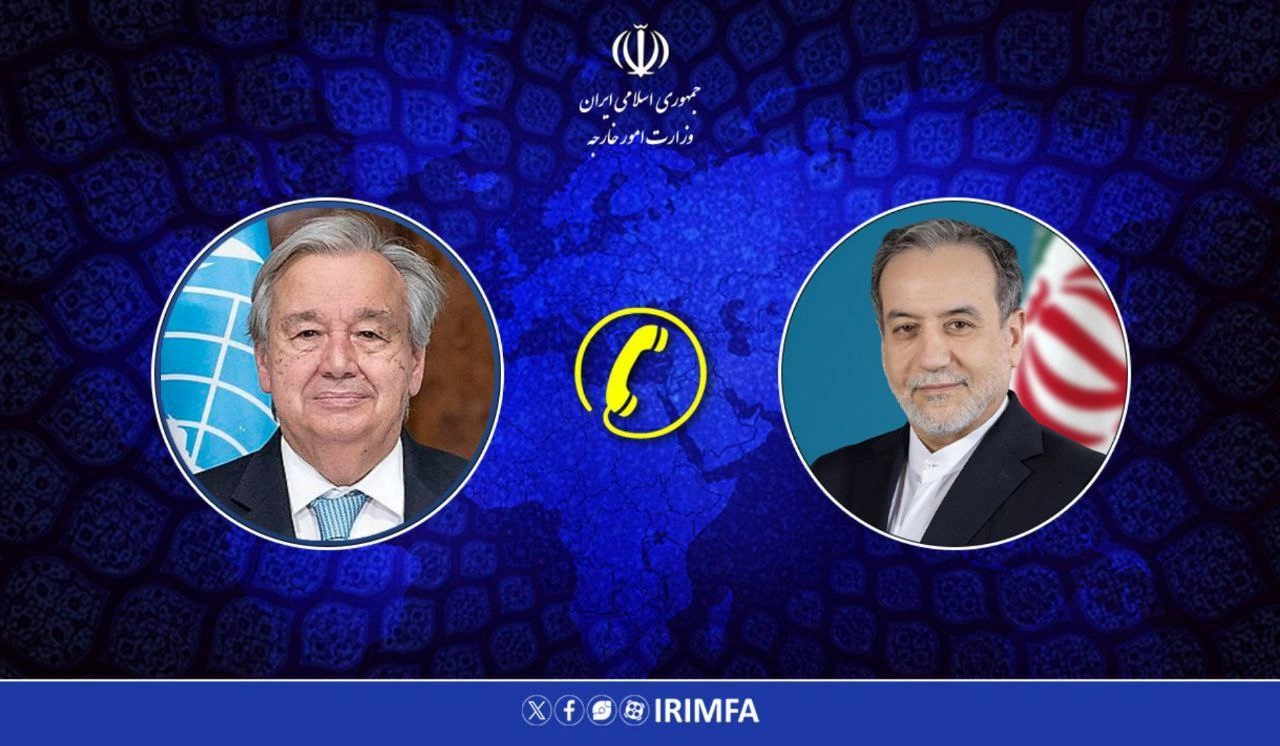
BAKU, Azerbaijan, January 16. Iran’s Foreign
Minister Seyyed Abbas Araqchi and UN Secretary-General Antonio
Guterres discussed regional and international developments during a
telephone conversation, Trend reports via Iranian MFA.
During the call, Araqchi outlined Iran’s view of the recent
events in the country, saying that peaceful gatherings with
economic and trade union demands had escalated into violence
following the involvement of terrorist elements. The Iranian
foreign minister also pointed to statements by current and former
US officials, which he said encouraged violence and the killing of
people with the aim of paving the way for US military intervention
in Iran, stressing Washington’s international responsibility for
what he described as illegal and destructive interference in
Iranian affairs.
Araqchi further referred to what he called heinous crimes
committed during the unrest, including attacks on law enforcement
personnel and civilians, the killing of women and children, arson
attacks, assaults on hospitals and medical centers, the burning of
ambulances and fire engines, and the destruction of mosques and
cultural centers. He described these acts as resembling ISIS-style
terrorism and called on the United Nations and the
Secretary-General to condemn them.
The Iranian foreign minister also criticized the US move to
convene a UN Security Council meeting under the pretext of
addressing internal developments in Iran, calling it
misleading.
Araqchi emphasized Iran’s commitment to protecting the human
rights of its citizens, including the right to peaceful assembly,
while also underscoring the country’s responsibility to ensure
public order, national security, and the safety of its people. He
added that the Iranian government and public expect the UN
Secretary-General and the Security Council to clearly condemn
terrorist acts committed during the unrest, as well as what he
described as illegal US interventions against Iran.
In response, Guterres highlighted the importance of respecting
fundamental human rights by all governments and rejected any form
of interference in the internal affairs of states, including
military intervention. He also stressed the need to adhere to the
principles of the UN Charter, particularly the prohibition of the
threat or use of force.