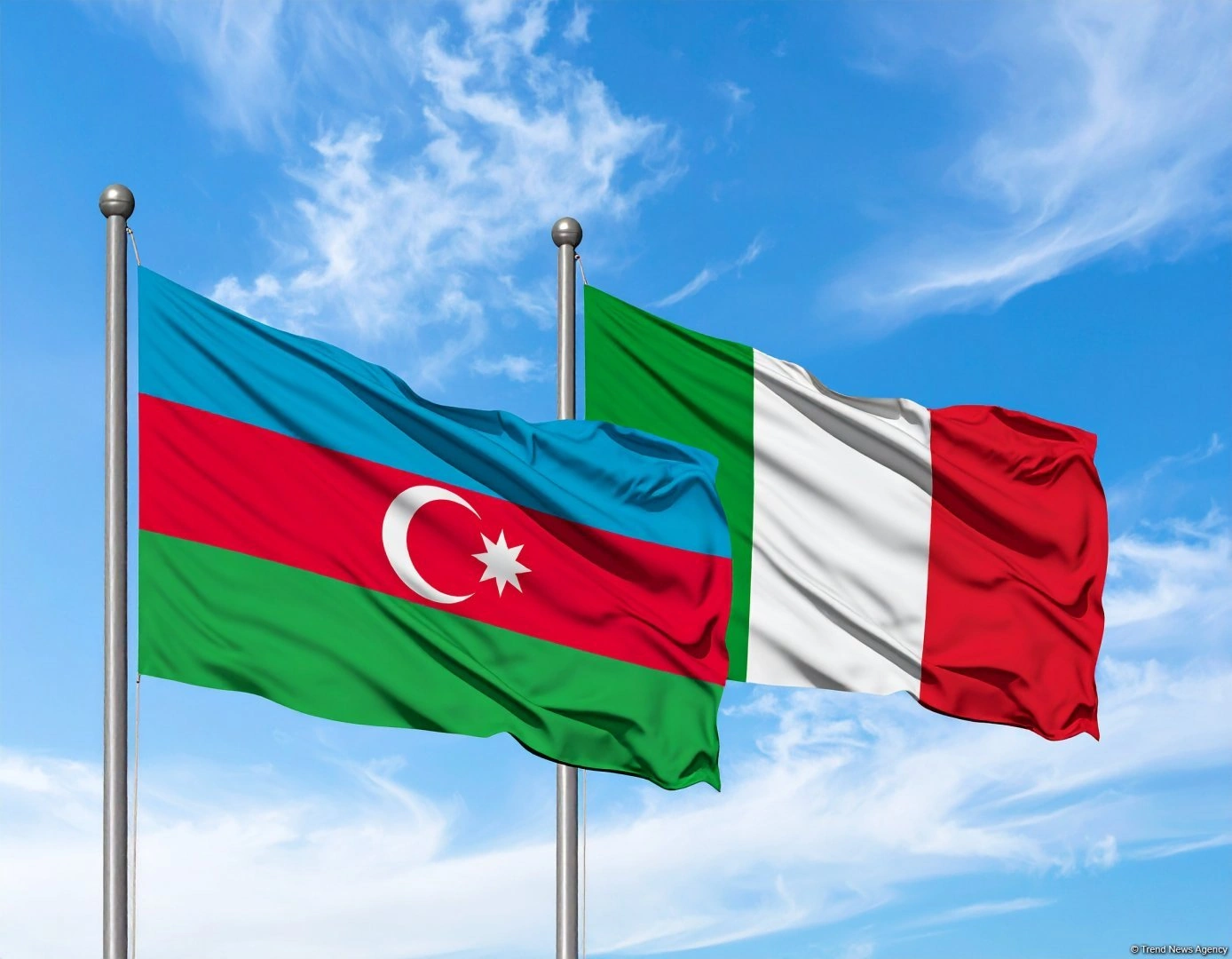
BAKU, Azerbaijan, January 14. The 6th session
of the Azerbaijan-Italy Intergovernmental Commission on Economic
Cooperation, convened on January 13 in Baku, not only advanced
bilateral dialogue but also marked a pivotal moment in reshaping
the economic and geoeconomic framework connecting the South
Caucasus, Central Asia, and Europe.
The protocol signed during the meeting, along with the ratified
2026-2027 Action Plan encompassing 65 initiatives across 18
sectors, signifies a shift from an energy-centric collaboration
model to a more diversified and institutionally structured
partnership.
The Southern Gas Corridor remains the cornerstone of
Azerbaijan-Italy relations. In an exclusive interview with Trend ahead of the
meeting, Italian Deputy Minister of Foreign Affairs and
International Cooperation Edmondo Cirielli directly linked
Azerbaijan’s role to the transformation of European energy
security.
He emphasized that, in the wake of Russia's aggression against
Ukraine, Azerbaijani gas has become an essential energy source for
Italy and the European Union (EU) at large. Since its inception in
2020, the Trans Adriatic Pipeline (TAP) has delivered over 40
billion cubic meters of gas to Italy, contributing to a total of
54.3 billion cubic meters of gas transported to Europe, with 45.4
billion cubic meters allocated to the Italian market.
In 2025, Azerbaijan upheld its position as Italy's
second-largest natural gas supplier and its principal oil provider,
exporting 9.5 billion cubic meters of gas, accounting for 38% of
Italy’s total gas imports, and 10.3 million tons of oil. Overall,
Italy received approximately 45% of Azerbaijan's total oil exports,
solidifying its status as Baku's primary energy partner in
Europe.
Italy, in turn, not only serves as a key consumer but also
functions as a critical gateway for Azerbaijani energy to broader
European and Mediterranean markets. As the second-largest European
economy by industrial output, Italy acts as the EU's southern
"gateway," providing access to a market of 500 million
consumers.
This strategic positioning underscores the increasing interest
of the State Oil Fund of Azerbaijan (SOFAZ) in Italian assets.
SOFAZ’s investment portfolio in Italy has reached $2.8 billion, and
between January and September 2025, Azerbaijan’s direct investments
in Italy amounted to $118.6 million, marking a twofold increase
compared to the same period in the previous year.
A noteworthy development in this context was SOFAZ’s partnership
with Enfinity Global, securing a 49% stake in a portfolio of solar
power plants with a combined capacity of 402 megawatts (MW) in
Italy. Situated in the Lazio and Emilia-Romagna regions, these
assets are projected to generate approximately 685 gigawatt-hours
(GWh) of clean energy annually, while reducing CO₂ emissions by
nearly 185,000 tons per year. For Azerbaijan, this acquisition
represents not only a substantial financial investment but also a
strategic foothold in the European renewable energy market.
Cirielli emphasized that Italy’s expertise in renewable energy
is poised to play a crucial role in Azerbaijan’s efforts to
diversify its energy portfolio. As one of the world’s foremost
operators in the renewable energy sector, Italy’s experience is
increasingly being integrated into regional energy projects
spearheaded by Baku.
Italian company CESI SpA is already contributing to feasibility
studies for the “Caspian–Black Sea–Europe” and “Central
Asia–Azerbaijan” green energy corridors. These projects have the
potential to connect renewable energy markets across Central Asia,
the South Caucasus, and Eastern Europe, reducing regional
dependence on fossil fuels. The phased launch of the Caspian–Black
Sea–Europe corridor is expected from 2032.
While Italy serves as Azerbaijan’s gateway to Europe, Azerbaijan
is increasingly becoming Italy’s entry point into Central Asia.
Italy’s interest in the Middle Corridor reflects a broader European
trend toward diversifying transport routes between Europe and
Asia.
According to Cirielli, the South Caucasus and Central Asia are
gaining strategic significance for logistics, and infrastructure
projects in the region could simultaneously support economic
integration and political stabilization. In this context, Italy has
expressed support for the normalization of relations between
Azerbaijan and Armenia, viewing it as a key condition for unlocking
the transit potential of the route.
Italian companies have shown interest in participating in
projects to modernize railways, ports, and highways along the
Middle Corridor, particularly in the rail sector.
Beyond energy and logistics, discussions between the two
countries increasingly focus on cooperation in manufacturing, waste
management, agricultural modernization, ICT, healthcare, and
pharmaceuticals. These areas are included in the intergovernmental
commission’s agenda as potential drivers of long-term growth.
Trade between Azerbaijan and Italy continues to thrive, even as
the energy supply landscape stabilizes. From January through
November 2025, bilateral trade reached $11.2 billion, reflecting a
9% year-on-year increase. Italy now represents more than 25% of
Azerbaijan’s total foreign trade turnover and nearly 47% of its
exports.
Azerbaijan-Italy relations have evolved beyond the traditional
"supplier-consumer" dynamic. While energy remains the cornerstone,
a more intricate partnership is gradually taking shape, spanning
investment, technology, and logistics.
For Italy, Azerbaijan serves as a pivotal partner positioned at
the intersection of the South Caucasus and Central Asia.
Conversely, for Azerbaijan, Italy is not only the largest trading
partner but also a strategic gateway to the European Union and
Mediterranean markets. This synergy between resources, trade
routes, and markets is redefining the framework for Eurasian
economic cooperation.
Stay up-to-date with more news on Trend News
Agency's WhatsApp channel