BAKU, Azerbaijan, January 10. As global
concerns over energy security, climate change, and sustainable
development rise to the top of government agendas, Azerbaijan is
emerging as one of the countries in the region pursuing an
ambitious and consistent policy in the field of green energy,
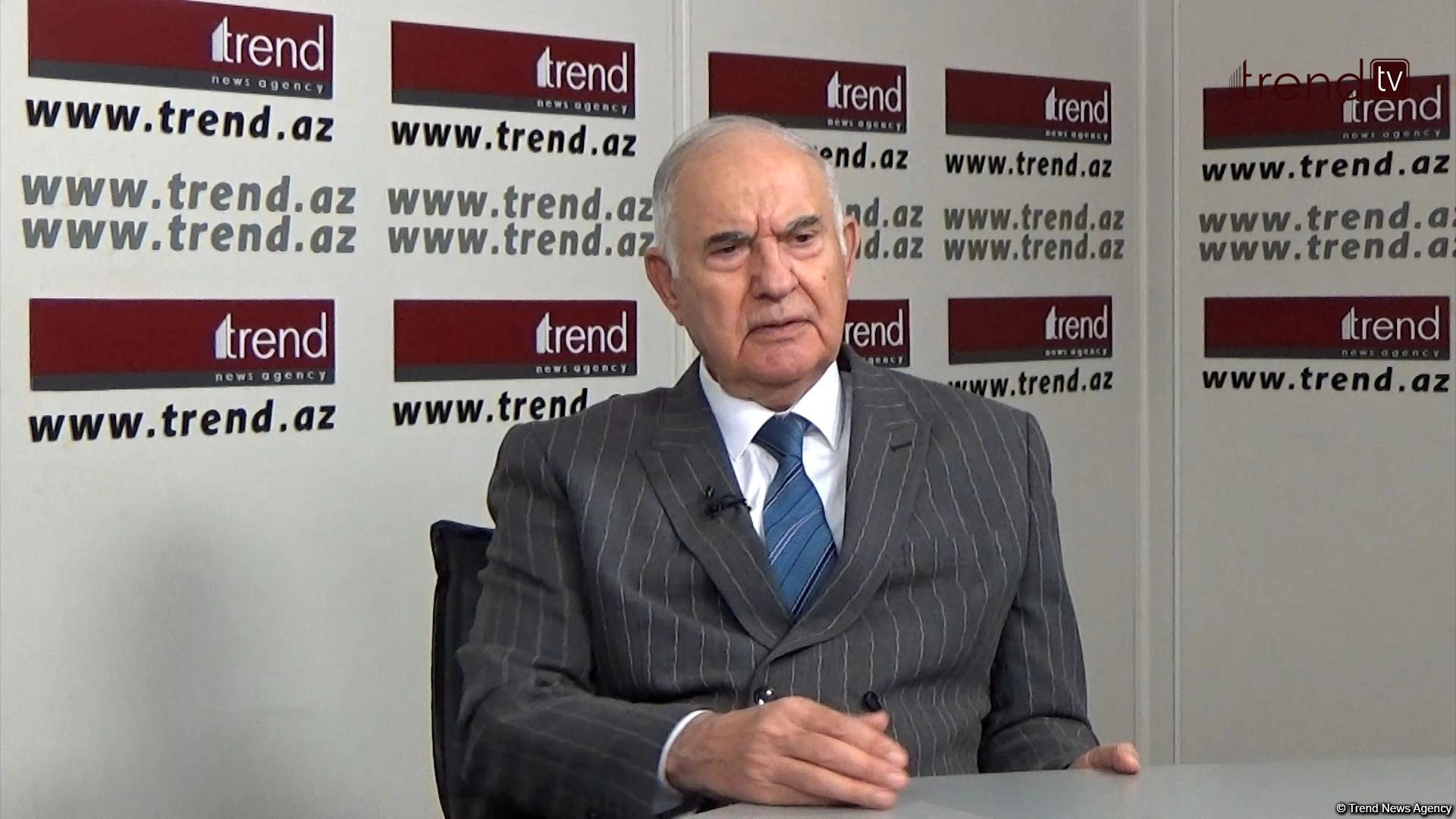
political analyst Azer Garayev told Trend.
Reducing carbon emissions and shifting toward alternative and
renewable energy sources has become not only an environmental
choice but also an economic and political necessity, he said,
noting that Azerbaijan has steadily positioned itself within this
global transition.
“Although Azerbaijan’s energy strategy was long based on oil and
gas resources, this model has been gradually diversified in recent
years. Under the leadership of President Ilham Aliyev, the country
has preserved its strong position in traditional energy while
simultaneously taking systematic and long-term steps in renewable
energy,” Garayev said. He cited the opening ceremony of the
Khizi–Absheron Wind Power Plant at the Gulustan Palace in Baku on
January 8, 2026, as a clear example of this policy.
The analyst recalled that President Ilham Aliyev has repeatedly
emphasized that the modernization, upgrading, and development of
Azerbaijan’s energy system has been one of the country’s key
priorities in recent years.
“This modernization has not been limited to upgrading existing
generation capacities. Moreover, the integration of renewable
energy sources into the national grid has expanded.” According to
the president, over the past 20 years, the country’s generation
capacity has increased nearly threefold compared with all previous
periods, reaching approximately 10,000 megawatts.
With a capacity of 240 megawatts, the Khizi–Absheron Wind Power
Plant is one of the largest renewable energy projects ever
implemented in Azerbaijan. The project was carried out by Saudi
Arabia’s leading energy company ACWA Power, marking the company’s
first renewable energy project in the country. President Ilham
Aliyev highlighted the significance of this cooperation, saying:
'This is the first renewable power plant built by 'ACWA
Power' in Azerbaijan, but not the last one. The company has bigger
plans, and the Government of Azerbaijan fully supports these
plans,'" the analyst said.
The foundation stone of the plant was laid in January 2022, and
the project was fully completed and commissioned within four years.
Garayev said this reflects Azerbaijan’s strong investment climate,
effective public–private partnership model, and high level of
implementation discipline.
According to him, the Khizi–Absheron Wind Power Plant is located
across the Absheron and Khizi districts and includes 37 wind
turbines, each with a capacity of 6.5 megawatts. The plant’s annual
electricity generation is estimated at about 1 billion
kilowatt-hours.
“These figures lead to several important outcomes. Around 220
million cubic meters of natural gas are saved annually, more than
400,000 tons of carbon dioxide emissions are prevented, and the
share of green energy in the national energy balance increases
significantly,” Garayev said. He added that a total of $340 million
in foreign investment was attracted to the project, underscoring
Azerbaijan’s appeal to international investors in the green energy
sector.
The Khizi–Absheron project also represents a successful example
of international cooperation. Its main contractor is China’s Power
China Huadong Engineering Co., Ltd. President Ilham Aliyev praised
this partnership, stating: “Here we also see a very
successful example of international cooperation.”
Additionally, Saudi Arabia’s deputy minister of energy, Nasser
Al-Qahtani, said the project demonstrates the strategic partnership
between the 2 countries. According to him, the cooperation will not
be limited to a single project and will extend to new onshore and
offshore wind projects, as well as energy storage systems.
Garayev stressed that the Caspian Sea occupies a special place
in Azerbaijan’s green energy strategy. Based on international
assessments, the wind energy potential of the Azerbaijani sector of
the Caspian Sea stands at 157 gigawatts. President Ilham Aliyev has
described this potential saying: 'According to international
estimates, the wind potential in the Azerbaijan sector of the
Caspian Sea stands at 157 gigawatts.' In other words, this process
will gain momentum in Azerbaijan in the coming years.
"Realizing this potential could transform Azerbaijan into one of
the region’s main green energy hubs, particularly in the context of
initiatives aimed at supplying green energy to Europe through
dedicated corridors.
One of the key challenges of renewable energy is the
intermittency of production, and Azerbaijan has begun addressing
this issue in advance. According to President Ilham Aliyev, the
country is creating its first-ever 250-megawatt Battery Energy
Storage System (BESS). 'Regarding future plans, given that
our renewable energy potential will increase significantly, we must
develop the infrastructure to store this energy,' he
said.
This approach shows that Azerbaijan views green energy not only
in terms of production but also as a comprehensive energy
ecosystem. The liberated territories also hold a special place in
the country’s green energy map. Over the past 5 years, nearly 40
small hydropower plants have been built in Karabakh and East
Zangezur, with a combined capacity exceeding 300 megawatts. Plans
are in place to construct additional hydropower plants with a
capacity of 500-600 megawatts in the future.
These projects contribute not only to energy security but also
to the socio-economic revival of the region,” Garayev said.
He added that one of the main reasons for Azerbaijan’s success
in green energy is its stable and reliable investment environment.
President Ilham Aliyev has repeatedly underscored this principle,
stating, “The state of Azerbaijan always protects foreign
investment. Many of our oil contracts have been implemented for
years, and not a single paragraph, not a single article, not even a
single word in the adopted decisions and contracts has ever
been—and will ever be—changed.”
This policy has enabled the country to attract more than $300
billion in foreign investment to date, while low external debt and
high foreign currency reserves further strengthen investor
confidence. Under signed agreements, Azerbaijan plans to build wind
and solar power plants with a capacity of 6 gigawatts by 2030 and 8
gigawatts by 2032, significantly increasing the share of green
energy in the national balance. As President Ilham Aliyev put it:
“Azerbaijan will become a country with a reliable and major
electricity generation capacity in the region.”
Garayev concluded that the commissioning of the Khizi–Absheron
Wind Power Plant is not merely the launch of a new energy facility
but a practical embodiment of Azerbaijan’s green energy strategy.
“Today, Azerbaijan is shaping its position not only as an oil and
gas exporter but also as a future exporter of green energy. The
steps being taken show that this path is deliberate, consistent,
and focused on real results,” he said.
Stay up-to-date with more news on Trend News
Agency's WhatsApp channel