BAKU, Azerbaijan, January 10. Russian Railways
Logistics (RZD Logistics) plans to connect new regions of Russia to
the route with Iran within the framework of the International
Transport Corridor (ITC) North-South, the company's press service
told Trend.
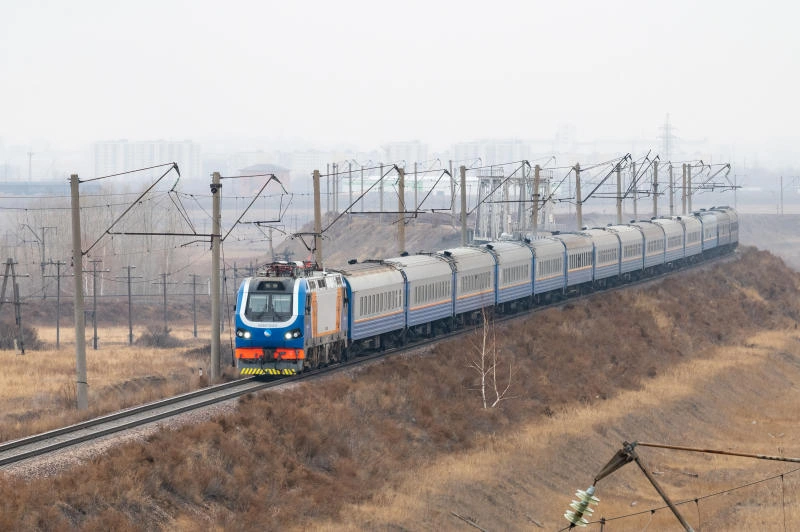
In November 2025, RZD Logistics marked a significant milestone
by dispatching its inaugural container train to Iran's Aprin dry
port via the North-South corridor.
This shipment represents a crucial step in the expansion of the
route, made possible by the establishment of the Aprin logistics
complex in spring 2025. Regular shipments have already commenced,
affirming the demand for this alternative transit route. Looking
ahead, this route holds the potential to evolve into a pivotal
transportation corridor connecting Russia with BRICS nations and
beyond.
RZD Logistics emphasized that the route expansion aims to create
new opportunities not only for businesses and clients within
Russia, but also for the broader Eurasian economy. The company’s
strategy includes integrating more regions of Russia into the
corridor, further accelerating delivery timelines, and developing
critical transportation infrastructure. At present, Russia’s export
shipments predominantly rely on the Northern Railway corridor, but
the expansion of logistics cooperation with Iran is expected to
grow as Iran’s role in facilitating freight flows along the
Russia-Iran-India-Eastern Africa route continues to strengthen.
Additionally, RZD Logistics highlighted that the increasing
volume of transit shipments through Iran is paralleled by rising
interest from Russian exporters in the Iranian market itself. The
ability to deliver products by rail to various Iranian cities opens
up significant new trade opportunities.
The Aprin dry port, strategically located at the junction of
Iran’s East-West and North-South rail corridors, is poised to
become a critical logistics hub in this expanding network.
The North-South corridor, which serves as the backbone of this
international transport agreement, was formalized on September 12,
2000. This multimodal corridor provides a vital link between
Northern Europe and the Persian Gulf, as well as the Indian Ocean,
passing through Russia, the Caucasus, and Central Asia. The
corridor is comprised of three primary routes: the western route
along the Caspian Sea’s western coast, the eastern route along its
eastern coast, and the Trans-Caspian route that crosses the Caspian
Sea. Regular container shipments along the eastern branch of the
North-South corridor, from Russia to Iran, have been operational
since 2022.