BAKU, Azerbaijan, January 6. The role of
Azerbaijan in ensuring Europe's energy security has undergone a
qualitative transformation in recent years. Initially, the country
was viewed primarily as one of the alternative sources and routes
for energy resource supplies, but today Azerbaijan has effectively
become one of Europe's key, and even irreplaceable, energy
partners.
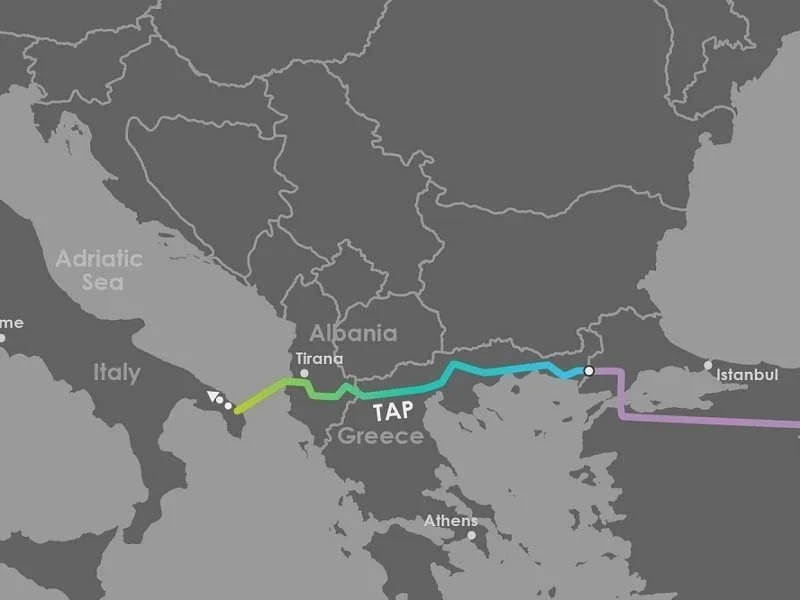
At the stage of forming the Southern Gas Corridor, it was
primarily considered an element of diversification—a way to reduce
Europe's dependence on a limited number of suppliers and routes.
However, even then, Azerbaijan took on much broader responsibility,
not just as a gas supplier, but as the initiator and guarantor of
creating a sustainable transregional energy infrastructure linking
the Caspian region with Europe. The implementation of the Southern
Gas Corridor became proof that Baku is capable of fulfilling
large-scale, long-term commitments, ensuring supply stability even
amid global turbulence.
A qualitatively new role for Azerbaijan emerged after February
2022, when Europe faced an unprecedented energy crisis. Amid a
sharp gas shortage and rising prices, it was Azerbaijan that
quickly supported countries that suddenly faced the threat of
energy instability. Baku not only ensured the fulfillment of all
existing contracts but also expressed its readiness to increase
supplies if necessary, once again confirming its reputation as a
reliable and responsible partner.
As President of Azerbaijan Ilham Aliyev said in an interview
with local television channels on January 5, Azerbaijan's gas
exports are growing with respect to both volume and geography.
"So far, we have supplied gas to 14 countries, 11 of them on a
regular basis. There are countries that received our gas in 2024
but then stopped because of other sources. It is kind of on demand:
whenever they need it, we start supply; when they do not need it,
we cut it. Overall, Azerbaijan supplies pipeline gas to 14
countries, with plans to add two more European countries this year.
So in total, it will be 16, and this is the largest number with
respect to pipeline gas. No other country in the world supplies
pipeline gas to as many countries as Azerbaijan," the head of state
noted.
Such figures clearly reflect the uniqueness of Azerbaijan’s
position in the global energy market and confirm its transition
from being an alternative supplier to a systemic player. Moreover,
the country has all the necessary resources for further expanding
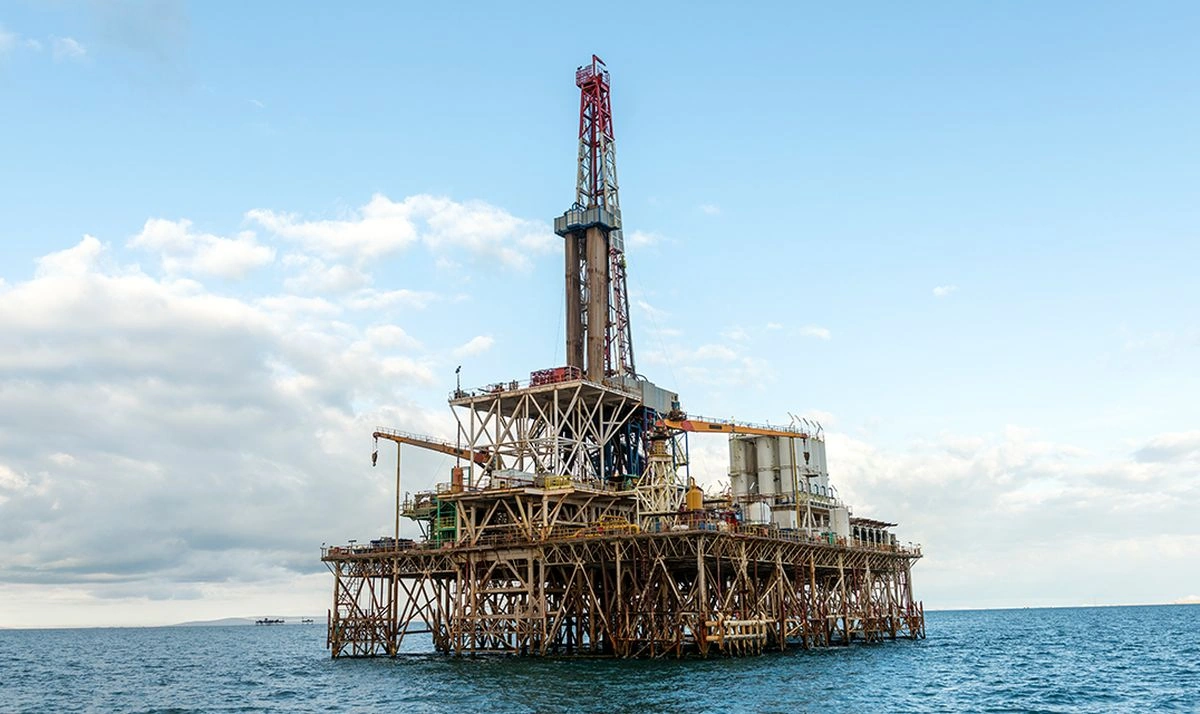
exports. The start of gas production from the deep-water part of
the Azeri-Chirag-Gunashli field, the implementation of the Shah
Deniz Compression project, and the development of the Babek and
Absheron fields are expected soon.
The next stage in developing the giant Shah Deniz field is the
$2.9 billion Shah Deniz Compression project. Its main goal is to
ensure gas production from reservoirs with low reservoir pressure,
making them accessible for exploitation and achieving maximum gas
recovery. The project is expected to allow for the additional
extraction and export of about 50 billion cubic meters of gas and
nearly 25 million barrels of condensate.
In the second phase of the Absheron field development, peak
production will reach 12.7 million cubic meters of gas per day,
equivalent to 4.5 billion cubic meters per year, and 37,000 barrels
of condensate per day. The start of production in the second phase
is planned for late 2028–early 2029.
Preliminary estimates suggest that the reserves of the promising
Babek structure may reach 400 billion cubic meters of gas and 80
million tons of condensate, significantly strengthening
Azerbaijan's long-term export potential.
At the same time, the country is actively developing the green
energy sector, which allows for optimizing the internal energy
balance and freeing up additional volumes of natural gas for
export. Azerbaijan demonstrates a realistic and pragmatic approach
to the energy transition, understanding that a complete refusal of
fossil fuels in the short term is impossible without serious risks
to energy security. Both individual countries and entire regions
view investments in traditional energy alongside the development of
renewable energy sources as necessary for their stability.
As President Ilham Aliyev stated, countries rich in oil and gas
are demonstrated by countries like Azerbaijan and many others that
have abundant oil and gas resources but also invest in green
energy.
"So I think there is also an understanding now in European
institutions that this mania against fossil fuels should end and
that pragmatism and realism should prevail," the head of state
said.
In this context, it becomes particularly important to revise the
approaches of international financial institutions that have
actively promoted the refusal to fund fossil fuel projects in
recent years. Practice has shown that without investment in gas
infrastructure, it is impossible to ensure either the stability of
energy supply or a consistent transition to 'clean' energy, and
such decisions should not be made at the expense of energy
security.
An important direction for further development is green energy
corridors, which organically complement the existing gas
infrastructure and form the basis for exporting 'clean' energy.
They include the Caspian–Black Sea–Europe, Central Asia–Azerbaijan,
Azerbaijan–Türkiye–Europe, and Azerbaijan–Georgia–Türkiye–Bulgaria
routes. These projects enhance Azerbaijan's role as a key link
between regions and markets.
Thus, Azerbaijan, which was initially considered a source of
diversification of routes and energy resource supplies, is now an
irreplaceable partner for Europe and beyond. In the future, this
role will only strengthen, becoming more complex due to a
combination of reliable gas supplies, infrastructure development,
and the export of 'clean' energy.
Stay up-to-date with more news on Trend News
Agency's WhatsApp channel