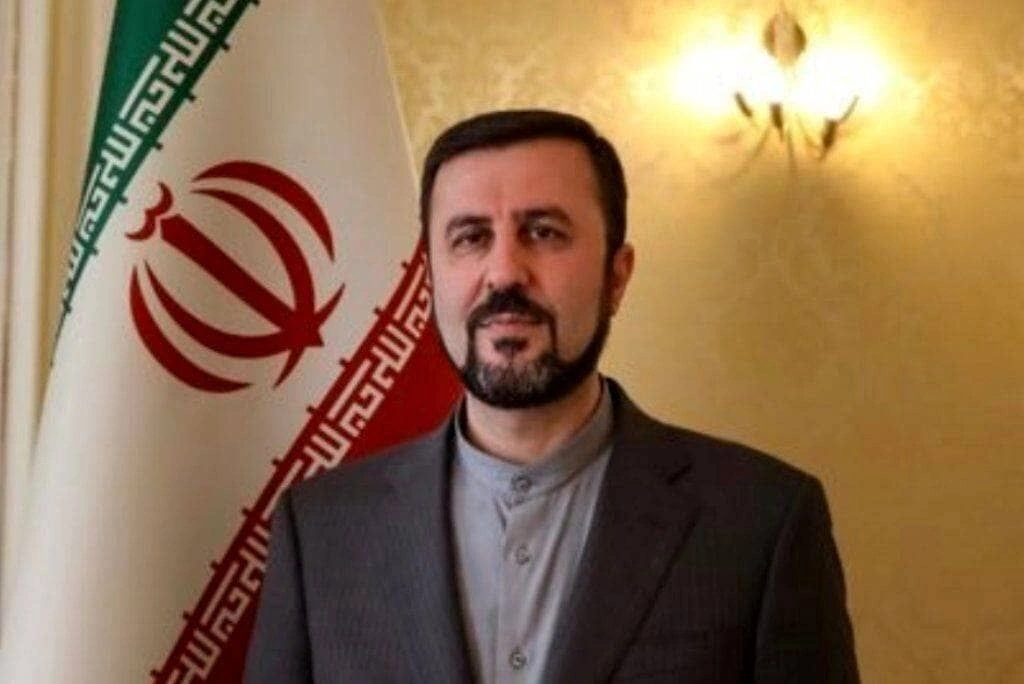
BAKU, Azerbaijan, January 5. Iran’s relations
with the International Atomic Energy Agency (IAEA) have
fundamentally changed following 12 days of military airstrikes
against the country, Iran’s Deputy Foreign Minister Kazem
Gharibabadi said in an interview with local media, Trend reports.
Gharibabadi emphasized that Iran is a member of the IAEA and the
Treaty on the Non-Proliferation of Nuclear Weapons (NPT), with
established mutual cooperation frameworks. However, after the
attacks, no IAEA inspectors remained in the country. While
inspections were carried out on undamaged nuclear facilities under
local agreements, conditions have not allowed access to damaged
sites, as the IAEA did not fulfill its responsibilities.
“If Iran is required to meet its obligations under the NPT, it
must be determined what measures will be taken to prevent attacks
on its nuclear facilities,” he added.
To recall, on the morning of June 13, Israel carried out
military air strikes against Iran, leading to the deaths of
numerous high-ranking military officials, generals, nuclear
scientists, and other senior personnel.
Meanwhile, on the same evening, Iran responded to Israel with
Operation True Promise III: hundreds of ballistic missiles and
drones were launched at several targets, including Tel Aviv,
resulting in civilian casualties and widespread destruction.
On June 22, the US launched military airstrikes on three Iranian
nuclear facilities. It was reported that the airstrikes destroyed
Iranian nuclear facilities.
In addition, on the evening of June 23, Iran launched airstrikes
on a US military base in Qatar.
On June 24, the Israeli Prime Minister's Office announced that
the Israeli government had agreed to a ceasefire with Iran,
brokered by US President Donald Trump.
Iran's Supreme National Security Council also issued a statement
noting the cessation of attacks.
Stay up-to-date with more news on Trend News
Agency's WhatsApp channel