BAKU, Azerbaijan, December 27. This year has
been one of the most turbulent in Iran's political and economic
history, with significant events in both foreign policy and the
economy that have had a profound impact on the country's regional
and international standing.
In foreign policy, the main focus has been Iran's nuclear
program. While Iran continued discussions with the European trio
(Germany, France, and the UK) and the U.S. regarding the nuclear
program, these negotiations did not yield positive results. Iran
and the U.S. held five rounds of indirect nuclear talks.
On June 12, a resolution against Iran was adopted at the
International Atomic Energy Agency (IAEA) Board of Governors. Just
a day later, on June 13, Israeli airstrikes against Iran began, and
missile and airstrikes continued for 12 days. In the final stages
of the conflict, the U.S. targeted three of Iran's nuclear
facilities and declared their destruction.
Following the war, Iran passed a law minimizing cooperation with
the IAEA. Under the new decision, cooperation with the agency is
only possible with the approval of the Supreme National Security
Council. By the end of the year, the "snapback" mechanism was
activated, allowing the restoration of UN Security Council
resolutions against Iran, at the initiative of the European trio.
As a result, Iran halted its nuclear dialogue with the European
trio and set several conditions for possible negotiations with the
U.S., particularly focusing on the preservation of its nuclear
program and continuing uranium enrichment within the country.
At the same time, the development of relations with neighboring
countries emerged as a more successful direction in Iran's foreign
policy. Removing existing obstacles in relations with Azerbaijan,
expanding bilateral cooperation, and strengthening ties with Russia
were highlighted. Iran placed special emphasis on economic, trade,
transit, cargo transportation, and energy cooperation with
neighboring countries.
The implementation of a free trade agreement with the Eurasian
Economic Union, the increase in cargo transportation within the
framework of the North-South and East-West international transport
corridors, and the revival of the Islamabad-Tehran-Istanbul railway
route were among the key outcomes of this policy.
Serious steps were taken toward the construction of the
Rasht-Astara railway line, located on the western route of the
North-South International Transport Corridor, which spans 160
kilometers. The project is expected to begin in the coming year.
Once completed, Iran expects to transport 15 million tons of cargo
annually in the initial phase. Although the railway line is not yet
operational, agreements have been reached with neighboring
countries to transport cargo from the Astara County of Gilan
Province to Rasht by road, and from there by railway to southern
ports.
Meanwhile, the eastern route of the North-South Corridor passing
through Iranian territory was activated, with a focus on increasing
cargo transportation in cooperation with Central Asian
countries.
Regarding economic indicators, 2025 was a difficult year for
Iran's economy. Inflation and the devaluation of the national
currency continued as in previous years. At the beginning of the
year, inflation was about 31%, and by November 20, this figure had
risen to 49.4%.
Significant changes also took place in the currency market. At
the beginning of the year, the official exchange rate of the U.S.
dollar was 575,000 rials, while the black market rate was 800,000
rials. Now, the official exchange rate stands at 748,000 rials, and
the black market rate has risen to 1.35 million rials. Inflation
and devaluation have negatively impacted all sectors of the
country's economy.
The Iranian government has focused on increasing the authority
of provinces to stimulate economic growth. The goal is for
provinces to establish direct economic relations with neighboring
countries to ensure regional development.
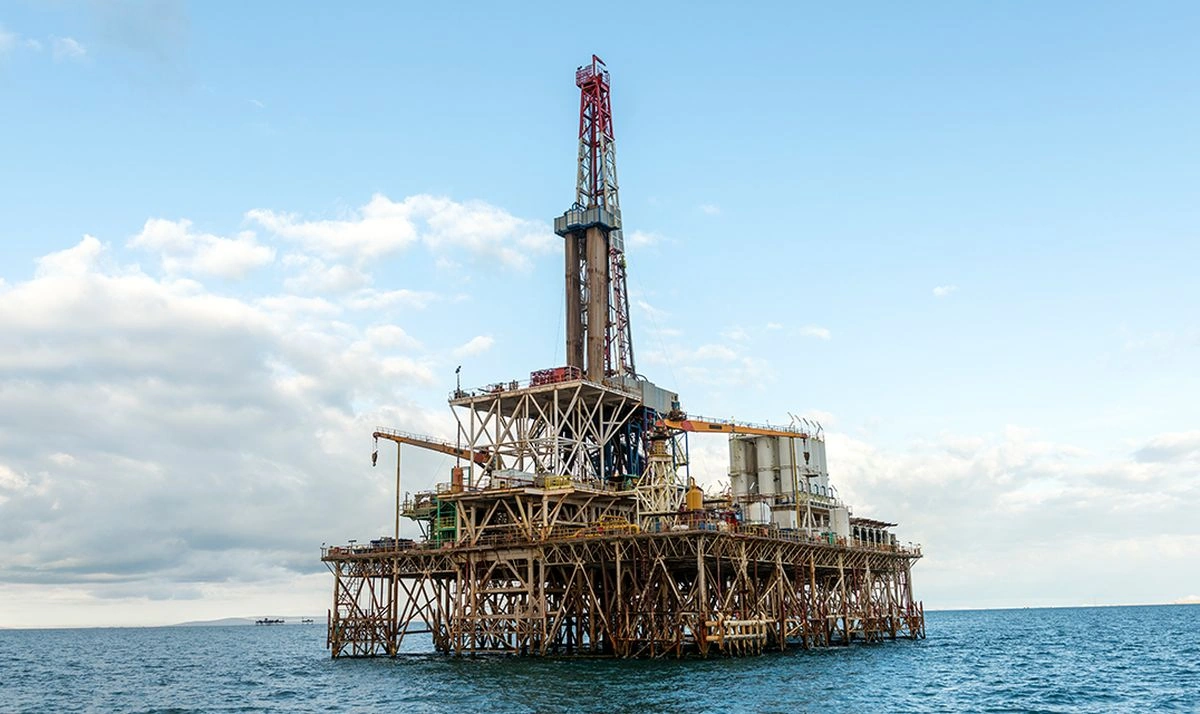
However, challenges persist in the energy sector. Due to
sanctions, Iran is forced to sell crude oil mainly through the
"gray market". Although natural gas production exceeds one billion
cubic meters per day, high domestic consumption severely limits gas
exports. In some months, gas shortages are even observed. A similar
situation arises in electricity generation: a sharp increase in
consumption during the summer months causes electricity shortages.
As a result, Iran needs to import gas and electricity from some
neighboring countries.