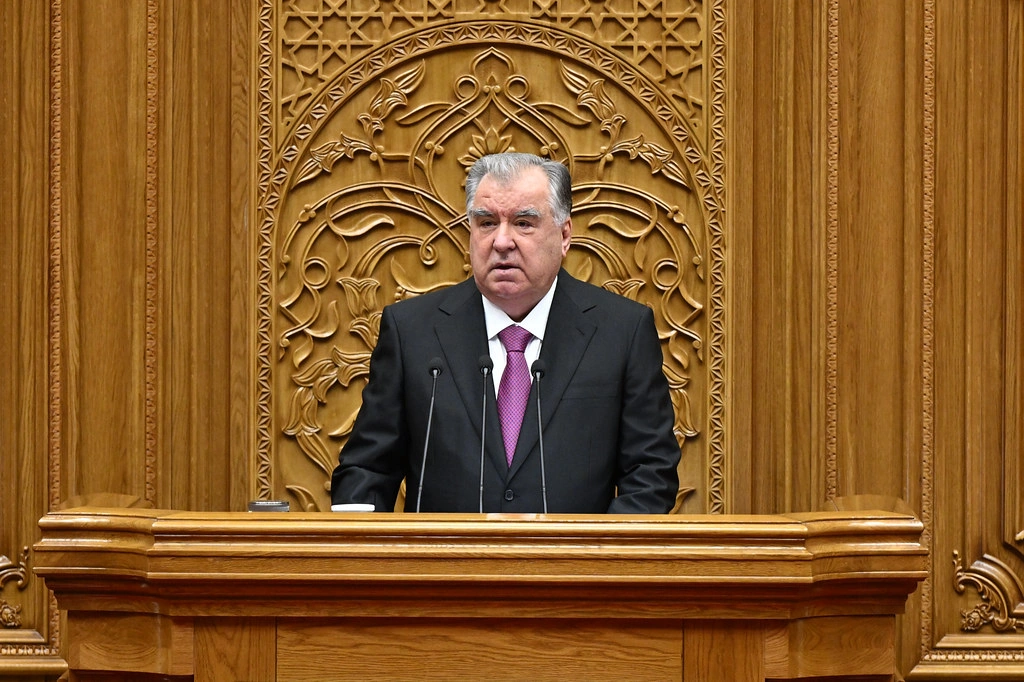
BAKU, Azerbaijan, December 26. On December 16,
2025, President Emomali Rahmon delivered a significant address to
the Tajikistan Parliament, outlining the nation’s economic
priorities and strategic goals for the forthcoming years. The
central message of his speech was unequivocal: Tajikistan is
committed to fostering development across all major sectors,
ranging from industry to agriculture, to enhance living standards
and ensure sustainable long-term growth.
Rahmon began by underscoring the necessity of advancing both
industrial and agricultural sectors. While the nation remains
heavily reliant on hydropower, he emphasized the critical need to
diversify the economy. Industry, he asserted, must undergo
substantial diversification, and agriculture must evolve beyond
traditional practices by incorporating modern technologies to boost
productivity while safeguarding environmental sustainability. He
presented the modernization of agriculture as a key avenue for
improving incomes and enhancing overall efficiency.
Simultaneously, the president stressed that these ambitions
could not be realized without a robust private sector. He
identified the support of entrepreneurs as a central pillar of his
economic strategy, noting that facilitating easier access to
resources and financing is essential for fostering growth. A
thriving private sector, Rahmon noted, is vital for job creation
and economic expansion. In this regard, the government has proposed
the establishment of a specialized fund to support lending
initiatives, aimed at simplifying access to capital and encouraging
businesses to scale and invest.
The president also addressed the role of technology, paying
particular attention to artificial intelligence and digitalization.
He described these areas as essential for Tajikistan to keep pace
with global developments. To remain competitive, the country must
actively adopt new technologies across sectors, from industry to
education. According to the president, technology can become a
major driver of economic growth if properly integrated.
Infrastructure development was another major focus of the
address. Tajikistan is actively investing in transport and energy
projects, including road construction, new facilities, and improved
logistics. These initiatives are not symbolic but practical steps
aimed at boosting economic activity. Without modern infrastructure,
businesses cannot operate efficiently. Moreover, improved
connectivity strengthens Tajikistan’s role in regional trade with
neighboring countries.
Social issues also featured prominently. Rahmon proposed raising
salaries in key sectors such as education, healthcare, and culture
to improve living standards and reduce poverty. Pensions and social
benefits were identified as priorities, along with higher
scholarships and an increased minimum wage. Special emphasis was
placed on indexing pensions to inflation to protect the
population’s purchasing power.
Finally, the president addressed foreign policy, highlighting
Tajikistan’s proactive efforts to resolve border disputes with
neighboring countries, particularly Kyrgyzstan and Uzbekistan.
These initiatives, he emphasized, play a crucial role in fostering
regional stability and enhancing conditions for trade and economic
collaboration.
In his closing remarks, Rahmon emphasized that the nation’s
future development is contingent upon its ability to swiftly adapt
to both domestic and global shifts. He warned that without
significant growth in business, improvements in infrastructure, and
the strategic application of technology, Tajikistan would struggle
to maintain its competitive edge in the global marketplace.
In sum, the address underscored Tajikistan's ambitious
aspirations. The commitment to comprehensive sectoral development,
bolstering entrepreneurship, raising living standards, and
strengthening social policies was framed as essential steps toward
building a more resilient, self-sufficient, and globally
competitive nation.