BAKU, Azerbaijan, December 25. In recent years,
the United Arab Emirates (UAE) has actively shaped the direction of
its foreign policy through a series of strategic initiatives. This
is reflected in the diversification of its trade and diplomatic
relations, coupled with an increased focus on expanding its
influence within neighboring regions. Furthermore, the UAE has
significantly ramped up investment across a variety of sectors,
particularly in traditional and renewable energy, digitalization,
data center development, and logistics. Notably, the global
logistics landscape would be incomplete without the presence of a
key UAE player, DP World. As an international logistics giant
operating in over 40 countries, DP World facilitates 10% of global
container transportation, underscoring the UAE's pivotal role in
the sector.
Central Asia has emerged as a key region in the UAE's efforts to
expand its economic influence. Although Central Asia’s share in the
foreign trade of Gulf Cooperation Council (GCC) countries remains
relatively modest, it is largely shaped by the UAE's growing
economic engagement, underscored by bilateral agreements with
several regional nations. According to the IMF’s December 6 report,
"Gulf Cooperation Council (GCC) - Enhancing Resilience to
Global Shocks: Economic Prospects and Policy Challenges for the GCC
Countries," the report highlights that improvements in
logistics, governance, and the simplification of trade procedures
hold considerable potential for further boosting interregional
trade.
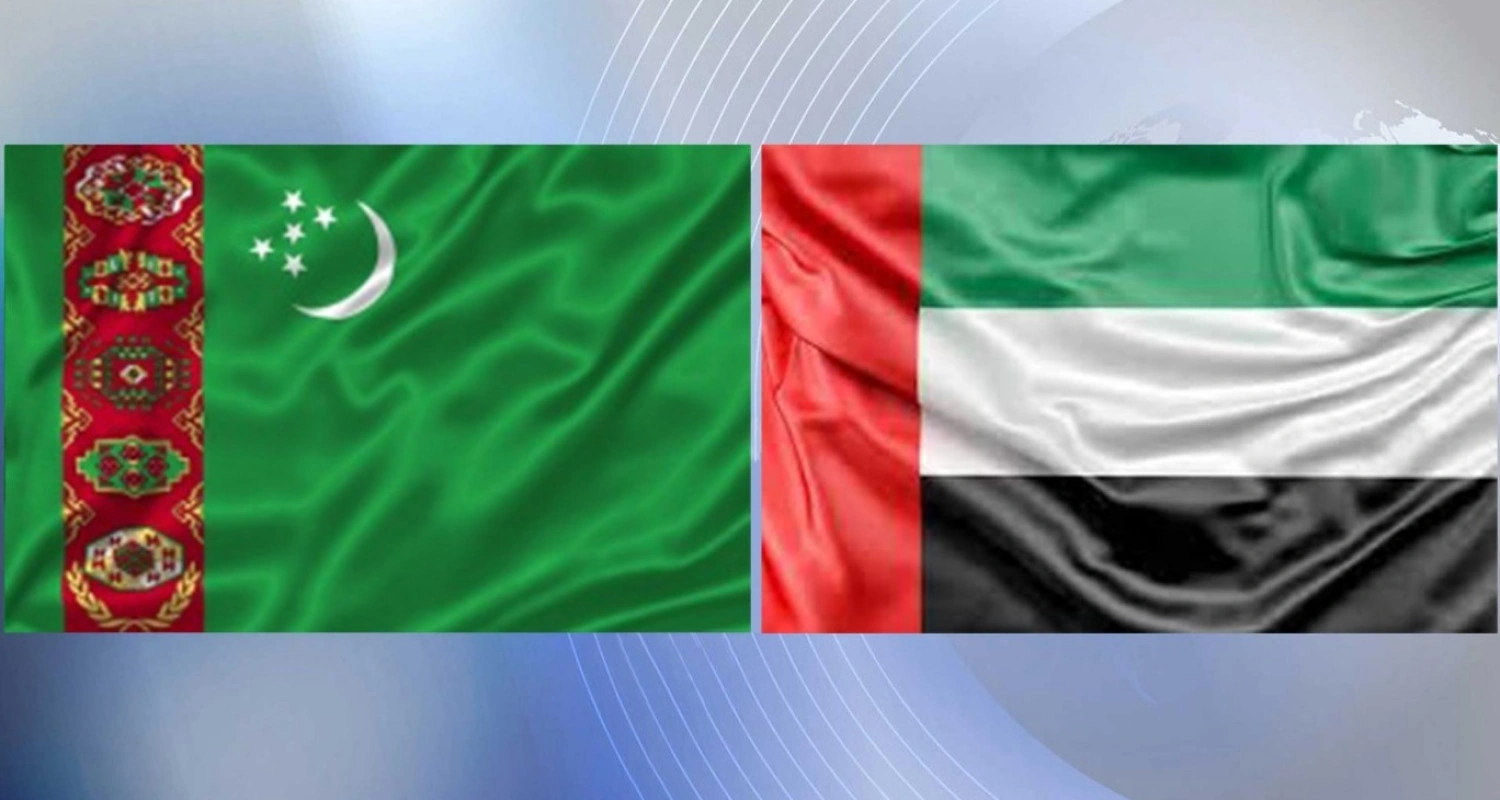
In this context, recent remarks by the UAE Ambassador to
Turkmenistan, Ahmed Alhai Hamad Khamis Alhameli, regarding the
country’s aim to double trade with Turkmenistan in the coming
years, align closely with expectations from regional stakeholders.
His statement, issued against the backdrop of a marked acceleration
in economic ties between Ashgabat and Abu Dhabi, signifies a
broader shift in the nature of their bilateral cooperation.
By the end of 2024, non-oil trade between the UAE and
Turkmenistan reached approximately $1.76 billion, a 75% increase
compared to the previous year. These figures indicate that the
process is already in an active phase rather than just declarative
intentions. In 2025, the UAE became one of the top three largest
trading partners of Turkmenistan, signaling a qualitative shift in
Ashgabat’s trade geography.
A significant factor in this growth has been the increased
presence of Emirati businesses in Turkmenistan’s energy sector. In
2024-2025, the UAE's state oil company, ADNOC, and its
international investment division, XRG, entered the Turkmen market.
Notably, XRG purchased a 38% stake in the large gas field "Block I"
in Turkmenistan’s Caspian Sea sector, which holds 7 trillion cubic
meters of gas, with daily production reaching 400 million cubic
meters. These agreements are of a strategic nature and lay the
foundation not only for increasing trade volumes but also for
establishing a sustainable Emirati investment presence in
Turkmenistan’s key economic sector.
In this context, the statement by President Serdar
Berdimuhamedov at the International Forum on Attracting Foreign
Investment in Turkmenistan’s Economy, held in the UAE in 2023, is
noteworthy: “We place special emphasis on foreign investment. One
of our key tasks is to develop licensed blocks of Turkmenistan’s
Caspian section through foreign capital, based on the Production
Sharing Agreement,” said the President.
At the same time, the official rhetoric from the Emirati side
focuses particularly on non-oil trade. This approach aligns with
the UAE’s strategy of diversifying its foreign economic relations
and reducing dependence on the hydrocarbon sector. For
Turkmenistan, this focus is also important: Ashgabat consistently
declares its intention to expand the range of its exported goods
and attract foreign investment into manufacturing, infrastructure,
and related industries.
In addition to energy, cooperation in the transport and
logistics sector is also developing significantly. The signing of a
memorandum of understanding between Etihad Rail and the
Turkmenistan Railways Agency "Turkmendemiryollary" under the
Ministry of Communications of Turkmenistan reflects both parties'
interest in forming transit routes connecting Central Asia to the
port infrastructure of the Persian Gulf. In the context of the
restructuring of global supply chains, such projects have the
potential to influence the structure of bilateral trade and
increase the share of higher-value-added products.
At the same time, the institutional foundation for cooperation
is being strengthened. ADNOC has opened an office in Ashgabat,
contacts between chambers of commerce have intensified, and
business forums and meetings are being regularly held. This
reflects a transition from political agreements to a more practical
form of cooperation focused on specific commercial projects and
investment decisions.
For the UAE, its cooperation with Turkmenistan aligns with a
broader strategy of expanding its economic influence in Central
Asia, a region rich in energy resources and strategically
positioned as a vital transit hub between East and West. For
Ashgabat, collaboration with Abu Dhabi offers valuable access to
capital, advanced technologies, and managerial expertise, while
also providing a gateway to the Middle Eastern markets.
In this context, Ambassador Alhameli's statement underscores an
ongoing trend: trade and economic cooperation are increasingly
central to the bilateral relationship. Current initiatives in
energy, infrastructure, and logistics are poised to play a critical
role in realizing the objective of doubling trade turnover, thereby
reinforcing the development of a systematic and enduring economic
partnership between the UAE and Turkmenistan.