BISHKEK, Kyrgyzstan, December 23. Kyrgyzstan
reviews the sixth package of de-bureaucratization measures,
Trend reports via
the press service of the Kyrgyz Cabinet of Ministers.
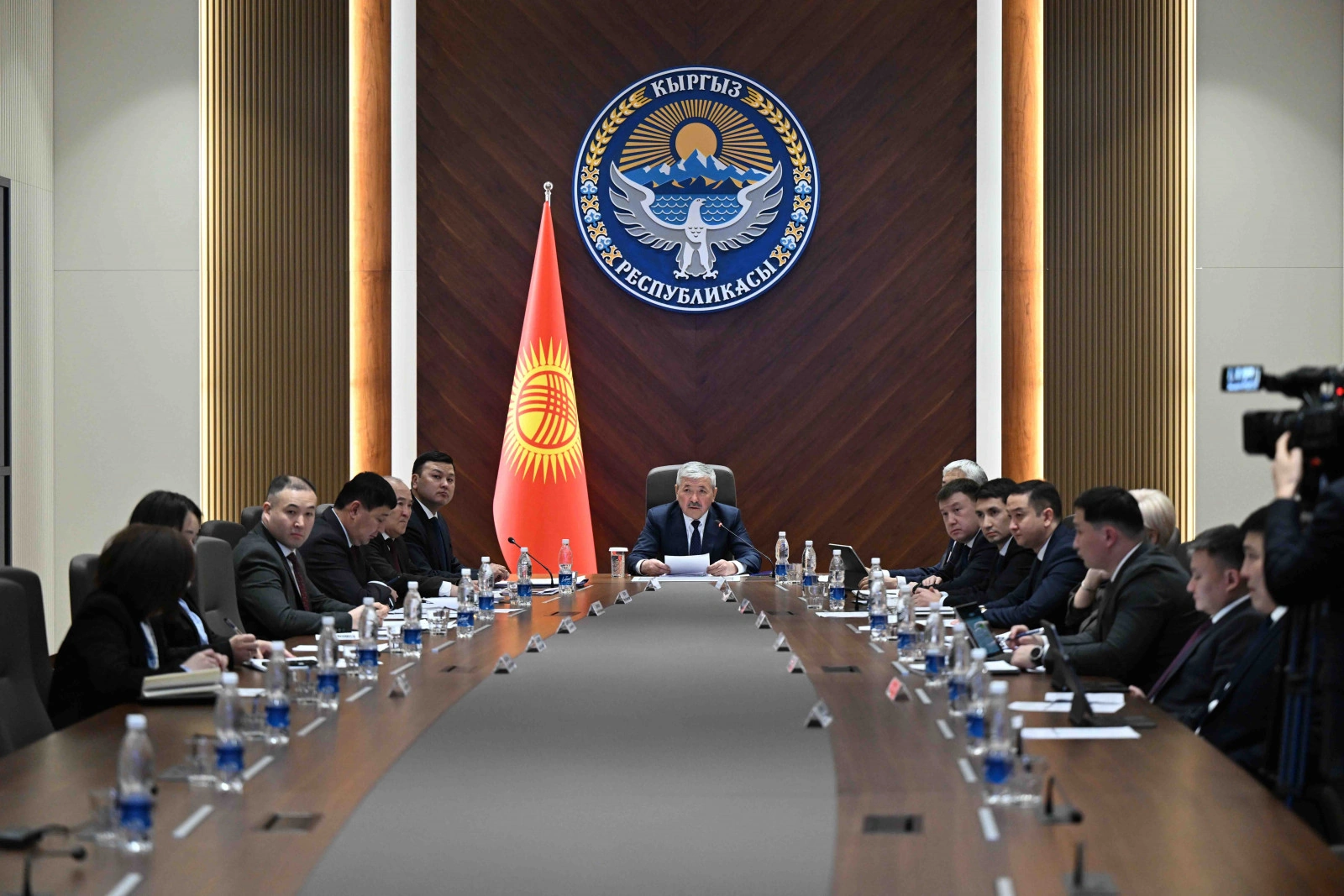
The issue was raised at the 6th meeting of the Interagency
Commission on Debureaucratization of the Civil Service System under
the chairmanship of the Chairman of the Cabinet of Ministers and
Head of the Presidential Administration of Kyrgyzstan, Adylbek
Kasymaliev.
During the meeting, interim results of the Commission’s
activities were summarized, and a report, along with presentation
materials, was delivered by Deputy Chairman of the Cabinet of
Ministers, Minister of Justice, and Director of the National
Institute for Strategic Initiatives (NISI), Ayaz Baetov.
Furthermore, it was noted that since the signing of the relevant
Decree by the President of Kyrgyzstan, Sadyr Japarov, significant
progress has been achieved in the area of de-bureaucratization. The
Interagency Commission was established in March 2025, while the
first package of measures-comprising 36 regulatory legal acts and
10 systemic directives already been approved in February. Over the
course of eight months, six such packages of decisions have been
adopted, which, through hundreds of departmental decisions and
draft regulatory acts at various levels, have helped ease
administrative and bureaucratic pressure across many processes.
The meeting highlighted successful progress in optimizing
administrative barriers, including a comprehensive analysis of
regulatory legal acts and active involvement of representatives of
the business community in discussions and the revision of
administrative procedures.
Proposals forming the sixth package of de-bureaucratization
measures were also presented during the meeting.
In particular, the Ministry of Digital Development and the
National Statistical Committee developed a data-driven government
concept aimed at introducing decision-making practices based on
data analysis. The Ministry of Economy proposed the implementation
of the “zero-plus” and "zero bureaucracy" principles in the
provision of public services, conducted an analysis of tax
deductions with a view to transitioning to a targeted approach and
automated calculation through the "Tunduk" system, proposed the
introduction of a preventive consulting system for businesses, and
is implementing a reform of taxation for online trade.
Furthermore, a task was set to study the feasibility of
reallocating compensation for medicines in favor of pregnant women
and children under the age of six.
Relevant agencies were also recommended to expand the functional
capabilities of ELQR QR payments, including enabling cash-out
operations through ATMs.
These and many other initiatives and proposals submitted by
government bodies were consolidated into the sixth package of
debureaucratization measures and approved by members of the
Interagency Commission. The implementation of this package is aimed
at further reducing excessive administrative procedures,
eliminating duplicative requirements, expanding the use of digital
solutions, and enhancing the citizen- and business-oriented focus
of public administration.
Summing up the meeting, Chairman of the Cabinet of Ministers and
Head of the Presidential Administration Adylbek Kasymaliev noted
that the sixth package of measures marks a transition from isolated
changes to a systemic transformation of public administration
processes. He emphasized that the key priority at the next stage
will be the practical implementation of the adopted decisions,
strict oversight of their execution, and the achievement of
concrete, measurable results.
Following the meeting, responsible government bodies were given
relevant instructions to implement the sixth package of measures
within the established timeframes, with an emphasis on the personal
accountability of agency heads for final outcomes.