BAKU, Azerbaijan, December 18. Central Asia is
shaping up to be a hotbed of interest, with major global players
looking to get their foot in the door and bolster their economic
and political clout in the area. Japan, along with its partners, is
pulling out all the stops to broaden its horizons, steadily keeping
the lines of communication open with Central Asian countries. In
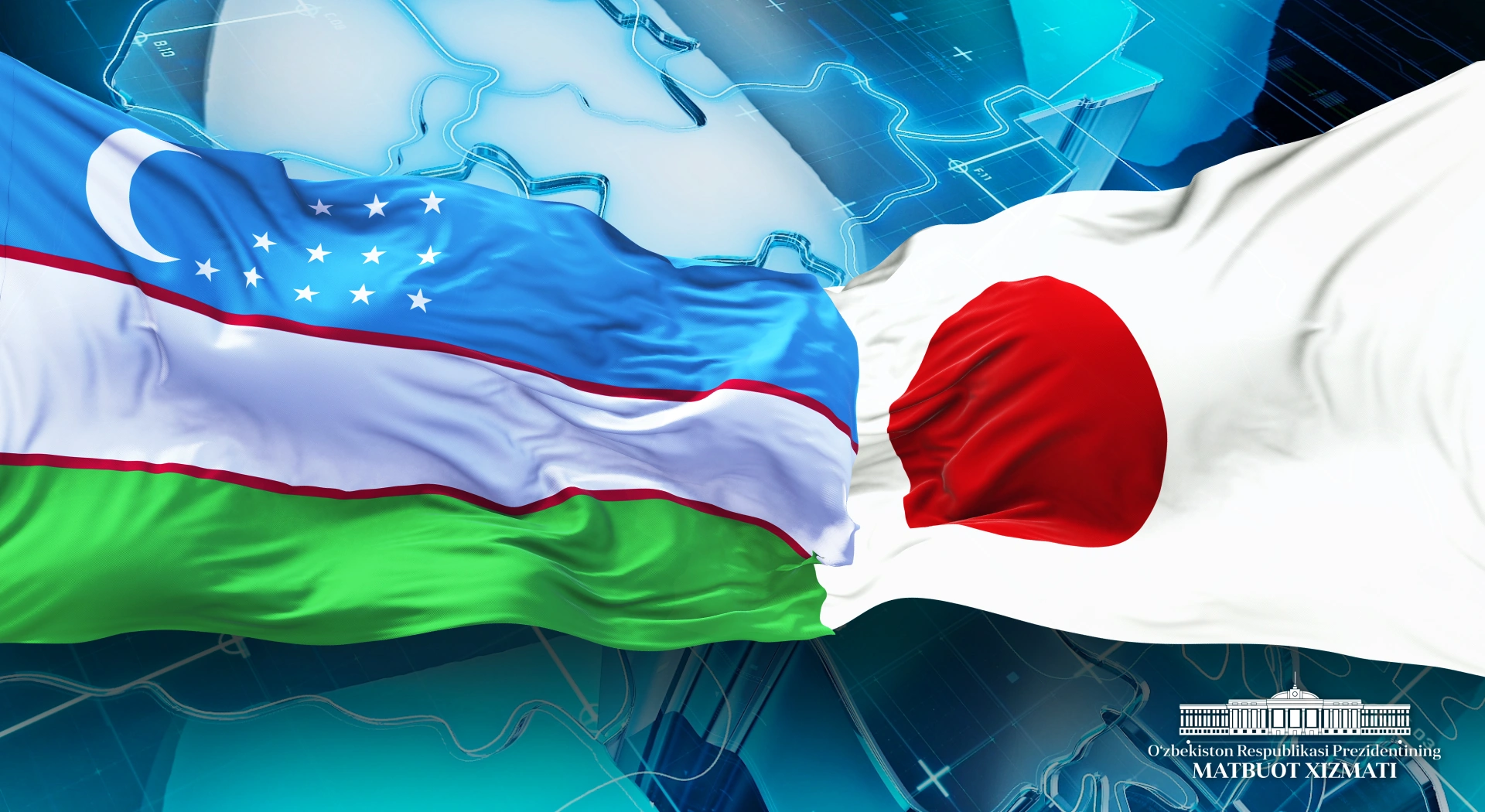
the grand scheme of things, Uzbekistan holds a pivotal role in this
conversation, having in recent years consolidated its status as one
of the region’s key centers of economic growth.
Large-scale reforms, economic liberalization, and improvements
in the investment climate have made Uzbekistan an attractive
platform for long-term projects. For Japan, which traditionally
prioritizes stable and predictable partnerships, these factors have
laid the groundwork for strengthening ties with Tashkent.
Economic ties between Uzbekistan and Japan demonstrate steady
positive momentum. In 2024, trade turnover between the two
countries increased by 35%, reflecting the expansion of business
contacts and growing interest of Japanese companies in the Uzbek
market. At the same time, investment cooperation is also
strengthening, with the total portfolio of projects involving
Japanese companies and financial institutions exceeding $12
billion.
Around 100 joint ventures and organizations with Japanese
participation operate in Uzbekistan, covering energy, mechanical
engineering, the chemical industry, logistics, and infrastructure.
Active investors include Mitsubishi Corporation, Marubeni, Sojitz,
Toyota Tsusho, and Hitachi. These indicators form a solid economic
foundation for the Uzbek-Japanese partnership and create conditions
for its further expansion.
In light of this, the energy sector stands tall as the bedrock
of bilateral cooperation and has been the linchpin for decades.
Japan is among the few countries that, from the early years of
Uzbekistan’s independence, consistently supported the modernization
of the energy infrastructure through participation in the
construction and upgrading of thermal power plants, the
introduction of energy-efficient technologies, and modern solutions
for power system management.
The notable collaborative projects include the construction of
the 900-MW Turakurgan thermal power plant in the Namangan Region
and the installation of the third combined-cycle unit at the Navoi
thermal power plant, which has a capacity of 650 MW, in partnership
with Mitsubishi Corporation and Mitsubishi Power. The rollout of
these projects has really turned the tide on energy supply
reliability and fine-tuned fuel consumption to boot and reduced
specific greenhouse gas emissions. The combined output of the new
power units exceeds 10 billion kWh per year, which is of key
importance for the sustainable functioning of the country’s
economy.
At this juncture, the collaboration between the two nations in
the energy arena is steadily pivoting towards renewable energy
sources, aligning with Uzbekistan’s national priorities and the
worldwide climate playbook. One of the largest projects in this
area is the construction of solar power plants with a total
capacity of 1,000 MW in the Samarkand and Bukhara regions, along
with energy storage systems with a combined capacity of 1,336
MWh.
The project is being implemented with the participation of
Japan’s Sumitomo Corporation, Chubu Electric Power, and Shikoku
Electric Power, in partnership with Saudi Arabia’s ACWA Power, and
is one of the largest renewable energy projects in Central Asia.
Its significance goes beyond individual power capacities. For
Uzbekistan, it means accelerated diversification of the energy mix
and reduced dependence on gas-fired generation amid growing
domestic demand. For Japan, it represents the consolidation of
long-term economic presence in a key regional economy and the
promotion of its own technologies and financial instruments.
A key role in the project’s implementation is played by the
Japan Bank for International Cooperation (JBIC), which is providing
a $635 million loan and acts as the largest financing participant.
Total investment is estimated at $1.45 billion. JBIC’s
participation is of fundamental importance, as the bank serves as
an anchor institution, reducing risks for private investors and
creating conditions for attracting commercial banks and insurance
mechanisms, including support from the Nippon Export and Investment
Insurance (NEXI).
The collaborative framework between Uzbekistan and JBIC exhibits
a systemic character. In 2024, the sides signed a three-year
cooperation program that provides for the possibility of
non-sovereign financing of projects by Japanese companies in the
country. This mechanism is seen in Tashkent as a golden ticket for
reeling in fresh Japanese investments, especially in the realms of
energy, industry, and infrastructure.
In conjunction with the energy sector, the industrial domain
continues to represent a pivotal facet of the collaborative
framework between Uzbekistan and Japan. Japanese companies are not
just putting all their eggs in one basket with equipment supplies;
they’re also rolling up their sleeves to localize production, pass
the baton on technology transfer, and give their industrial
facilities a much-needed facelift. This approach is in line with
Uzbekistan’s course toward industrialization and the development of
high value-added products.
In this context, the official visit of President of the Republic
of Uzbekistan Shavkat Mirziyoyev to Japan on December 18–20 and his
participation in the first summit of heads of state of the “Central
Asia + Japan” Dialogue in Tokyo are seen as a logical political
consolidation of the already established economic and investment
partnership. Uzbekistan is hoping that this visit will open the
floodgates for Japanese investments and bolster the backbone of
institutional support for collaborative projects.
Consequently, the bilateral engagement between Uzbekistan and
Japan is evolving into a robust partnership paradigm anchored in
economic collaboration, energy sector synergies, and industrial
advancements. For Uzbekistan, this opens the door to long-term
capital and cutting-edge technologies, while for Japan, it’s a
golden opportunity to solidify its foothold in Central Asia through
one of the region’s most rapidly blossoming economies.
Stay up-to-date with more news on Trend News
Agency's WhatsApp channel